35th day of the Omer — Nobility in Humility (malchut sh’b’hod)
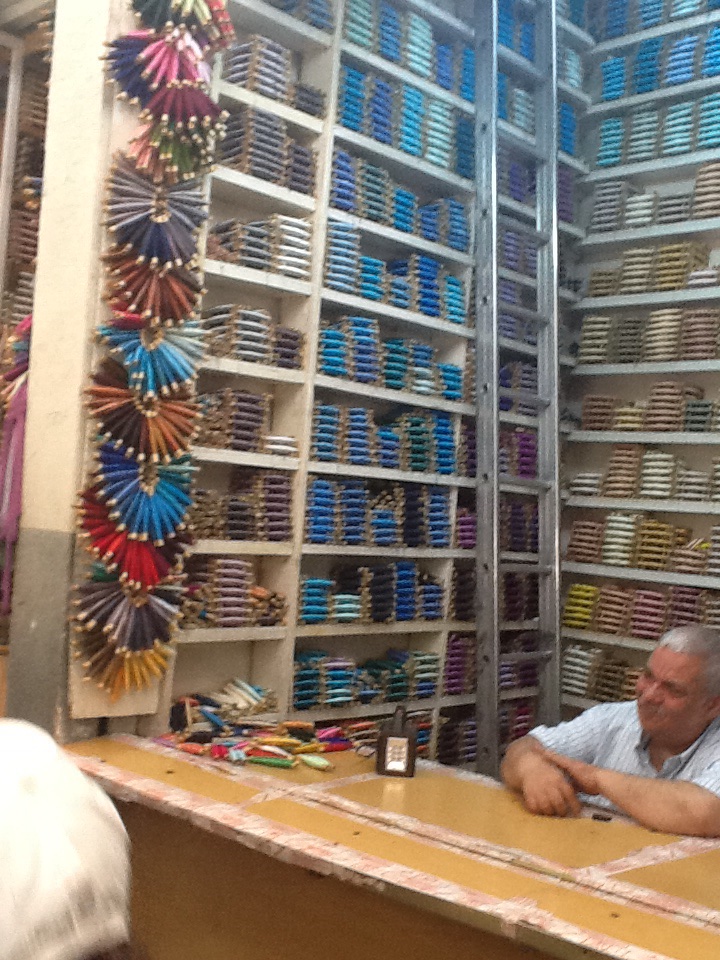
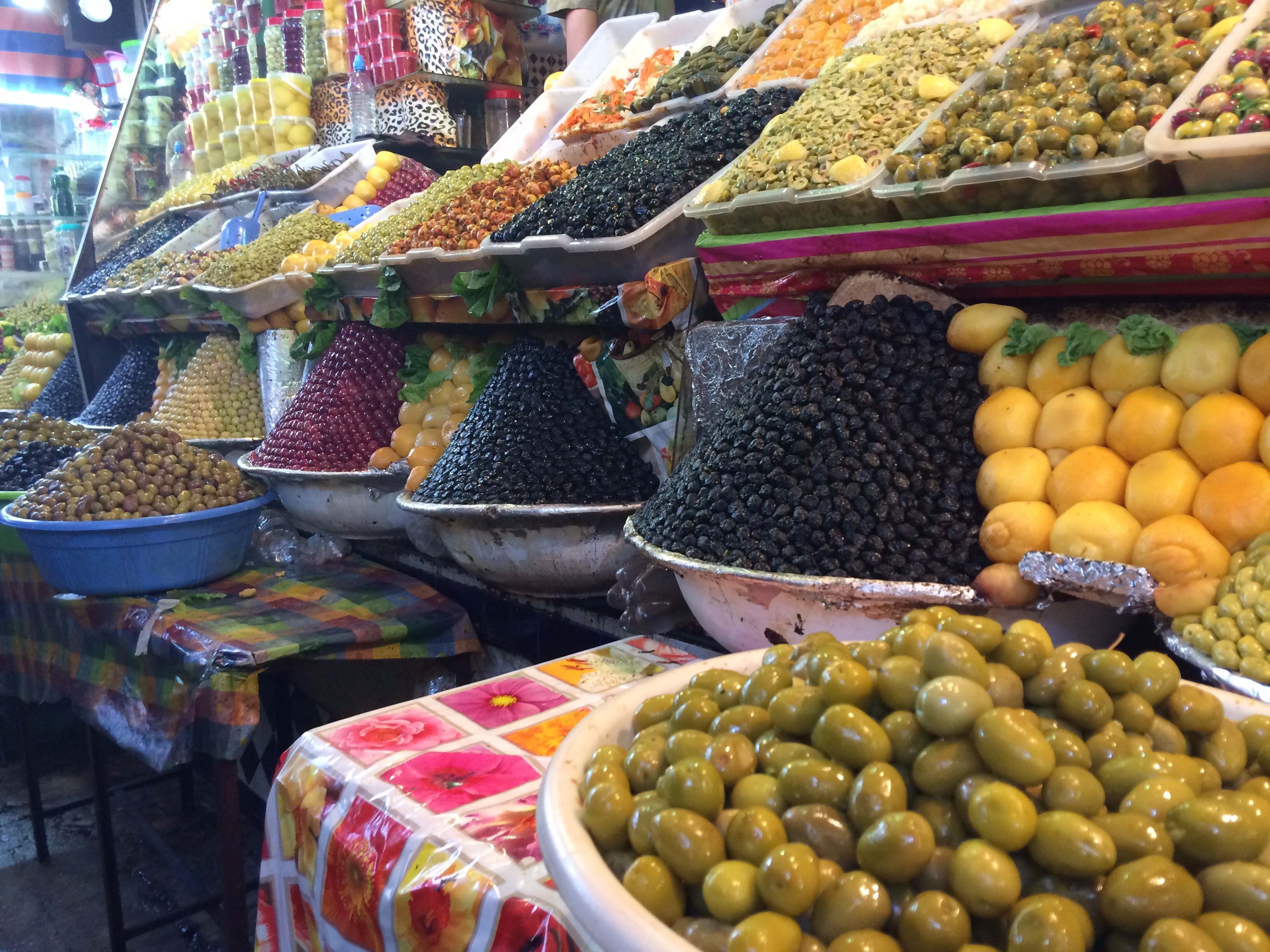
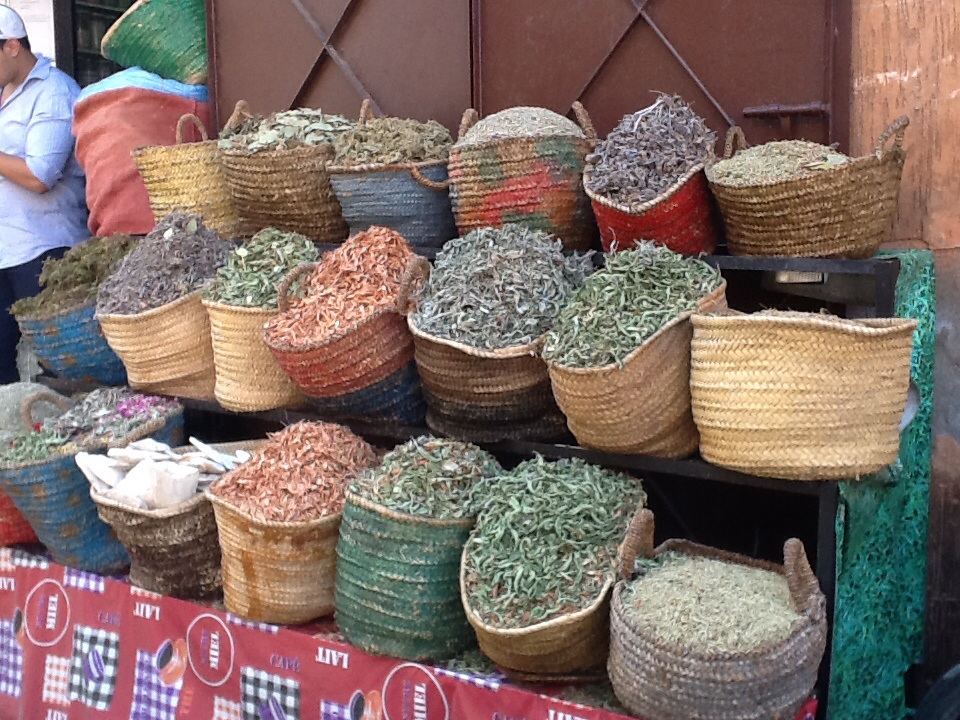
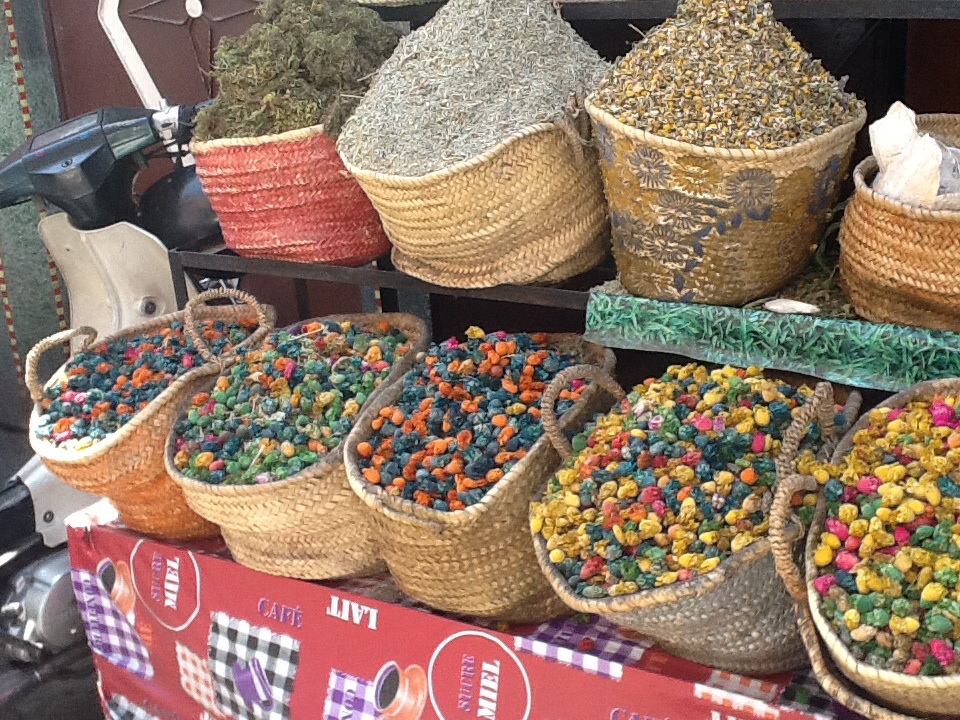
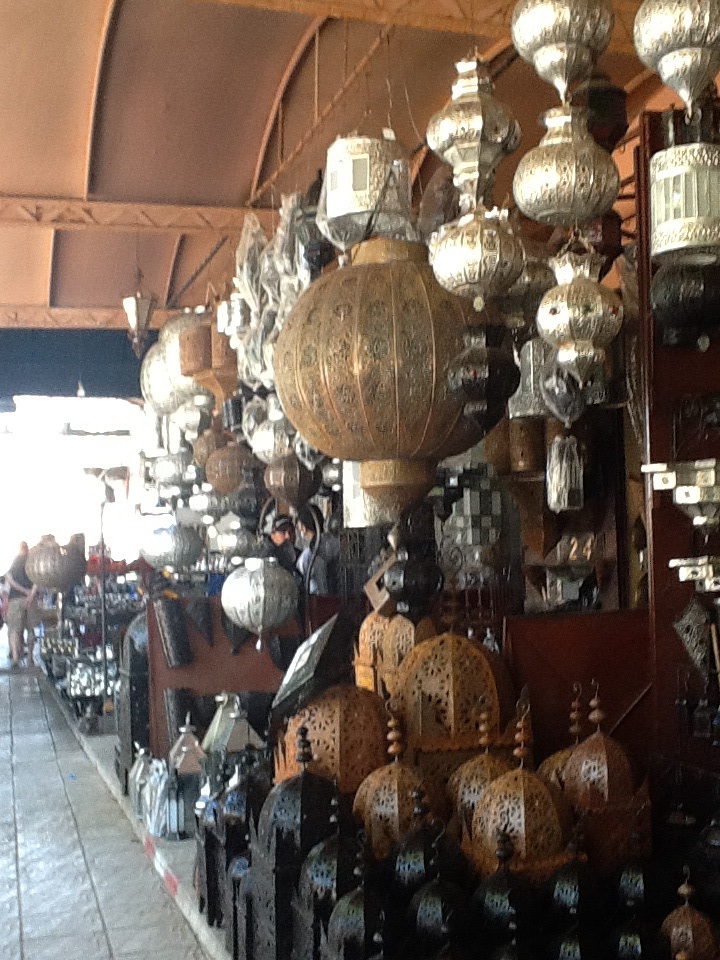
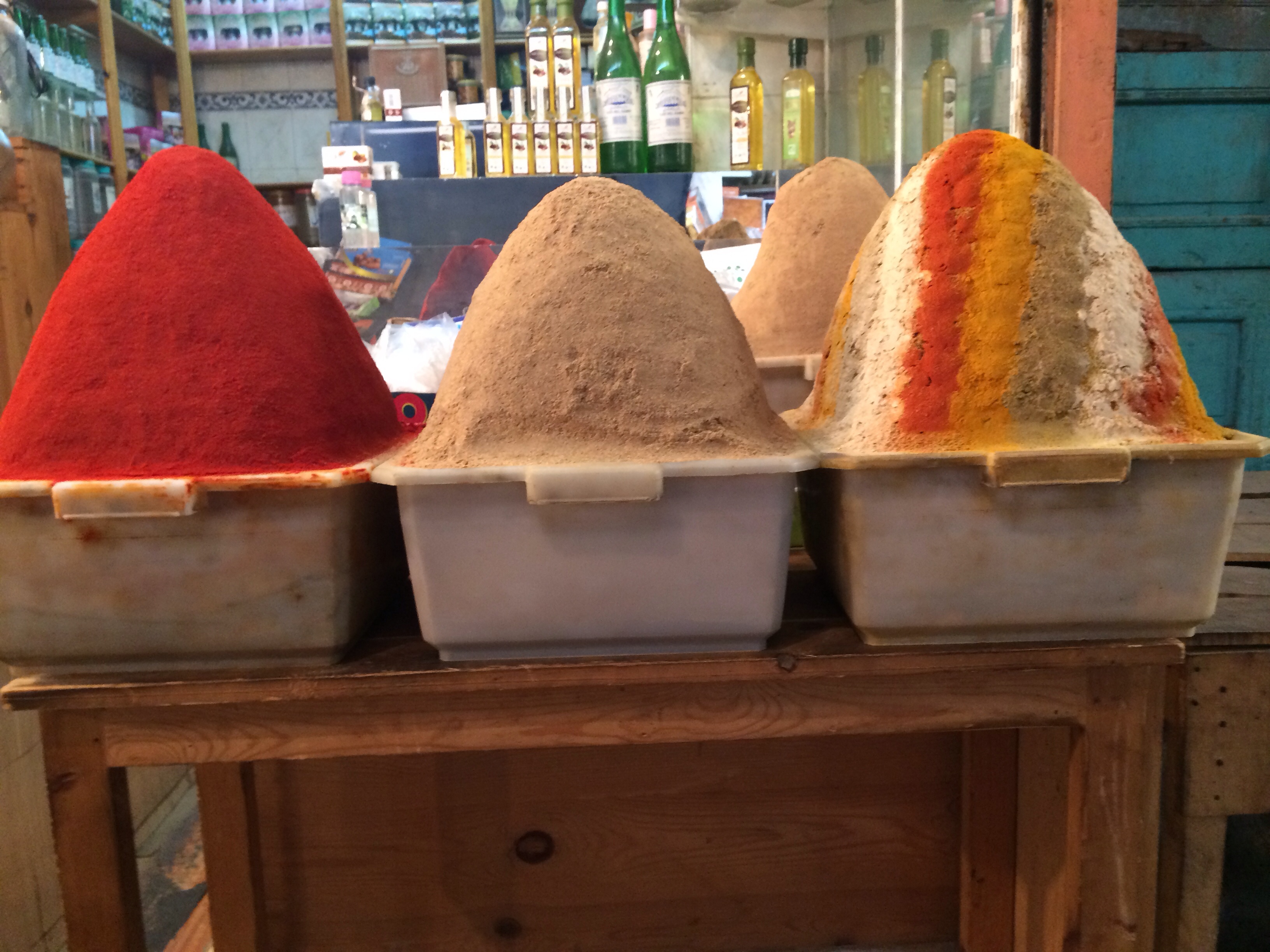
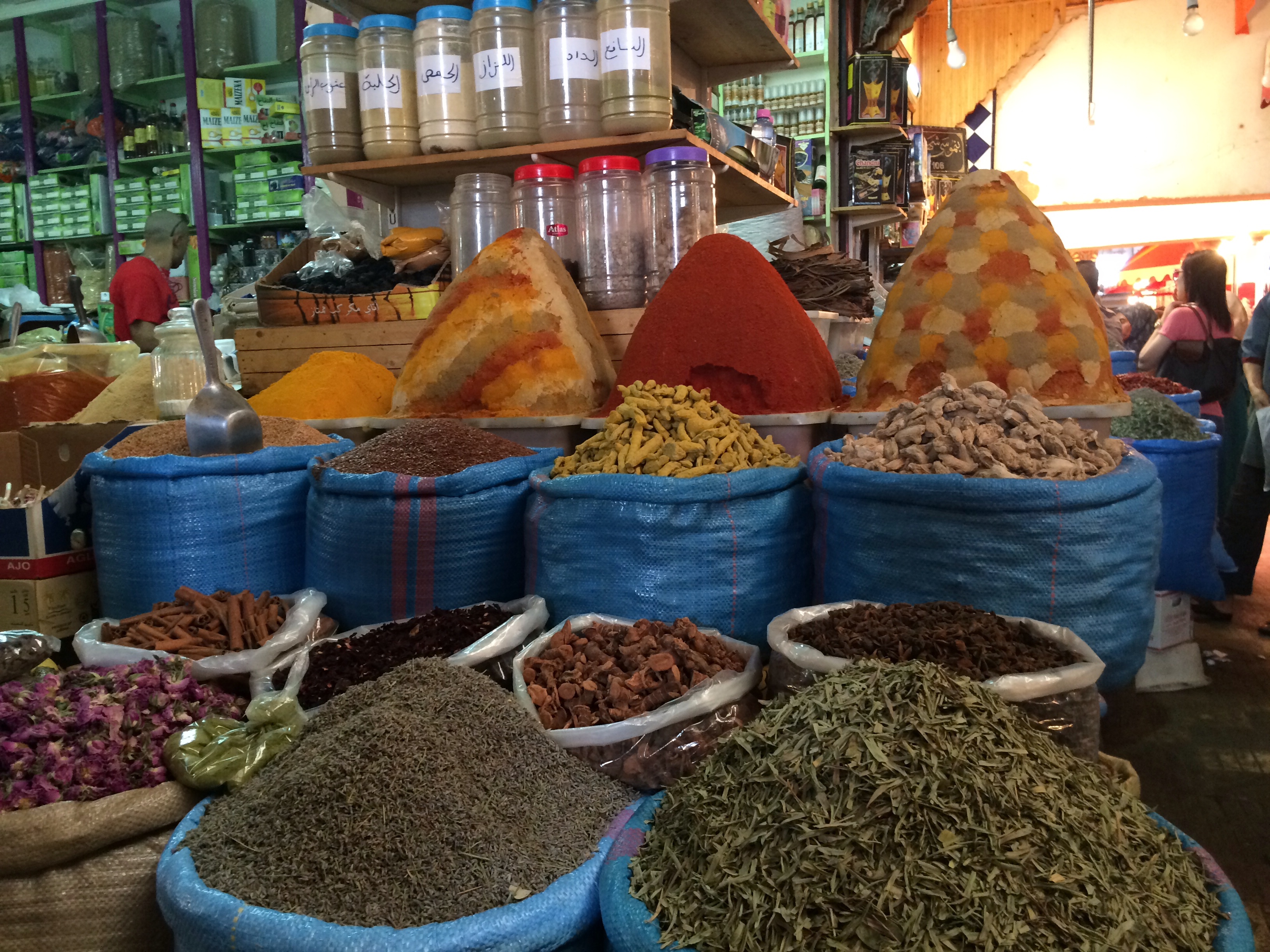
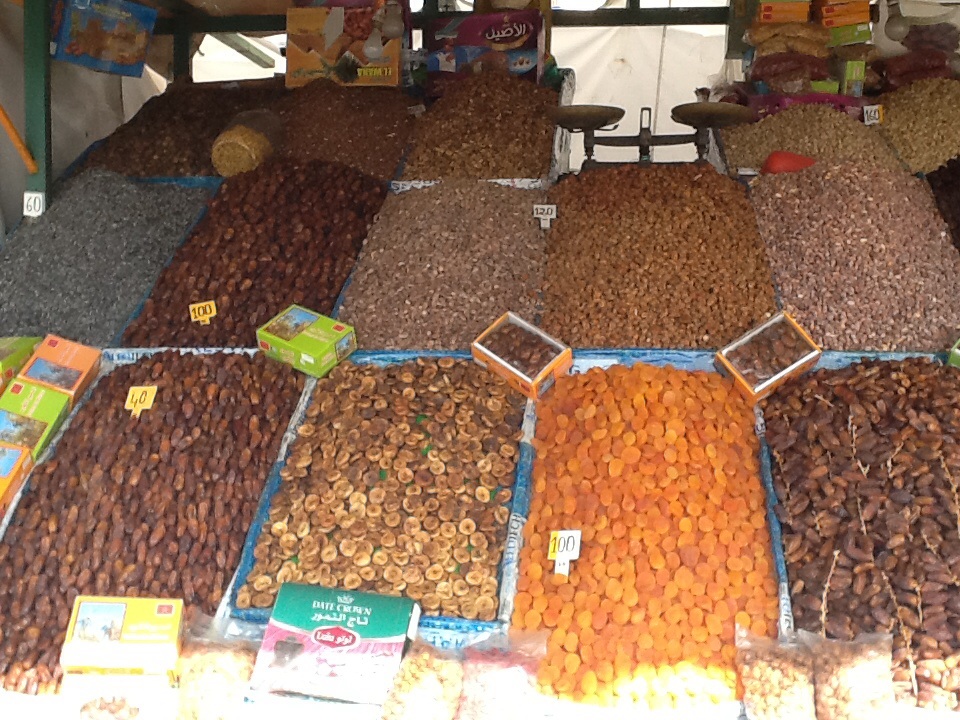
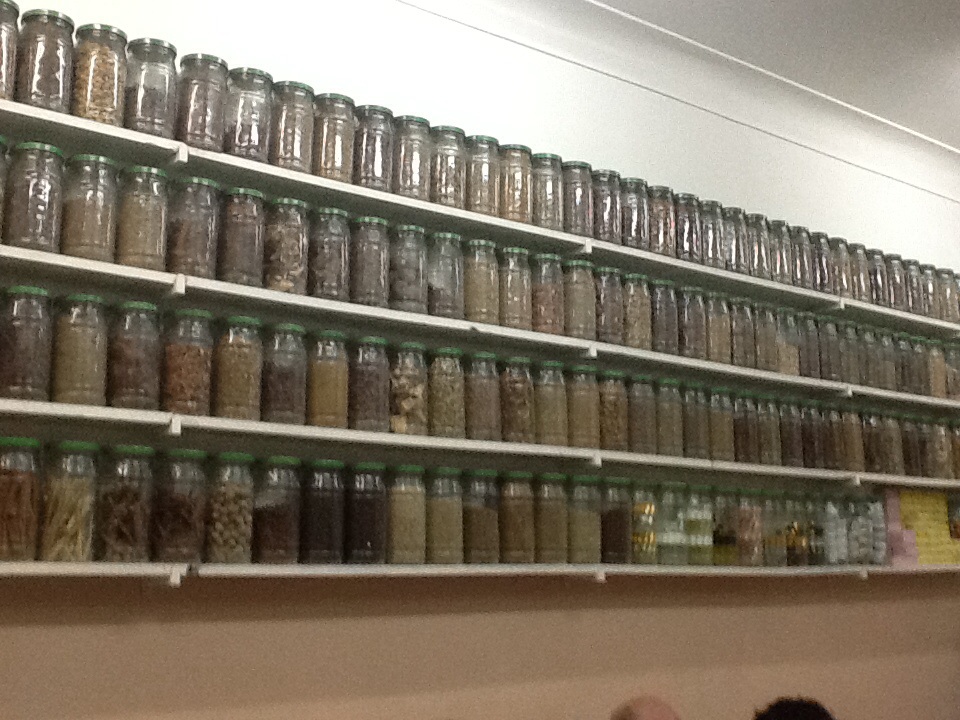
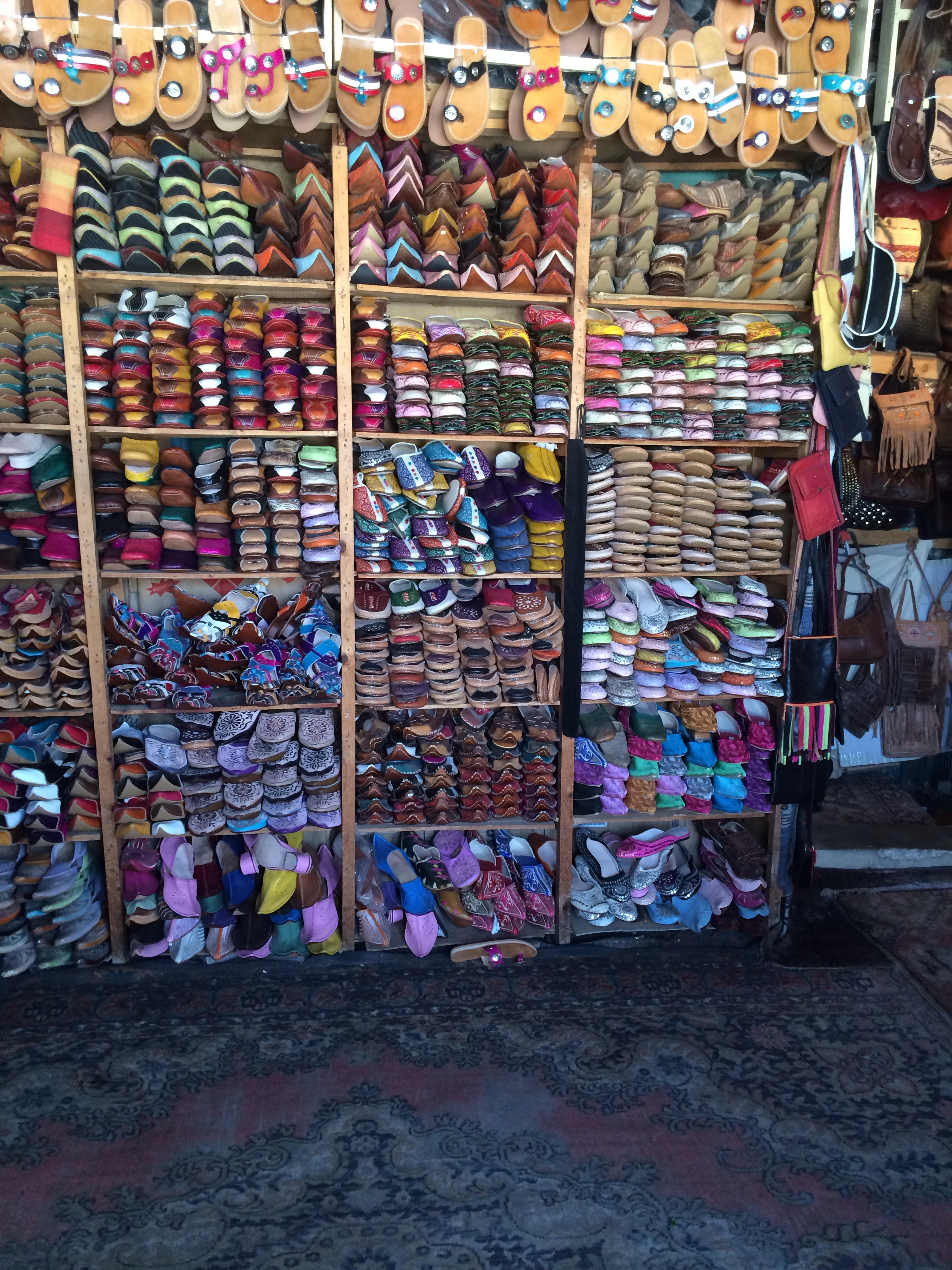
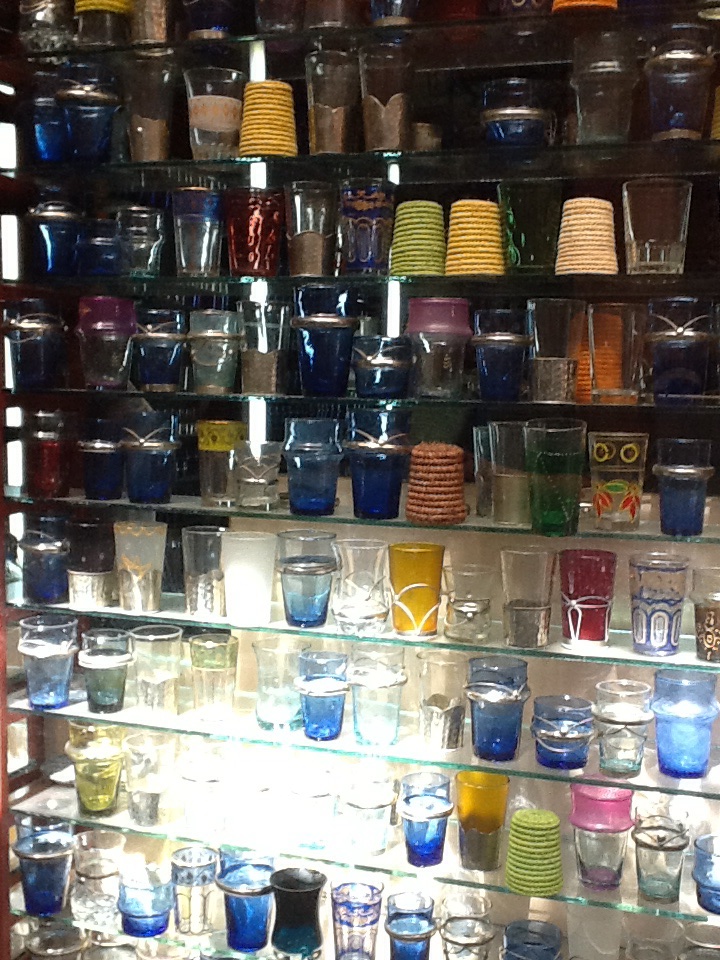
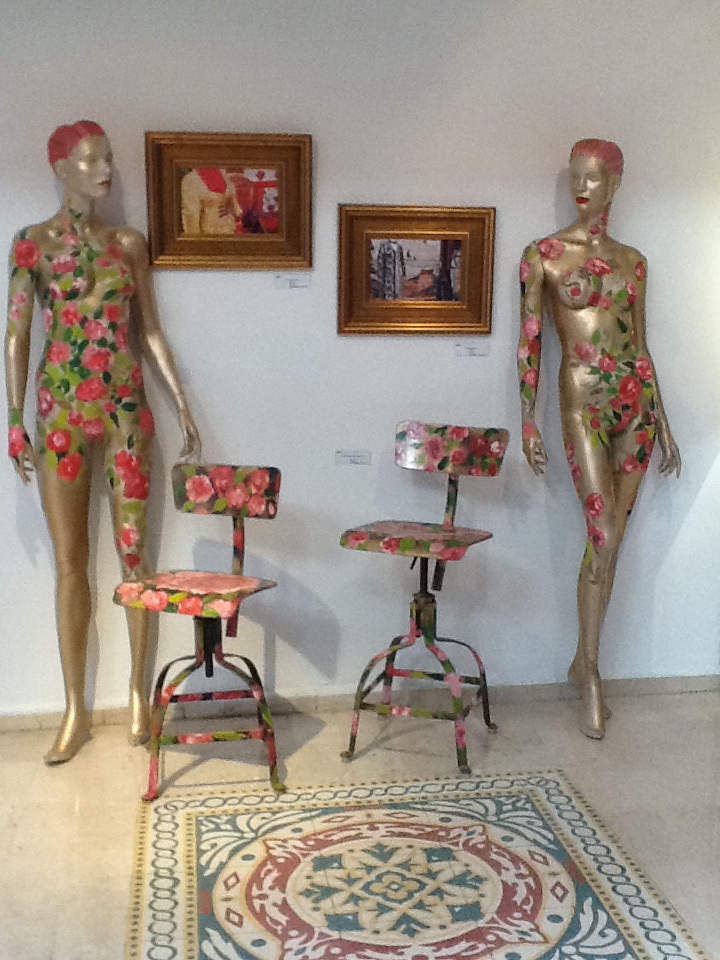
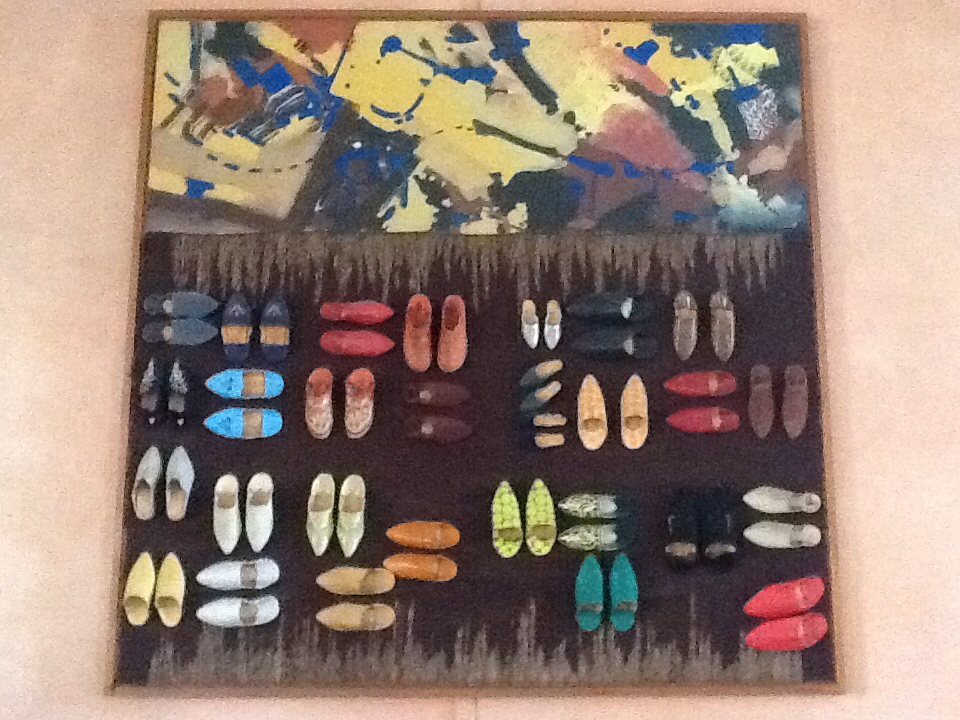
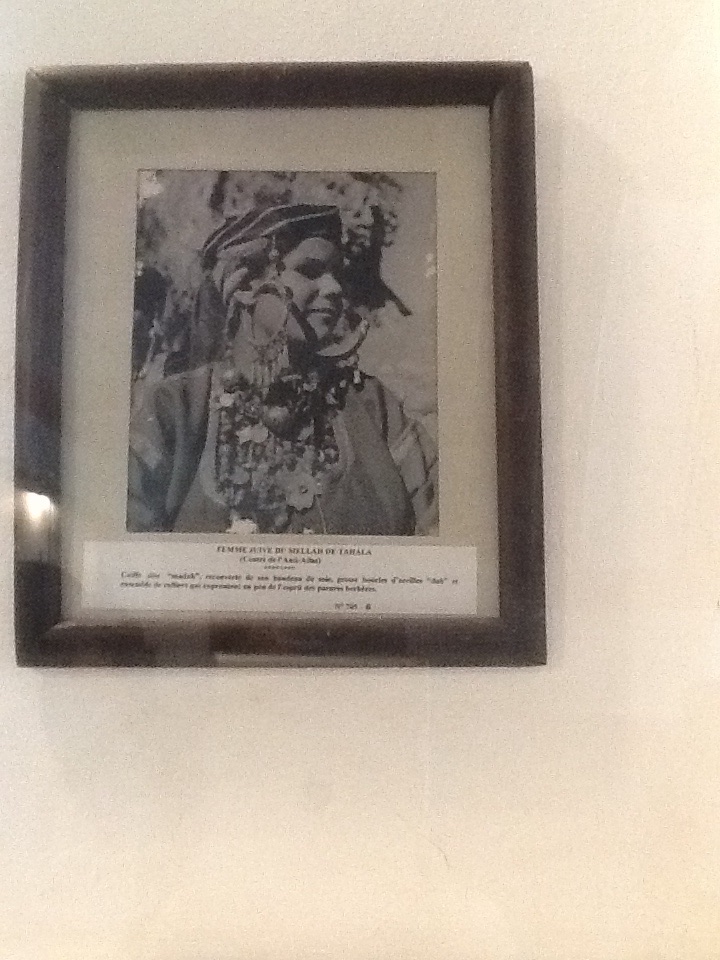
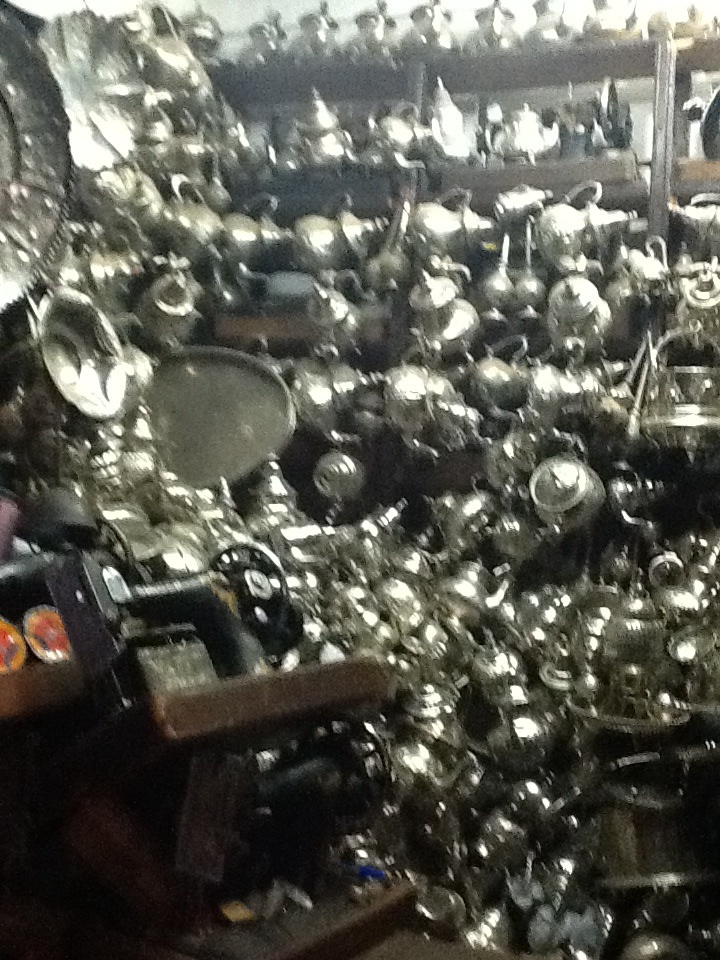
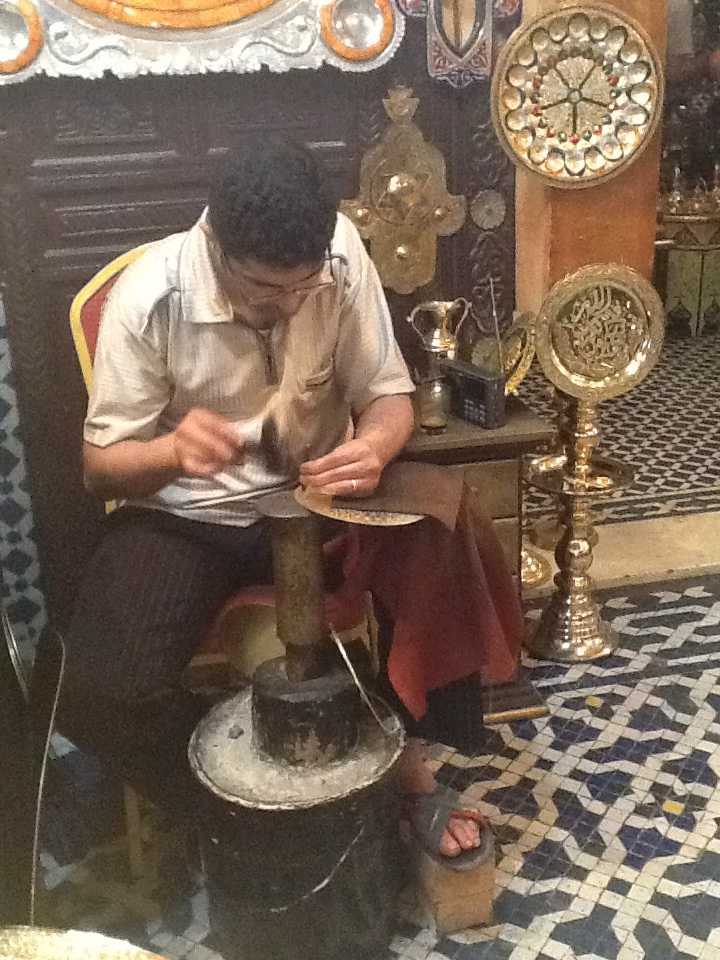
I just wanted to post some thematic photos for the next few days. Today are some beautiful marketplace displays that I don’t believe I posted in earlier posts.
35th day of the Omer — Nobility in Humility (malchut sh’b’hod)
I just wanted to post some thematic photos for the next few days. Today are some beautiful marketplace displays that I don’t believe I posted in earlier posts.
31st Day of the Omer — Compassion in Humility
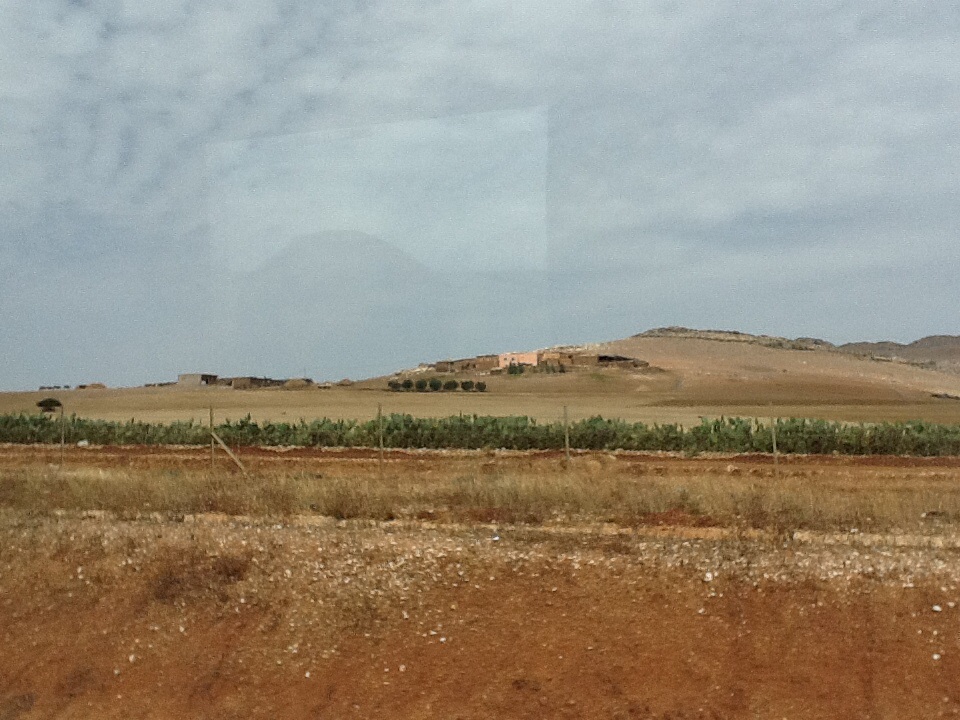
On Friday we had about a 4-hour drive from Rabat to Marrakesh. (What would have been a 10-12 hour trip from Fez to Marrakesh was broken up for us by returning to Rabat for one night, where we’d been earlier in the week, and then taking a quicker route to Marrakesh.) On the way, our guides Michal and Seddik (Arabic for Tzaddik/righteous one) gave us interesting background on the land and mountainous regions through which we passed and the indigenous Berber peoples who inhabited them.
45% of the Moroccan population live in the countryside and most are subsistence farmers. Among that population are the Berbers. The Berbers (actually now a bit of a pejorative term since the French turned it into the word “barbarian”) are comprised of 243 different tribes, some Berber- and some Arabic-speaking. Racially, the tribes may look nothing alike — some may have dark black skin and some may look more Asian, like Mongolians. Of course, their customs would be different, as well; some may tattoo or veil themselves, others not. Until 1912, when the French came, each tribe had its own chief and organization. Since then, the tribes are not independent political entities but only cultural entities, as the French put an end to tribal divisions. By doing so, the French actually united the country and made it possible for future rulers to be “King” and not merely “Sultan,” which was the actual assignation before Morocco’s 1956 independence from France. For some, no doubt, the commitment to the tribe is still a stronger identity than the identity as a Moroccan citizen.
Berber is now an accepted language with its own alphabet. Berbers are known to be good businessmen with a strong work ethic — most little stores both in Morocco as well as in France and Belgium where they emigrated are Berber-owned, open 18-20 hours a day. The two big gas stations we have passed in our travels are OiLibya and Afriquia. Afriquia is a Berber business and its founder is now a minister in the government.
Later in the day when I successfully bargained a merchant in the souk/market down to about a third of where he started on the price of a purse, he called me a Berber woman. I asked him if he said that as an insult; he assured me it was a great compliment. I later asked Seddik, and he assured me that it was indeed a compliment.
One of the animals we have seen in the marketplaces is the turtle. Because the turtle carries its house on its back, they are good luck symbols for the home. When a new home is built (and every son of the Berbers builds a new house near his parents’ home when he marries, while the daughters leave for the villages of their husbands), a turtle joins the new inhabitants. Marrakesh is a corruption of the Berber words Amour Akoush, meaning “God’s land.”
The first thing we noticed when we entered Marrakesh is that the buildings are red, not white or beige as they were elsewhere, due to the different color of the clay, hence the nickname the Red City. We also pumped up the music on the song “Marrakech Express” (Crosby, Stills, Nash and Young) and learned about the hippie scene that used to take place there where marijuana was easily acquired. Now it is illegal though it still grows in the mountainous regions. Seddik told the story of a man who came on his tour once and asked to be shown the local jailhouse. At first he told Seddik that he was in the corrections business in the US and wanted to see how it was done in Morocco. He finally fessed up that he had spent time in that jail for drug possession.
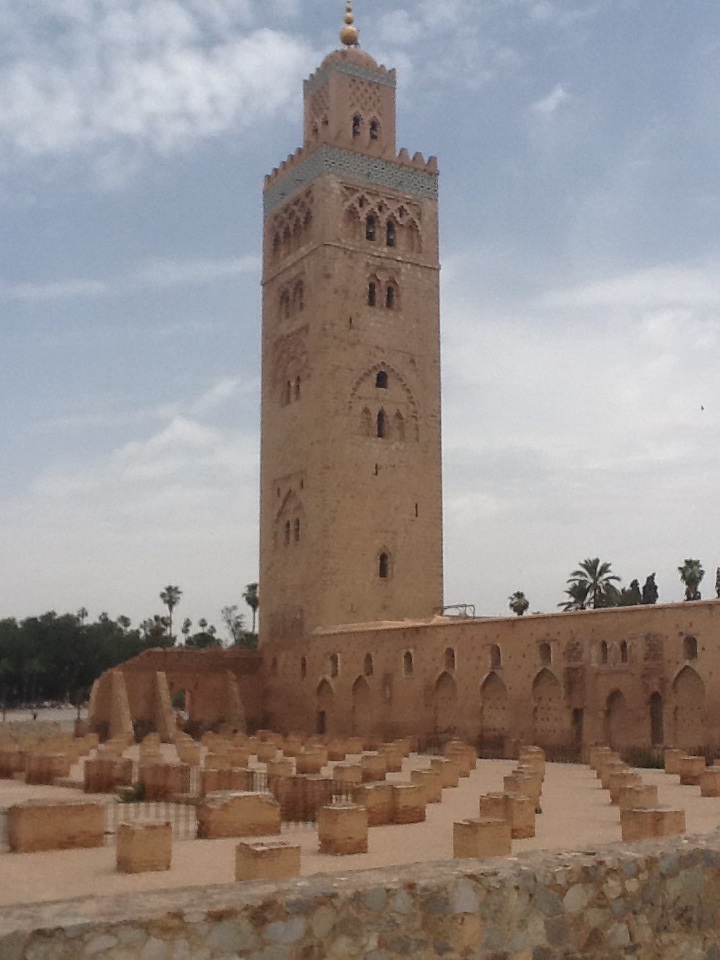
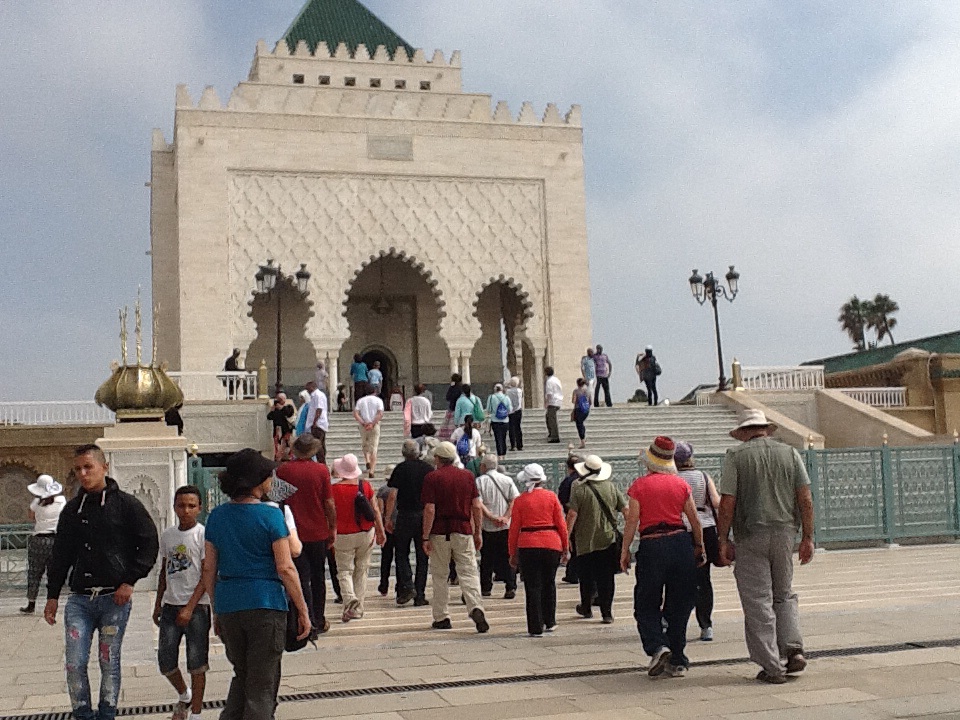
Our first point of interest after entering the city and taking note of the red buildings was the new Starbuck’s that just opened on the city’s main drag, a very upscale and French-looking part of the city (where there are also a KFC and two McDonald’s.) The first historic sight, however, was the Old Ketubia mosque, used for prayer since 1062.
Since this used to a be a capital city and this was an important mosque, a royal palace used to stand right next to the mosque. The king/sultan was traditionally not only the political leader but the religious leader, as well, and had the prerogative to speak on Fridays in the mosque (a duty that modern kings have rarely — ever? — used, though, even today they are considered the religious head of state.)
This mosque is the same design as the unfinished one at the mausoleum of Mohammed V; there is also another identical mosque elsewhere in the country, as well. (It saves on architects’ fees, I guess 😉 The call to prayer used to be indicated by a flag that would be hung from the minaret, a white flag during the week, and a black flag on Fridays. But the muezzin no longer climbs the stairs all the way to the top of the minaret; the use of loudspeakers from the minaret now mitigates the necessity of the flag. (And the muezzin of today is probably no longer as in good shape as those who previously had to climb all those stairs 5 times a day!)
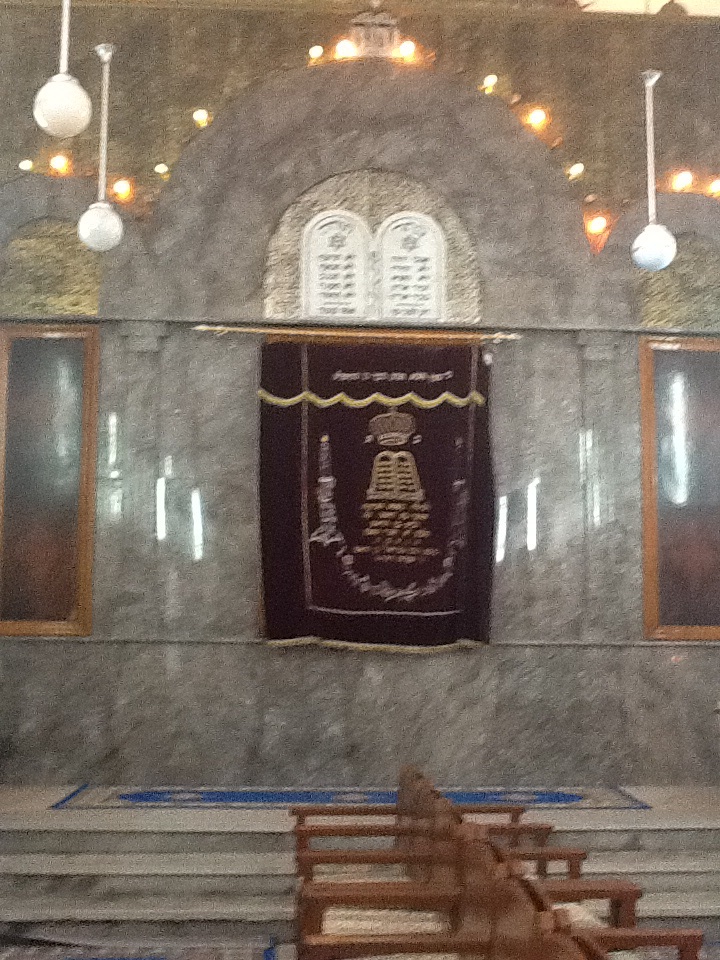
Our next stop was the old Mellach, the Jewish quarter, which was built in 1578. In the 20th century, 40,000 Jews lived in the Mellach. Today there are only a couple of hundred Jews in all of Marrakesh, mostly old and poor. Here is the Slat El Azama Synagogue in the Mellach which is still functioning as a synagogue, though we will be attending Bet-El in the new part of the city for our service this evening.
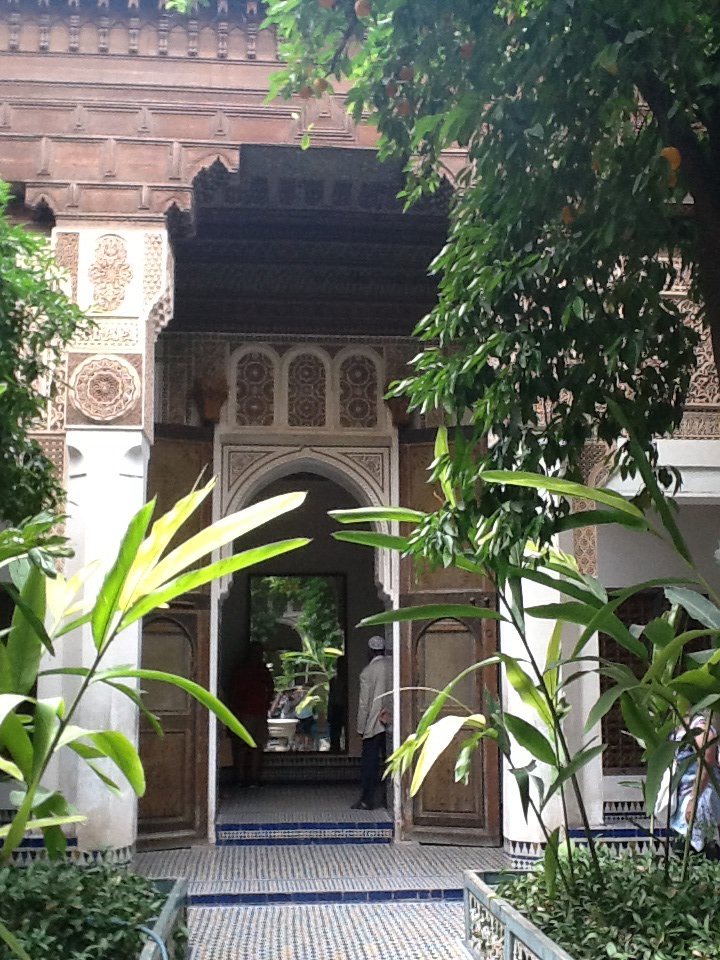
As part of our intensive introduction to Moroccan architecture, we learned to distinguish a riyad, a home with a central courtyard that is divided into four-squared gardens, and rooms off that courtyard. We visited the Bahia Palace (19th century), a classic example of a riyad.
Morocco had been a harem society. (Again, I refer you to the wonderful book I read by Fatima Mernissi’s Dreams of Trespass: Tales of a Harem Girlhood, a very feminist take on the treatment of women in Morocco.) In some cases a harem referred to a man with multiple wives, but it could also mean a multi-generational extended family all living in one riyad, each couple being monogamous. Today 1,800 of those riyads have been converted into guesthouses; many of them were in the Medina/old city and the Mellach/Jewish area of the Medina. Entrances to a home typically make it impossible to see into any of the living areas; for instance there may be a winding pathway from the front door into any kind of living space. This was to keep passersby from seeing into the home, both to cloister the women and to avoid the evil eye, since people tried to hide their wealth which could incur bad luck. As a result, windows only opened into the inner courtyard, not out onto the street. The exception to this general rule was always the Mellach/Jewish quarter, where the Jews even had balconies out onto the street.
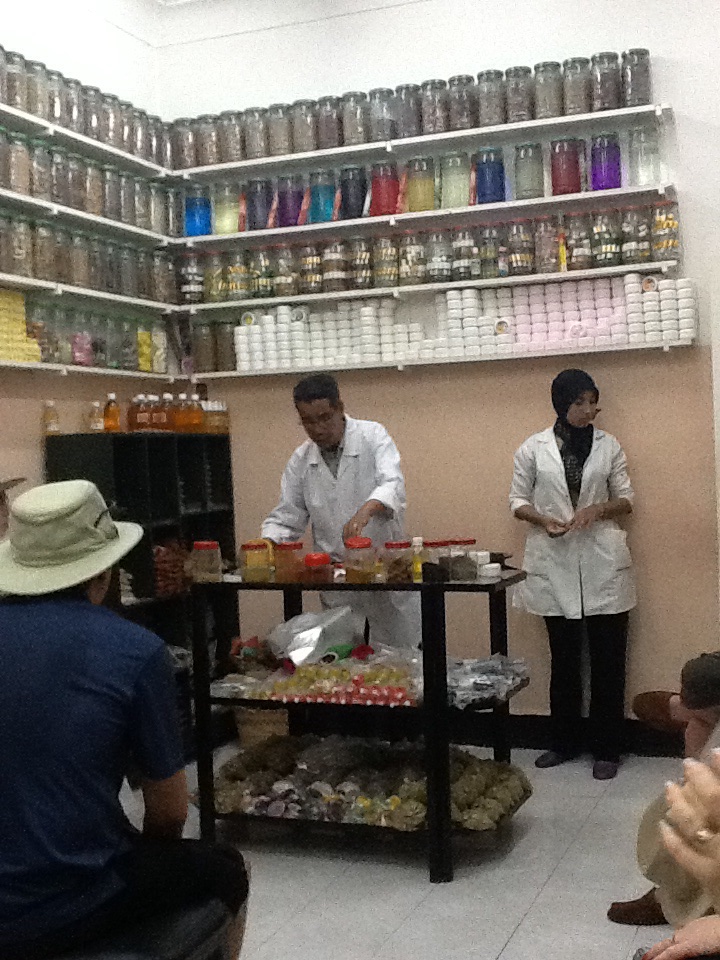
One of the highlights of our afternoon adventures in the souk/marketplace of the Medina was a visit to a Herboristerie or pharmacy. Unlike our American chain drugstores, these stores have shelves filled with jars of herbs and spices that get weighed out in grams. Some are cosmetic, some medicinal, and some for cooking. From “small doctor in the house,” small black seeds that one sniffs to alleviate headaches or respiratory issues (including snoring), to digestive herbs, to “Berber viagra,” to “magic lipstick,” to spices such as cumin or ginger, the pharmacy carries it all (but no Advil, Vicks, Jergen’s, etc.)
I mentioned my bargaining experience in the souk, but I didn’t mention all of the other activities that take place in the square (Djma El Fna Square) outside the market — from snake charmers to musicians to jugglers. To quote Crosby, Stills, Nash and Young:
I’ve been saving all my money just to take you there /I smell the garden in your hair /Take the train from Casablanca going South /Blowing smoke rings from the corners of my mouth
Colored cottons hang in the air /Charming cobras in the square /Striped djellabas we can wear at home /Well, let me hear ya now
Would you know we’re riding on the Marrakesh Express? /Would you know we’re riding on the Marrakesh Express? / They’re taking me to Marrakesh
(excerpt from “Marrakesh Express,” Crosby, Stills, Nash and Young)
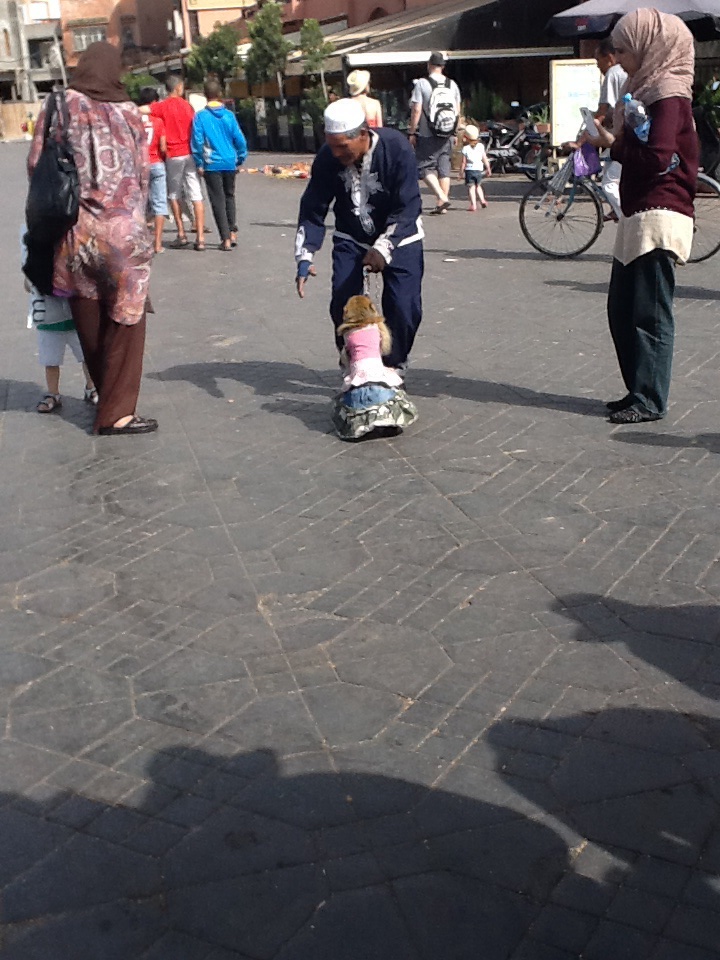
Though I didn’t want to get too close to the snake charmers in the square to take a picture, I did get a picture of this monkey.
Note: This post should have been sent on Friday before Shabbat, to have preceded the one you received yesterday.
Note 2: I would also like to note that I am back home now, and that I had the wonderful surprise of having a young Moroccan cabdriver (from Casablanca) drive me home from the airport. I told him of all my adventures, and wanting to test his response, I mentioned that I had been on a Jewish Heritage tour. He was very excited and told me his father has a very close Jewish friend in Casablanca (this proved to me everything I heard about the close relationship of Jew and Muslim in Morocco. (In contrast, however, Wednesday’s New York Times had an article about an ADL survey of anti-Semitic views around the world. The article didn’t mention Morocco specifically, so I found the results of the survey on the ADL website, where it says that 80% of Moroccans harbor anti-Semitic attitudes. I will need to learn more about the survey questions and methodology before believing this survey.) When he dropped me off, I showed him some of my photos and he was very excited to see some of the places he hasn’t been able to visit for many years. I was equally excited by this unbelievable coincidence of meeting him and being kept in a “Morocco state of mind” for a bit longer. He was also able to give me advice on where to get the best couscous in NYC (go to Astoria, Queens!)
Re-post due to incorrect download of a photo
33rd day of the Omer – Hod sh’b’Hod: Humility in Humility
I’ve loved every place we’ve been a bit more than I’ve loved the place before. It’s not just a case of “love the one you’re with,” but also the way our leaders built the trip, so that everything led us to the highlight city of Marrakech, which is incredibly cosmopolitan, trendy, yet also very ethnic because of the Berber influence here.
Last night we went to Bet-El Synagogue in the modern part of the city. Moroccan Jewry has its own liturgical customs and nusach (melody) which was fascinating to witness and listen to. They chant Song of Songs every Friday night, which is a Sephardic and Middle Eastern custom, and there was a sharing of leadership of the chanting among different members of the congregation, not just the chazan/cantor. After the service, we went to the cantor/chazan’s home for a Shabbat meal. He and his wife apparently open their home up every Friday night to guests. There was another Israeli contingent of about 25 people, our large group, as well as a smaller table of young Americans.
This morning we decided, however, not to attend a Moroccan service but to have our own little Shabbat service at the hotel. One Israeli woman who was staying at the hotel joined us, and when I read Torah, and then translated it, she cried, which was very moving for us all: And I will give peace in the land, and you shall lie down, and none shall make you afraid (Leviticus 26:6).
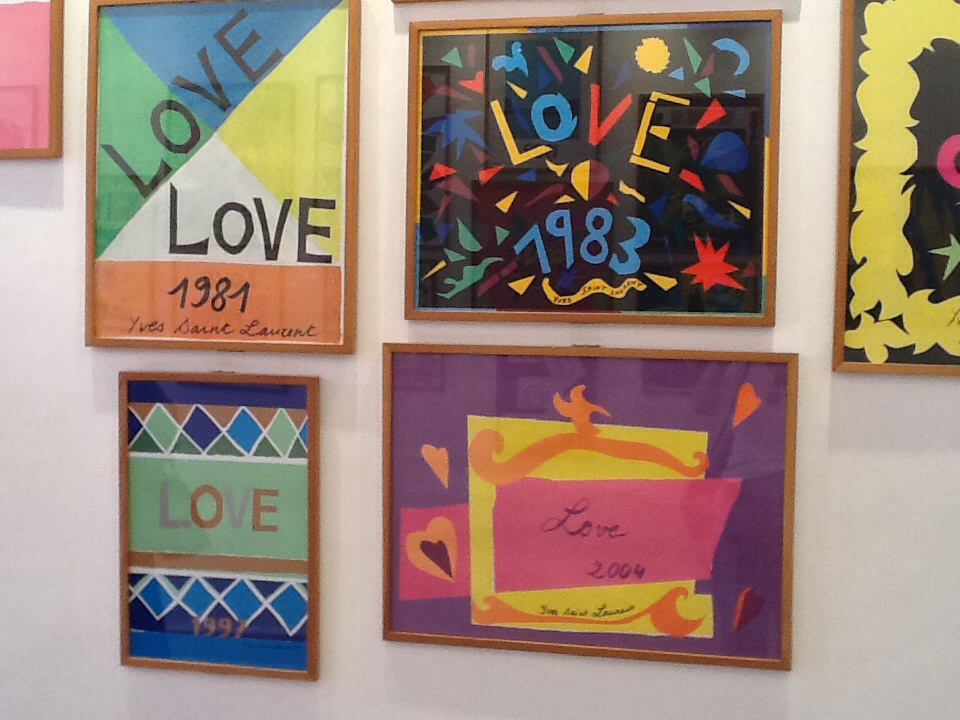
Our touring today was a bit inconsistent with my ideal Shabbat practice of keeping Shabbat as a day of rest, but when in Marrakesh, do what the other rabbis are doing…We visited the Saadian Tombs, built in the 16th century as a mausoleum to bury many Saadian rulers. We also visited the Dar Si Said Museum of Moroccan Arts. Then we went to Majorelle Garden, the beautiful garden created by the orientalist painter Jacaques Majorelle, as well as the Berber museum built there in 2011. Fashion designer Yves Saint Laurent and his partner Pierre Berge acquired and restored the property after Majorelle’s death, and the Love Gallery features some of Yves Saint Laurent’s yearly new year’s card paintings.
This afternoon I walked back to the hotel by myself from the Medina, about a 25-minute walk, and fell in love with the city even more because I felt so incredibly safe here to do that. I took a lovely Shabbat afternoon swim in one of the hotel’s two gorgeous pools, competing for lounge space with a European jet-set kind of crowd. This hotel, by the way (the Sofitel, where we’ve stayed in each of the cities this week), functions as Marrakesh’s museum of contemporary Morocco art, some of which is quite surprising.
There is also the wall of photos of the rich and famous who have stayed here, including Martin Scorcese, Susan Sarandon, Leonardo DiCaprio, Julia Roberts, and lots of etc., etc. This evening we made havdalah, separating the holiness of Shabbat time back to secular time, had a farewell circle with the group in which we all shared about our experiences of the week, thanked our guides and each other for sharing in this enriching experience, and went for an spectacular farewell dinner at Dar Moha Restaurant, offering a modern interpretation of traditional Moroccan cuisine.
A great miracle happened here in that I was successful in repacking my suitcase to fit all of the wonderful memories I am taking back with me tomorrow to the United States — examples of Moroccan traditional arts, Berber herbal concoctions, gifts for my nieces and nephews, and additions to my hamsa collection.
A piece of advice: If you are planning a trip to Paris, I invite you to consider Morocco instead. You can speak French here, it feels French in so many ways, and it is so much less expensive!
If you are NOT planning a trip to Paris, I still invite you to consider Morocco. It is a remarkable place, so rich in history, culture, and beauty. Additionally, after Israel, this feels like a must-do trip for Jews. Seddik, our Muslim guide, told us today that when he does his tours for the general public (not specifically Jewish groups doing a Jewish heritage tour as we were), Jewish sites and history are very integrated into the tour because they are so central to the history of Morocco. We have seen that demonstrated in so many ways while here — for instance, even today both the Dar Si Said Museum and the Berber museums which we visited today had Judaica displays (many Jews also lived in the mountainous regions and were influenced by the Berbers).
It also explains something which surprised me in my pre-trip readings about Morocco, a number of novels and memoirs about Morocco: Jews came up somehow or other in each of these books while neither the author nor the main characters were Jewish: these included Paul Bowles’ The Spider’s House, Shah Tahir’s In the Caliph’s House: A Year in Casablanca, Tahar Ben Jelloun’s The Sand Child, and Fatima Mernissi’s Dreams of Trespass: Tales of a Harem Girlhood.
Though we leave early in the morning for the airport, this will not be my last post about this trip. First of all, I accidentally erased everything I wrote about our day yesterday and will have to recreate it when I get home. Secondly, there is still much for me to assimilate and write about — including Moroccan superstitions (for instance, djinns are taken very seriously here — as in “genies”), Moroccan food, and various other topics.
I am sorry we will not be here tomorrow on Lag B’Omer, the 33rd of the Omer. In Israel a pilgrimage is made to the grave of Shimon bar Yochai on this day, which is his yahrzeit (anniversary of his death) and a day of celebration (yom hillula). It is believed that he revealed mystical secrets on the day of his death. Here in Morocco, pilgrimages will be made to the local tzaddikim (holy people) instead, but it would have been very interesting to be in one of the Jewish cemeteries tomorrow to see that. We have asked the Jews we’ve met here to tell us who their tzaddik is, and they’ve each had one.
Do you?
The 31st day of the Omer — Tiferet (Compassion) in Hod (Humility/Glory)
This was another long and wonderful day of touring and learning. On our long drive to Meknes from Fez this morning, one of our two guides (one is a secular non-Moroccan Israeli Jew and the other a Moroccan Muslim) gave us a wonderful history of the belief held by Moroccan Jews in the intervening power of the deceased tzaddikim/holy ones to whom they pray. (That is an interesting conversation for another time.)
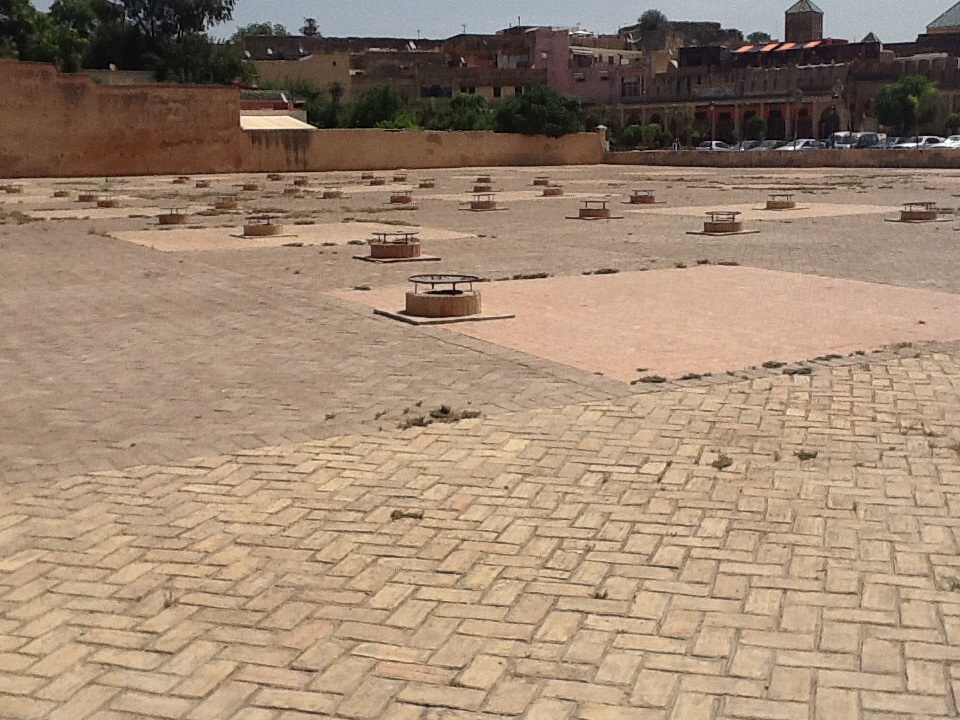
Meknes, located on a fertile plain north of the Middle Atlas, was the most fortified city in Morocco and was the home of King Moulay Ismail in the 17th century, a long-lasting king who served on the throne for almost 50 years. He used black Africans as slaves and soldiers, maintained a calvary of 12,000 horses, and turned a blind eye to Moroccan piracy, since he was the beneficiary of the captives (mostly white) on-board the pirated ships. When ambassadors would come from the Vatican or other countries to ransom their citizens, he benefited from their payments. Some of the prisoners converted to Islam; today anyone whose last name is Allej (?) is known to have Christian origins. On our tour today we saw his granaries, his stables, his dungeon, and his mausoleum. (The history of Morocco and piracy is quite interesting. It actually plays into the Moroccan belief that they are the first nation to have recognized the newly-formed United States of America in 1776.)
Today we also visited the old Mellach (Jewish quarter) in Meknes, in which there used to be 20-50,000 Jews; now there are 50 total Jews, only 4 families live in the old Mellach area. We visited the now-defunct synagogue in the Mellach as well as the 700-year-old Jewish cemetery. I had a good cry at the conclusion of that visit when the caretaker led us in the Mourners’ Kaddish prayer for all those buried in the cemetery who no longer had anyone to remember and say Kaddish for them.
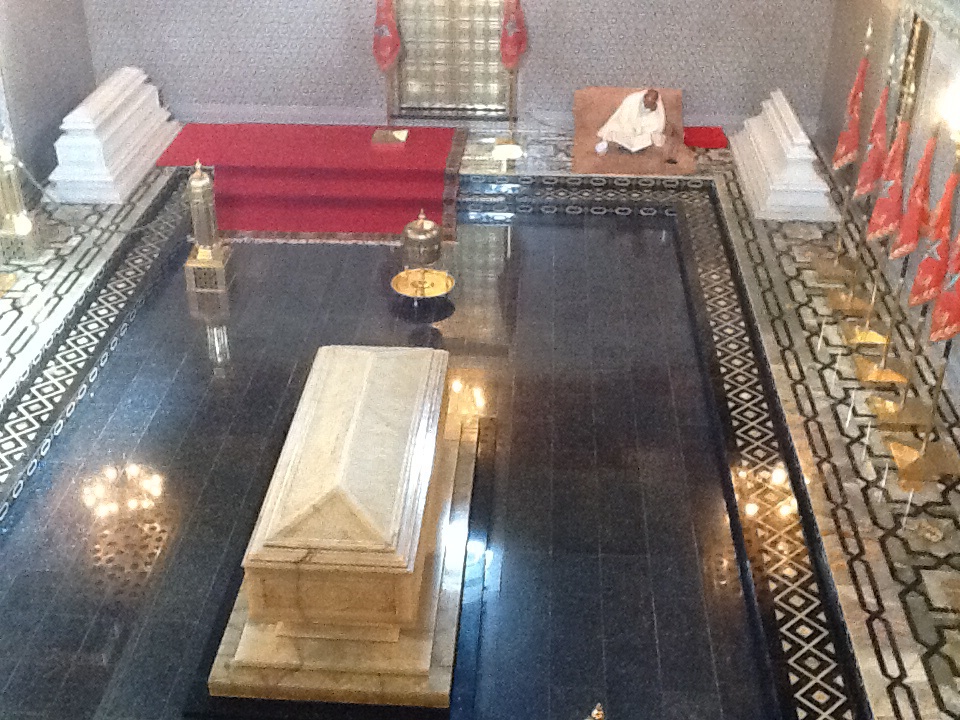
After a visit to the market in Meknes, where the spices and olives were gorgeously displayed, we left for Rabat to visit the mausoleum (considered an architectural gem) of King Mohammed V, the first king of independent Morocco, considered the father of the nation. He was put on the throne by the French in 1927, though he was not the legitimate heir to the throne, and served until 1953. He was exiled by the French from 1953-5 for not condemning the independence movement. His uncle was placed on the throne in his stead. Mohammed V was again recognized as sultan upon his return from exile, protested against the French protectorate, achieved independence from France in 1956, and ruled again as king from 1957 until his death in 1961. He was initially buried in the royal palace in Rabat, and was re-interred in this mausoleum when it was completed ten years later. While his tomb is in the center, in the back you will see the tombs of his two sons King Hassan II (who ruled from 1961-1999) and Prince Abdallah.
For those who caught the article last Saturday, May 10 in the New York Times entitled “Rebel Prince Shines a Harsh Light on Morocco,” you will note that the deceased Prince Abdallah’s son, Prince Moulay Hicham el Alaoui, is a harsh critic of his cousin, the current king of Morocco.
This evening we met with Matt Lussenhop, the acting US Embassy Deputy in Morocco, for a very enlightening session. He noted the many positive changes he’s seen in Morocco since his first stint here from 1997-2000 — from better infrastructure to civil rights to better economic opportunities for its citizens. On the prince’s article in the New York Times, he said that previous interviews with him in Le Monde used to be banned here, but are no longer. There is a more tolerant view of dissent.
The deputy ambassador considers Morocco an important US ally and a good American partner. The king met with President Obama in November in the US, and Secretary of State Kerry visited Morocco just last month. The depth of the relationship is in the following areas:
1. Supporting economic and political reform in Morocco, such as women’s and migrant rights. All of this has been accelerated since the Arab Spring.
2. Military/security/counter-intelligence. Morocco is open to information-sharing and cooperation, and there are joint military operations.
3. Finding opportunities for American business and creating business ties between the two nations. (Morocco is one of the few Middle Eastern countries with which the US has a free-trade agreement.)
4. Cultural and educational exchanges. Many US students are now coming to Morocco for their Arabic studies rather than to Cairo as they would have done 5 years ago; and Moroccans come to the US for schooling, as well.
On the question of relations with Israel, the deputy ambassador said that this king’s father, King Hassan II, was more international in outlook and had relations with Israel, seeing himself as a player in the Arab-Israeli conflict. However, this current king, Mohammed VI, is more inner-focussed on the problems of Morocco and the saying here is “Taza (referring to a poor city in Morocco) not Gaza.”
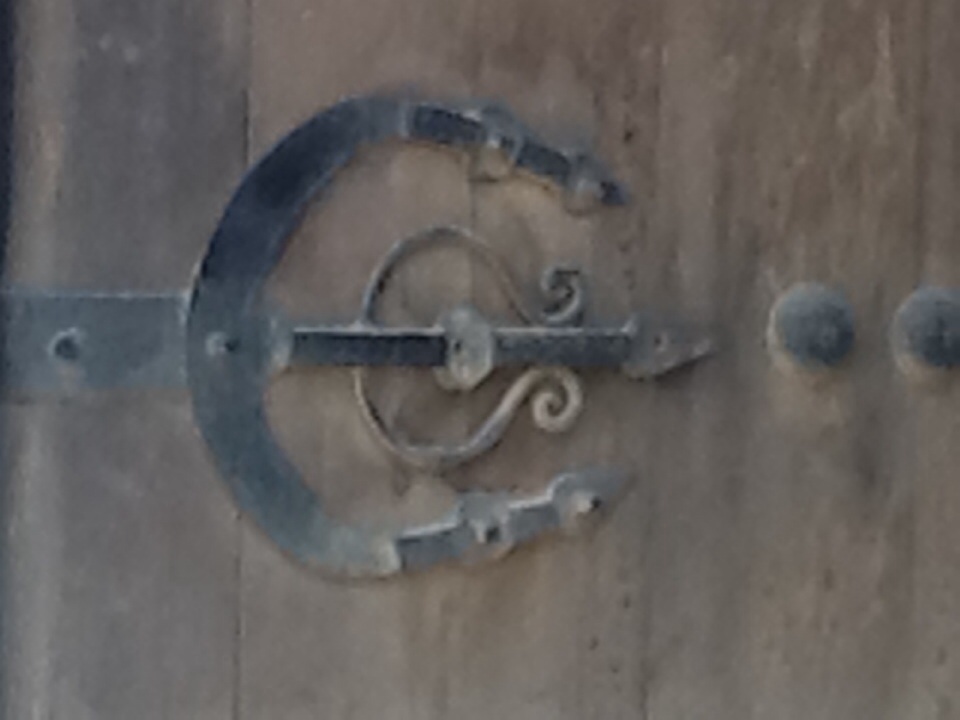
It is now midnight here and again, I’m not sure I will be able to download photos to the blog. If I am, I would love to include a photo of a strange looking hamsa, often found sideways like this on doors, called here in Morocco “the hand of Fatima.” (Fatima was the Prophet Mohammed’s daughter.) As many of you know, I love hamsas, and have already bought myself some memorable examples to bring home with me.
Until tomorrow.
The 30th day of the Omer — Gevurah/Discipline in Hod/Humility
If I was excited by our adventures in Volubilis yesterday, that didn’t come close to the thrill of our touring day in Fez today. This is a magnificent city, rich in history and teeming with life. Once considered a political center, it is now more the artistic, spiritual and intellectual center of Morocco. Fez is home to the University of Al-Karaouine (Al Qarawiyyin), considered the oldest continuously operating academic degree-granting university in the world. Did you know that?
The full tour started with glimpse of the American Fondouk, a refuge and charitable veterinary clinic for pack animals, thanks to the generous gift of an American named Amy Bend Bishop who was horrified by the care of the animals when she visited Morocco in the 1920’s. We then took in a panaromic view of the Medina (old city) of Fez from a 16th century fortress called Borj Sud, before descending to the city and visiting the Mellah (old Jewish quarter) of Fez.
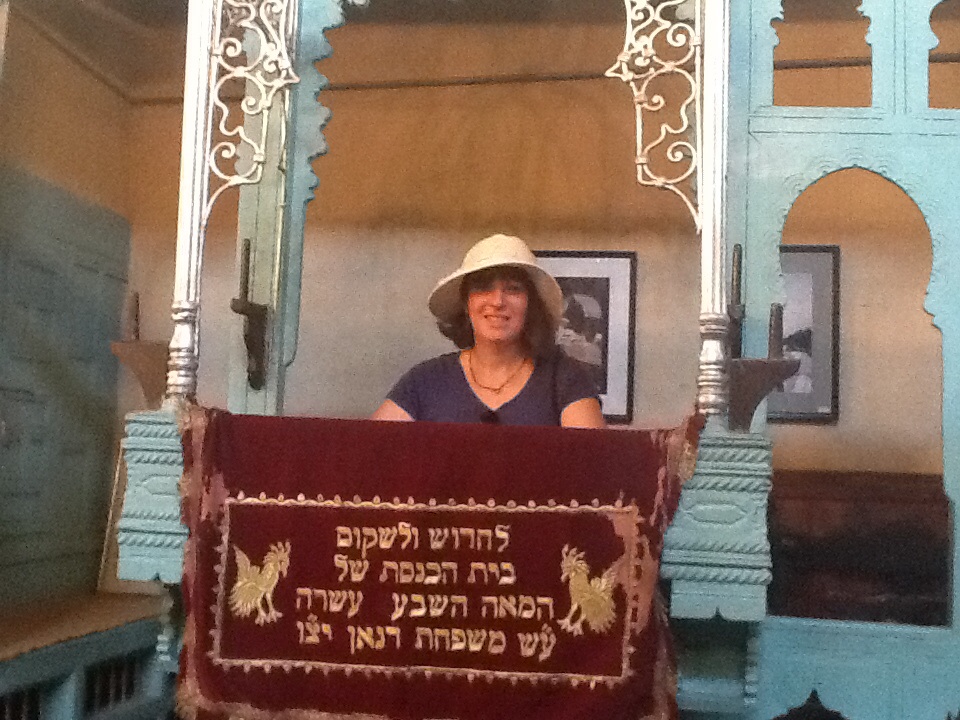
Here I am (neither preaching nor singing) on the pulpit of the Ibn Danan Synagogue, a restored ancient synagogue. We also visited the Jewish cemetery.
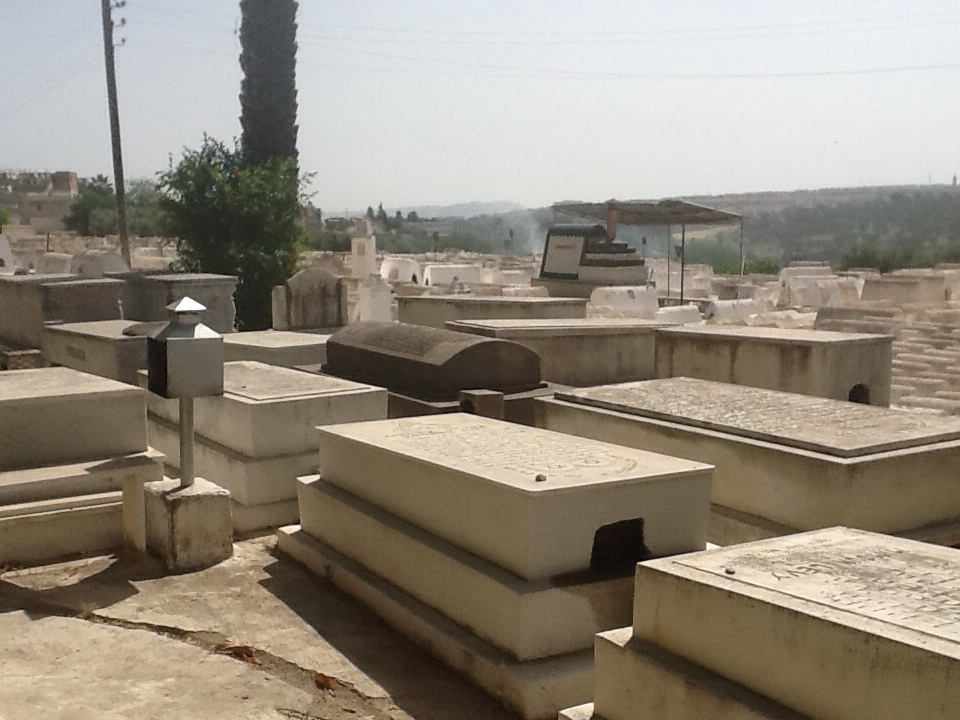
You will note that here, as on the Mount of Olives in Jerusalem (I believe I spoke about this in January 2013 in the “Nerves, Graves and Scrabble” post) that it is common for these above-ground gravesites to include an enclosed hole in which to burn yahrzeit candles on the anniversary of the death. For some of the more famous rabbis buried in the cemetery, a larger oven and chimney is provided, since these candles are burned not only on the yahrzeits/anniversaries, but also on Fridays and other special occasions. In this cemetery one of those larger ovens is provided at the tomb and pilgrimage site of Lalla Soleike, a Jewish woman martyr. The Road to Fez by Ruth Knafo Setton, one of the books I read before coming to Morocco, first introduced me to this legendary woman, believed to have martyred herself rather than convert to Islam to be married to the Sultan.
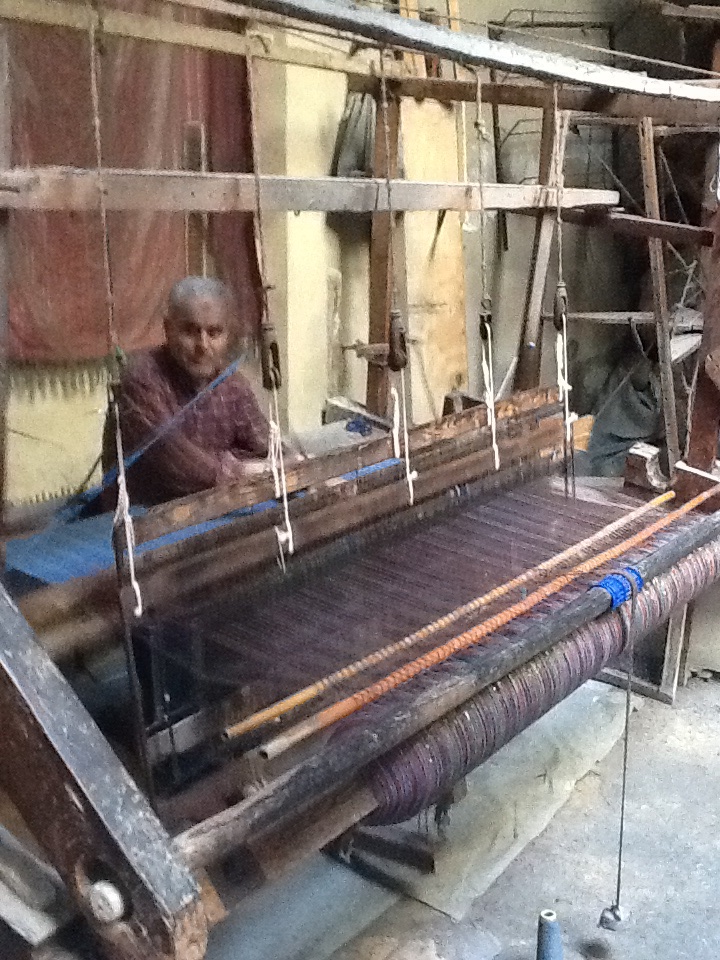
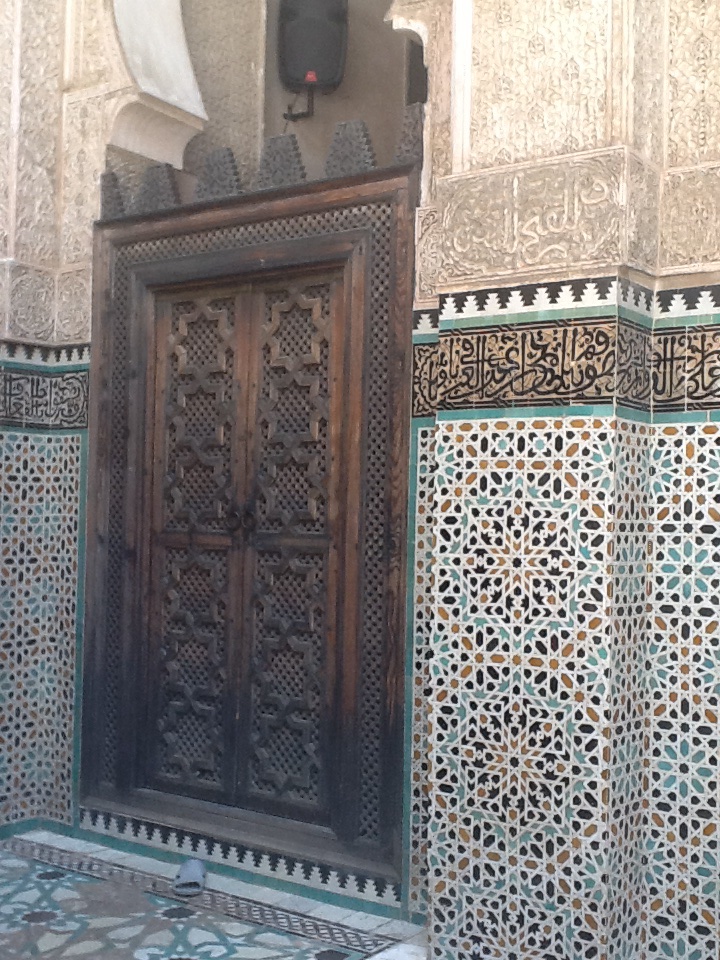
Much of our afternoon was spent walking in the ancient walled city of the Medina (some parts dating from the 9th century, some from the 14th), the largest marketplace/souk in the world in which cars are not allowed. For those who have walked the winding alleyways of the Old City of Jerusalem, that is a piece of cake compared to this Medina. Here we saw the breathtakingly gorgeous Madrasa Bou Inania, founded in the 14th century, one of the few religious places in Morocco that is accessible to non-Islamic visitors; the presumed home of the great Jewish scholar Moses Maimonides, who lived in Fez for ten years until he was 25; the Museum of Wooden Arts; and many artisans at work — metalworkers, tanners, weavers, and potters — each an expert in his craft. In Morocco, the agave plant is used to make silk. Here are some pictures of the crafts and craftspeople at work.
I came back to a lovely swim at our hotel, an old palace, and an outdoor dinner on the terrace with live Arabic music and the call of the muezzin in the background. It was like heaven.
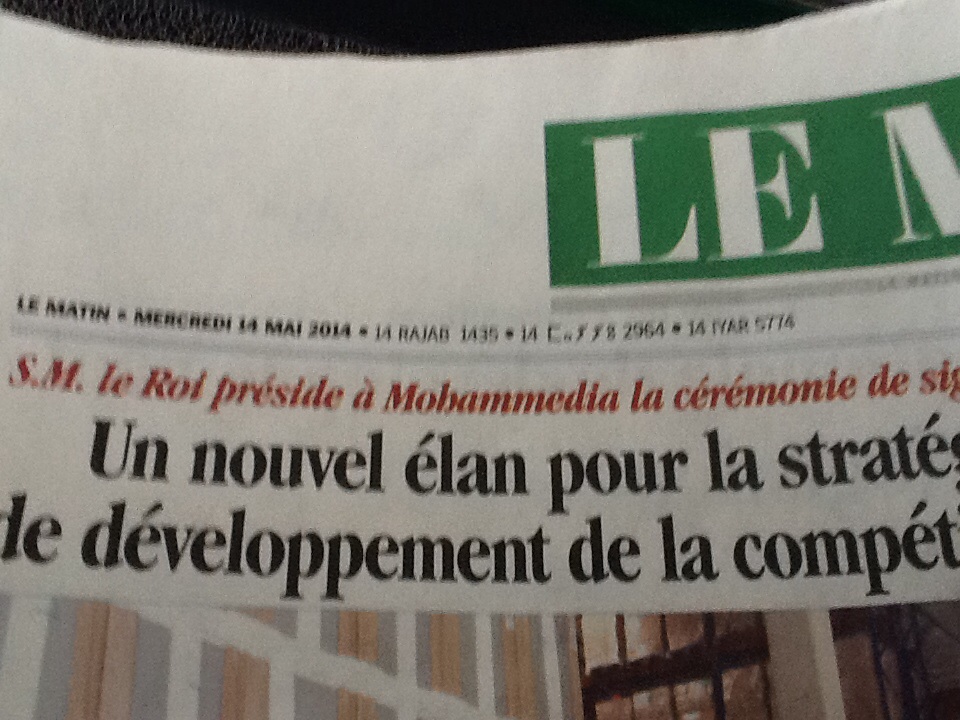
I am also including a picture of the daily French government newspaper, Le Matin. Take note that in keeping with the new Moroccan Constitution which I mentioned in an earlier post, the dates on the paper include the Hebrew date (14th of Iyar) as well as the date in Berber, Arabic, and Gregorian. For a country with so few Jews left, this is quite amazing. (BTW, we were told that the new Constitution was inspired by the Arab Spring.)
We leave in the morning for Meknes and then Rabat (redux).
(PS Again it seems that I am unable to download photos into my post. Hopefully, I will be able to do so tomorrow night from our new hotel. If it has to wait until I return to the US, I will update the posts then with the photos and you can find them all by going to http://www.paminjerusalem.com.)
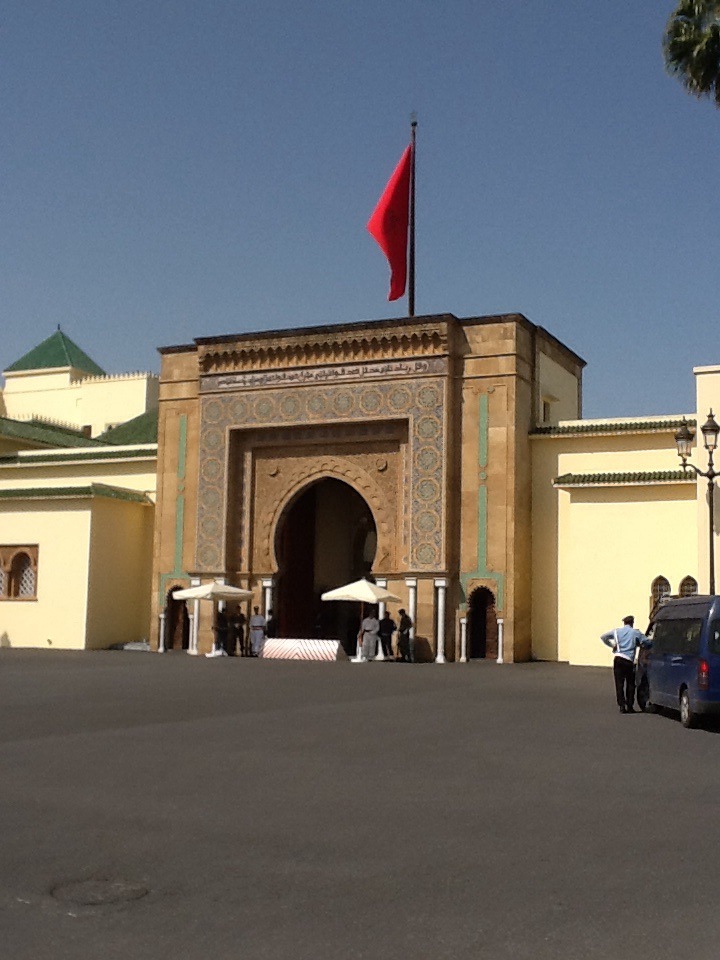
29th Day of the Omer — Chesed (lovingkindness) in Hod (Humility or Glory) We left Casablanca this morning with the ultimate destination of Fez, though we made several stops along the way. First we stopped at the King’s Palace in Rabat (one of approximately fifteen royal Moroccan palaces). The men in white outside the gates are of the Tworig (?) clan, for many generations the only group ever allowed to guard the king due to their extreme loyalty.
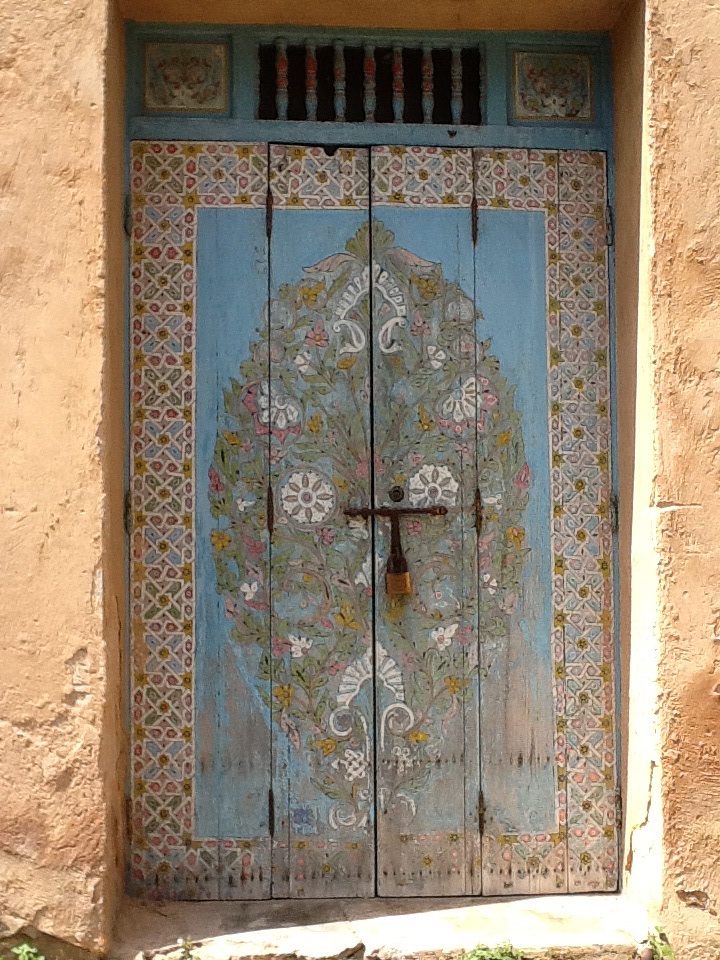
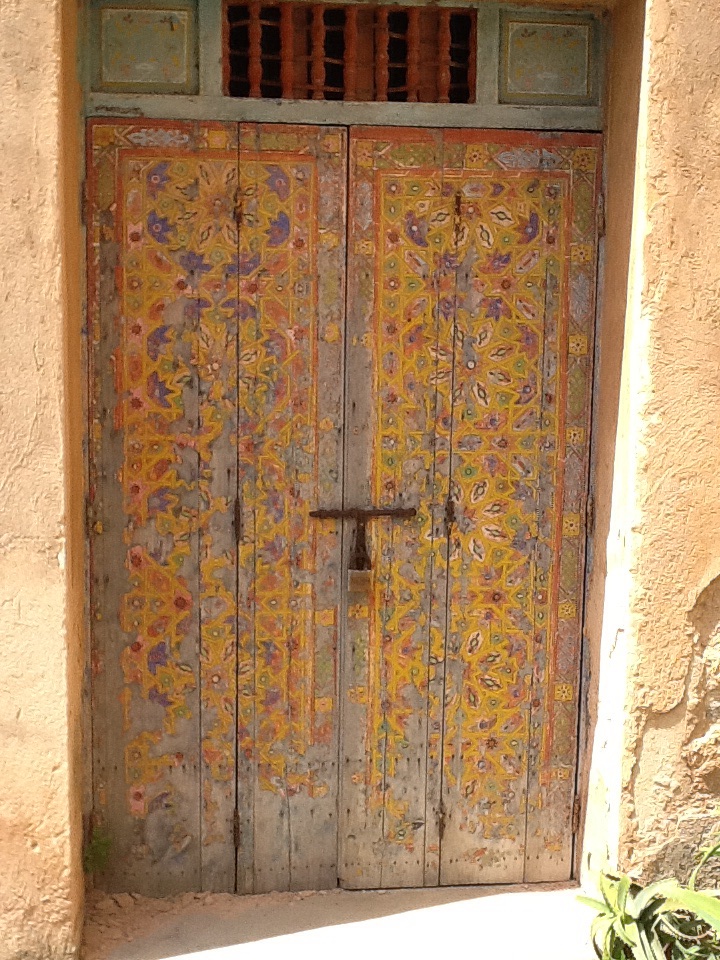
From there we visited the walled city of Rabat, the Casbah des Oudayas. We walked winding streets not unlike those in the Old City of Jerusalem, where I was especially taken by the beautiful doors. 
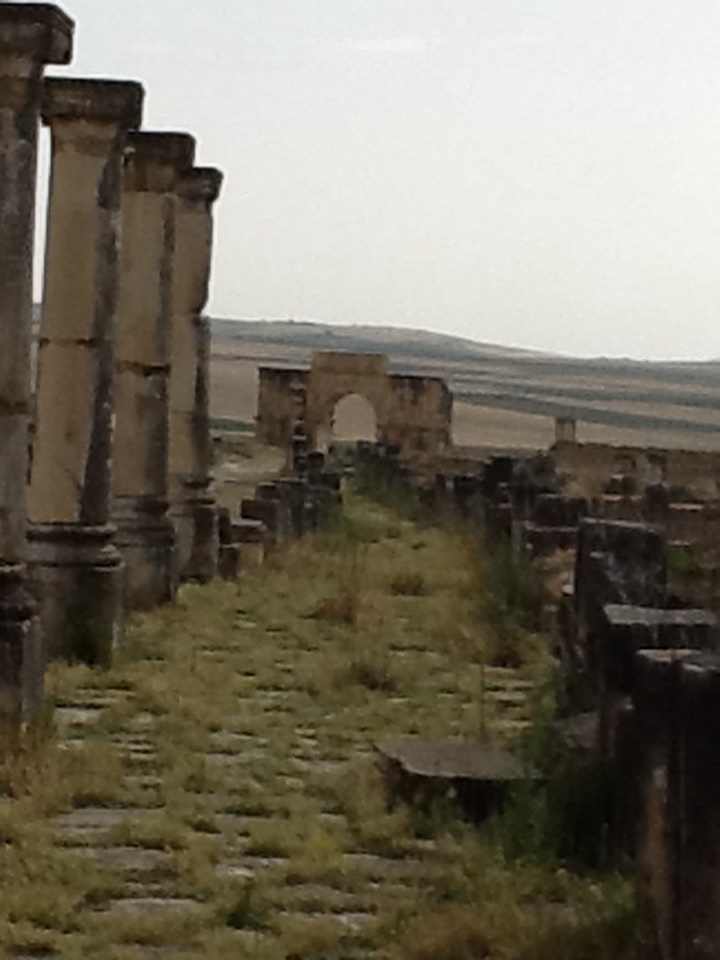
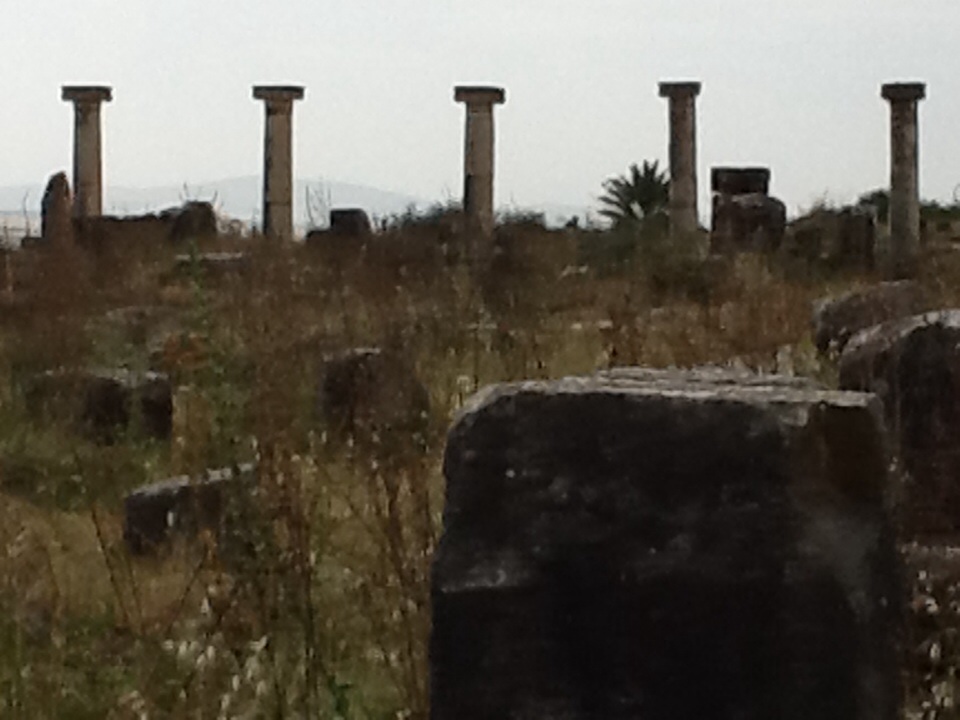
From Rabat (which we will be visiting again later in the week), we drove past Mouley Idris, the holiest site in Morocco to which a pilgrimage is made every year, en route to Volubilis. Volubilis is a UNESCO World Heritage site, founded in the 3rd century BCE, which became an important outpost of the Roman Empire. When the Romans left, later generations of Moroccans who did not know the Roman history, called the site “Pharaoh’s Palace,” a reference to the Pharaoh we know from the Book of Exodus and the story of Moses. There was apparently a Jewish community in Volubilis and we saw one tombstone from there inscribed with Hebrew letters. I’m not one usually interested in ancient ruins, so when I say this place was breathtaking and mindboggling, believe me, it was — you would surely think so, too. Again, the photos won’t do it justice since you won’t see the vastness of the site.
In 1755, an earthquake which destroyed Lisbon also covered over this entire site in Morocco. From 1915-1931, the French excavated 1/3 of the city. It is unlikely that the rest of it will ever be excavated, as this is not a Moroccan priority. From Volubilis, we drove 1-1/2 hours to Fez, which we will have an opportunity to explore tomorrow.
I’ve been having WIFI problems and it’s late, so I just want to get this off. It may be that I won’t be able to post any photos with this.
It has been nearly a year since I last posted. Something about traveling seems to inspire me to keep a blog journal of sorts. This Moroccan trip is no exception.
Besides that, it is now the 27th day of the Omer period, and I had promised myself last year that I would keep a blog of my Omer “journey” from Passover to the holiday of Shavuot. I guess that starting at day 27 of 49 is better than none at all, but I wish I had done so earlier.
According to the count, this is the week of Endurance (netzach in Hebrew) and today is the day of Bonding (yesod) within that week.
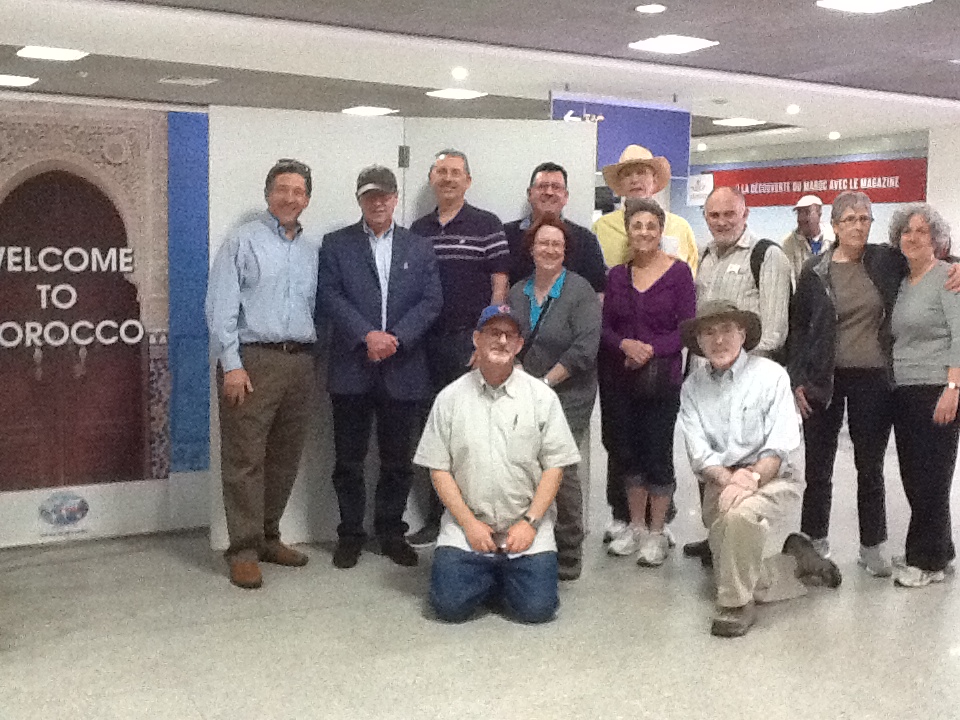
Today has been both — a test of my endurance as well as the beginning of the “group bonding” experience. Though not all pictured below, we are a group of about 10 Reform rabbis, some with spouses, some solo, one with his brother.
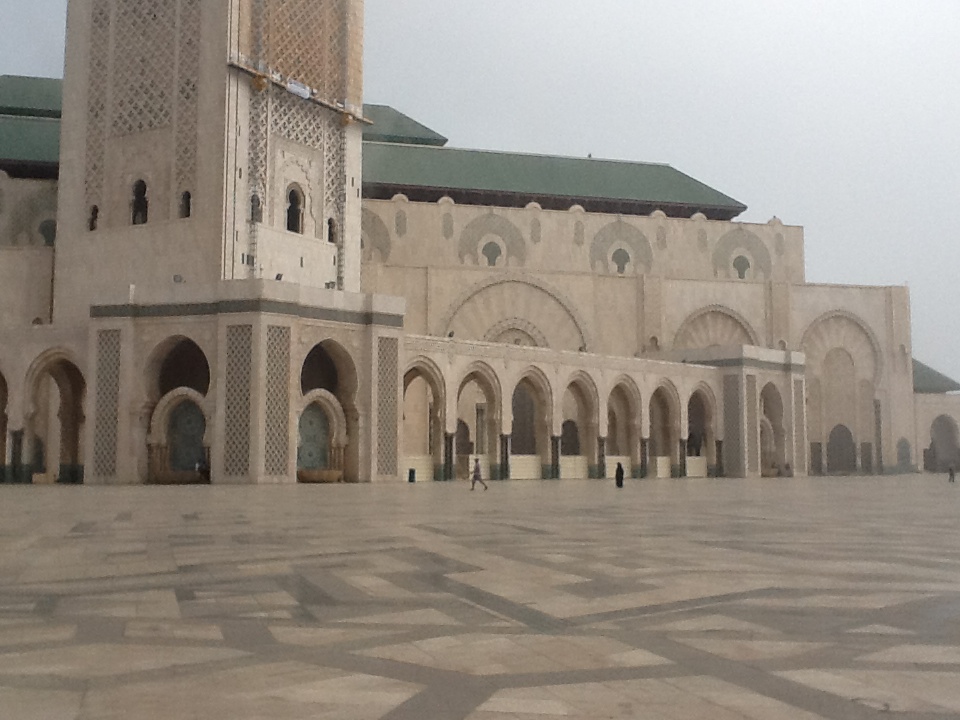
In any case, after about two hours of sleep on the plane last night (which made for the Endurance part of today), we hit the ground running when we landed at about 7:30 this morning . We began at the mosque of Hassan II (Hassan II was the last king of Morocco and the father of the current king, Mohammed VI). Completed in 1993, this is the third largest mosque in the world (after Mecca and Medina), has the world’s tallest minaret, and is the only one that allows non-Moslems to enter it. It is truly breathtaking and my photos won’t do it justice, so I’m adding only a couple.
This is an outside view. It was so misty from the ocean (the mosque is right next to the Atlantic Ocean), the minaret was shrouded in fog. Inside, there was magnificent artistry of all kinds from tiling to woodworking. There was a purposeful intention in the design to draw on both cathedral-like elements (in the grandeur and high ceiling of the inner sanctum) as well as of the synagogue with a women’s balcony.
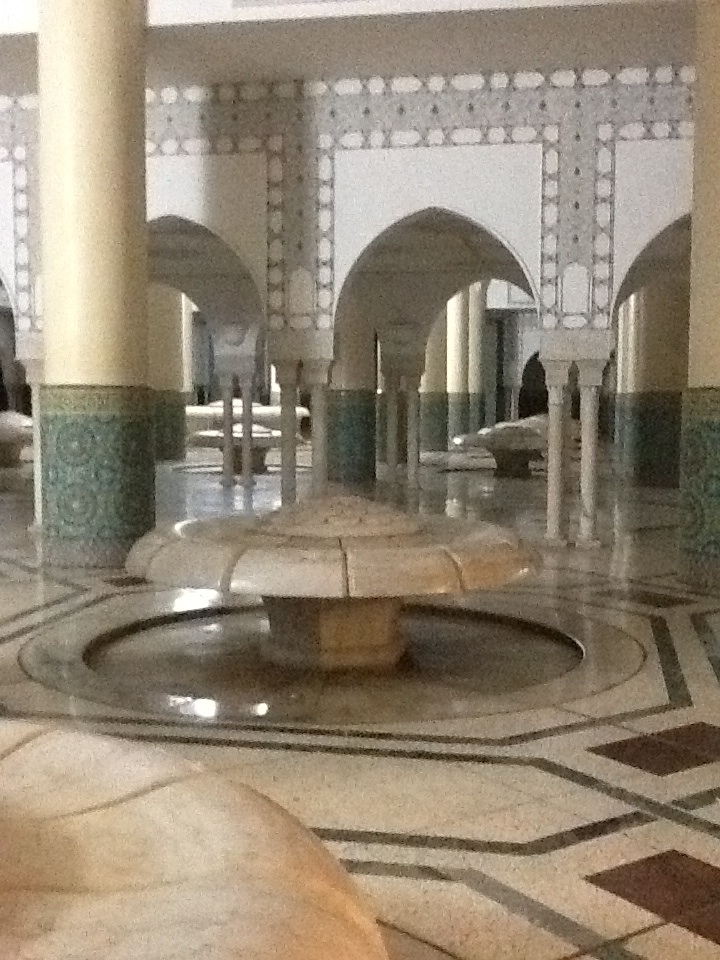
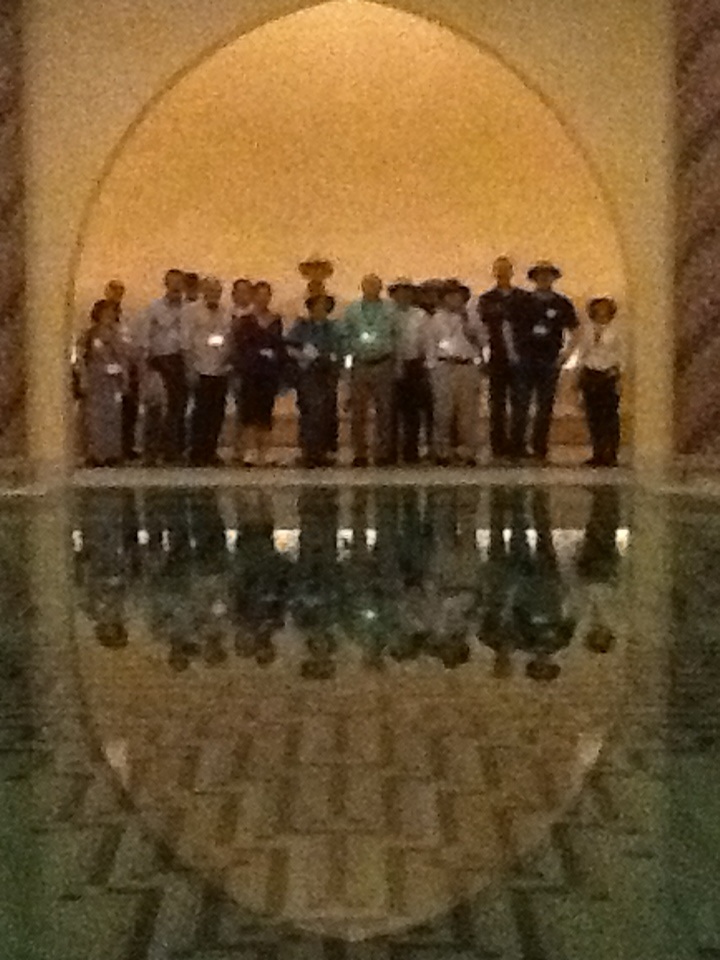
Downstairs were all of these fountains for pre-prayer ablutions, as well as a chamam bath. Our guide got a terrific shot of us on the other side with a reflection in the pool.
From the mosque, we visited the Museum of the Jews of Morocco (the only Jewish museum in the Arab world), Beit El synagogue, and several sites funded by the JDC (Joint Distributions Committee), including the Oeuvre de Secours aux Enfants clinic which serves the medical needs of the indigent and elderly Jews of the community. Unfortunately, we did not have an opportunity to visit the Maimonides school, a Jewish school that teaches both Jews and Muslims. French is the main language, Hebrew the secondary language, and Arabic the third. It seems a great model of co-existence.
The Moroccan Jewish community is very proud, very tight-knit, and very loyal to Morocco. Even those who emigrate come back regularly to visit. Of the many books I read about Morocco leading up to this trip, both memoir and fiction written by non-Jews, Jews always figured into the story-line somehow, which indicated to me how integrated the Jews have been into Moroccan society.
This perception was reinforced by a statement that King Mohammed V (the current king’s grandfather) is known to have made: “There are no Jews in Morocco. There are only Moroccan subjects” when the Vichy government of France wanted to impose anti-Jewish laws on Morocco’s Jews.
Additionally, the current constitution of Morocco, written in 2011, while affirming Morocco as a Muslim country, also honors the pluralistic nature of the cultures that have influenced it, specifically mentioning African, Andalou, Hebrew, and Mediterranean.
There are the counter-narratives, as well, of course. Distrust of the Jews reared its ugly head after the creation of the state of Israel. And I’m sure when we are in Fez we will hear more about a massacre of Jews that took place there in 1912. I may leave Morocco less sure of the health of the relationship of Jew and Muslim in Morocco than I have begun with.
I look forward to keeping in touch with my journey and with you through this blog.
Blessings on this 27th day of the Omer.
A season is set for everything, a time for every purpose under heaven:
A time for being born and a time for dying; a time for planting and a time for uprooting;
A time for killing and a time for healing; a time for tearing asunder and a time for building;
A time for weeping and a time for laughing; a time for wailing and a time for dancing;
A time for throwing stones and a time for gathering stones; a time for embracing and a time for shunning embraces;
A time for seeking and a time for losing; a time for keeping and a time for discarding;
A time for ripping and a time for sewing; a time for silence and a time for speaking;
A time for loving and time for hating; a time for war and a time for peace.
(from Ecclesiastes 3)
Rabbi Pamela Wax
Remarks
May 26, 2013
Oberlin 30th Cluster Reunion Memorial Service
Paul Offenkrantz just sang for us a beautiful rendition of Ecclesiastes’ poignant poetry about there being a time for everything under heaven.
Which leads me to two questions: First, Is there, in fact, a time — a singular, unique time — for every purpose under heaven? And secondly, is there time — enough time, sufficient time — for every purpose under heaven?
The poet Yehuda Amichai, in riffing on Ecclesiastes, wrote (QUOTE):
“A human being does not have time to have time for everything,
does not have seasons enough to have a season for every purpose.
Ecclesiastes was wrong about that.
A human being needs to love and to hate at the same moment,
to laugh and cry with the same eyes,
with the same hands to cast away stones and to gather them,
to make love in war and war in love.
And to hate and forgive
and remember and forget,
to set in order and confuse,
to eat and to digest
what history takes years and years to do.” (UNQUOTE)
In disputing those well-worn words from Ecclesiastes, Amichai reminds us of one of the first adult lessons of my life, perhaps of yours: to see gray where once I only saw black or white, to hold the dialectic gently in the palms of my hands, or to stand on the fulcrum of the see-saw, teeter-tottering between here and somewhere else, between this choice and that one, now knowing more clearly that either choice, either path, has its own delights, riches, heartbreaks, doubts, and sufferings.
And what Amichai says about history taking years and years to eat and digest events, to set them in order and make sense of them, we are here to do in but one short weekend.
How is it that we – who, but a blink-of-the-eye-ago — were in our early twenties with our arms wise open, our hearts timid but hopeful, our whole LONG lives spread out in front of us, seemingly FOREVER — how is it possible that we are here to commemorate the deaths of 65 of our classmates, equally young and immortal in our mind’s eye? How is it that we young’n’s — still wet behind the ears in so many ways — are here today to face our own mortality? How is it possible that we who have come here to Oberlin to celebrate, rejoice and remember the good, the joyful, the hopeful, are also necessarily called here to the underbelly of life, to “laugh and cry with the same eyes”?
Mind you, I do not speak only of the loss of 65 of our peers, but collectively of all of our incumbent losses – losses both physical and spiritual.
And I also speak of the loss of some of our beloved faculty members. Particularly in my heart this weekend is the memory of English professor Phyllis Jones, my advisor, who took her own life in the summer of 1982, just after I graduated.
I suspect that thirty years ago, the vast majority of us were innocents in regards to death, human suffering, and our own mortality. I imagine that many, if not most of us had healthy, if not vibrant parents. Many, if not most of us, had living grandparents. To what extent were you personally acquainted with the angel of death back then?
Thirty years later, the vast majority of us have likely glimpsed the Angel of Death up close and personal. Certainly grandparents have died, but so have many of our parents, aunts and uncles, in-laws, mentors and teachers. It is certainly imaginable that death has taken peers: certainly our 65 classmates, but also colleagues, cousins, siblings, friends, and perhaps spouses. Tragically, some may have lost children. Some in our midst are bereaved now at this very moment; some are suffering or have suffered some sort of illness, the loss of a marriage, the pain of being single, the stress of being of the sandwich generation, and all of us carry (we are Obies, after all!) the pain and suffering of the greater world. The world has become more real for us in the last 30 years. We feel young, yes, but our bodies are telling us we’re aging; we are each more aware of our own mortality.
Just as this college reunion itself is a touchstone of our past, helping us to integrate our younger selves with the early-fifty-somethings we’ve become , so is this memorial service a touchstone, healing us, I pray, “with the wisdom that death gives urgency to life”.
So well-captured by various verses in the book of Psalms are some of the spiritual truths of my existence, and perhaps of yours, as well: such as knowing that life is short, like a breath, like a fleeting shadow; such as knowing that I always walk in the shadow of the valley of death, but that I need not fear if I carry God and hope with me; knowing that the living, not the dead, have the exquisite duty and privilege to praise; knowing that there are narrow places, but that in trusting the Infinite One they often open up into wide, expansive places of the soul. These spiritual truths ground me in faith and hope, but that faith was hard-won, something I had, then lost, then rebuilt slowly and surely over many years.
I stand here and wonder about what has sustained each of you during this past 30 years, and what role Oberlin may have had in helping you to develop those inner resources.
There is a story about God’s adversary, Satan, (Sah-TAHN in Hebrew) who gathered his assistants one day to decide upon the most effective method of destroying the meaning of people’s lives. (That’s what Satan does, after all.) One demon suggested; “Tell them there is no God.” Another proposed, “Tell them their sins are so great that they’ll never be forgiven.” “No,” Satan replied, “none of these things will matter to them. I think we should simply tell them: ‘There is plenty of time.’”
Simply tell them, “There is plenty of time.”
There is so very little time; we don’t, in fact, have time to have time for everything. The best we can do is to love — deeply and well — all the holy things that death can touch.
Let us grab – SEIZE! — at what is left of the celebration of this weekend together, cognizant that at succeeding reunions we will assuredly be adding more names to the list of those losses our classes have sustained. Let us celebrate our 18, 19- and 20-something selves who once walked this campus, and may we horde the memories elicited by our visit here, our walks across campus, and share them with others, so that those memories may live beyond ourselves. May we deepen our ties to each other, sharing our melodies and the songs of our lives, so that our melodies, our songs touch others, giving us our immortality, our legacy. May our values live on, well beyond our own years.
And may we honor our 65 classmates and all our deceased loved ones through memory and through deeds of loving-kindness, perpetuating ideals important to them. So may their souls be bound up in the bond of life. May they rest eternally in dignity and in peace. And we say: Amen.
REUNION (noun) – definition
Collins English Dictionary
1. the act or process of coming together again
2. the state or condition of having been brought together again
3. a gathering of relatives, friends, or former associates
Webster’s 1913 Dictionary
I graduated from Oberlin College on Memorial Day 1982 and just returned from my 30th college “cluster” reunion along with the classes of 1983 and 1984. I believe it was my third reunion return to campus. I went for either my 5th or 10th, and I went for my 25th, as well. The weekend was filled with reunions of all types — reunions with classmates; reunions with a former professor, the Hillel rabbi, and a former staff member with whom I had worked closely; reunions with places of meaning and memory on- and off-campus; and most importantly, a reunion with my younger self. That reunion with self wrought some painful memories and the recognition of some forgiveness and healing work that I will need to undertake with self and others.
I had the honor of delivering the reflections and benediction at the memorial service for those classmates who have died (see the next post, “Reunion Memorial Remarks”). I was humbled by several classmates telling me that that “sermon” was a meaningful highlight for them in its bittersweet rendering of all of our journeys over the past three decades. Though my mandate was to speak to the death of my classmates, I also included mention of Professor Phyllis Jones of blessed memory, who had been my college advisor.
In the fall of 1980, I attended (along with about 14 or 15 other “Obies”) Oberlin’s London semester abroad, a program for junior-year English majors in which we HAD to (poor us!) attend theatre twice a week and discuss that experience in class the following day. That year the program was co-taught by English professors Nick and Phyllis Jones, a married couple with two small and beautiful children, Anna and Christopher. Our classes met in their apartment. Phyllis was my advisor, but upon my return to Oberlin in the fall of 1981 (after I spent another semester away from campus on kibbutz), Phyllis was on-leave due to depression. The summer after I graduated, she committed suicide.
I remember how I struggled for many years with what her suicide meant. Not yet understanding the nature of depression, I had a difficult time comprehending how it was possible for someone with a successful career, a wonderful and supportive spouse, and young, beautiful children to make such a decision. If Phyllis could do it, I wondered, what might lead me (someone yet unformed, not really happy, with no real focus) to make that decision, as well? She was my mentor, someone I idealized, and it seemed to me that I had to consider that possibility for myself, to put myself in her shoes, to imagine the what-if for myself. I do think that, on some level, that foray into Phyllis’s unknown heart is part of what led me to the rabbinate and particularly to my current career in pastoral counseling. I now walk in a lot of other people’s shoes, empathizing with the pain of their lives.
With my friend Cindy’s suicide in March (which I wrote about in my last blog post on March 15th), I have been thinking again of Phyllis, and even more about Nick. Not only did Nick survive Phyllis’s suicide, but his beautiful daughter Anna was tragically murdered in 1998 by her boyfriend at Bard College.
I had a couple of opportunities to reminisce with Nick during this reunion weekend, to find out what has grounded and supported him through all of this grief. He is a kind and and gentle man, a resilient survivor, happily remarried, and I am so grateful for his friendship. He reminded me that he had written me a letter of recommendation for rabbinical school.
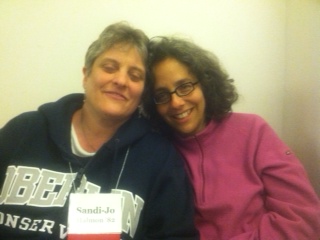
Chaim joined me on this adventure to Oberlin, as he did for my 25th reunion, falling in love with the campus and the idea of Oberlin, coming to understand the value of a residential college (an experience he didn’t have) and of a small liberal arts college where I was really known and seen. We walked a lot both on-campus and all over the beautiful town of Oberlin, visited with a number of friends (a particular shout-out to Sandi Jo and Beth!), attended symposia, and listened to a lot of concerts (Oberlin has a world-class conservatory and we heard graduating seniors who knocked our socks off on a variety of instruments).
Sandi-Jo and Beth Early morning mist, reservoir at the “Arb”
Sunday night of reunion/commencement weekend, unless it rains, is always memorable and beautiful — called Illumination Night, hundreds of Japanese lanterns are strung up in Tappan Square, with live music and homemade pie, an event attended by Oberlin residents, graduating students/families, and alums.
Oberlin is truly a unique and wonderful school. Though my nephew Steven will be attending UMass Amherst in the fall, I have a dream of my nieces Hannah or Sarah or my nephew Marcus attending there… and offering me more opportunities to visit this beloved and special place!
In speaking with Nick, Chaim analogized my attachment to Oberlin with that of the Hebrew poet Judah haLevi to Eretz Yisrael. HaLevi wrote that he was in the west (Spain) while his heart was in the east (Eretz Yisrael); Chaim commented that I am in the east (New York/Massachusetts) while my heart is in the Midwest (Oberlin). Chaim is only partly right — like HaLevi, my heart is also in Eretz Yisrael, but also in a number of other places.
I have had the good fortune to have a lot of different homes in my life — some were just physical places where I lived, but most were true spiritual homes. It is only in retrospect that I realize just how spiritual a home Oberlin was for me and how meaningful it was to return.
Chaim and I drove the nine hours each way to/from Oberlin listening to Barack Obama masterfully read his memoir Dreams of My Father (I listen to a lot of books on tape both for for 30-minute drives to work and on my drives between NY and MA, and he is truly a superior reader — dramatizing different voices effortlessly). That choice of reading material felt appropriate for the journey at hand: for Obama was writing about reuniting the facts and fictions of his father, as well as about ultimately reuniting with the Kenyan side of his family after his father’s death. In the book, he commented about Kenyans who have a home in the city but also keep a modest home on ancestral rural or village land. This second home is called “home-squared” (as in “home to the second degree”).
I have been thinking about that today, homes and homes-squared. As Chaim and I work out whether NYC or western Massachusetts is ultimately “home” and what role Israel will have in our lives moving forward, I add to the mix New Jersey (where I was born and bred), Oberlin, OH, Santa, Cruz, CA, where I truly came of age after college, and Boston, the other significant depots on the journey of my life.
All weekend, I kept thanking my parents, of blessed memory, for allowing me to attend Oberlin. It was a big financial investment for them, and while I took it for granted then, I am eminently grateful now. Thanks, Mom and Dad!
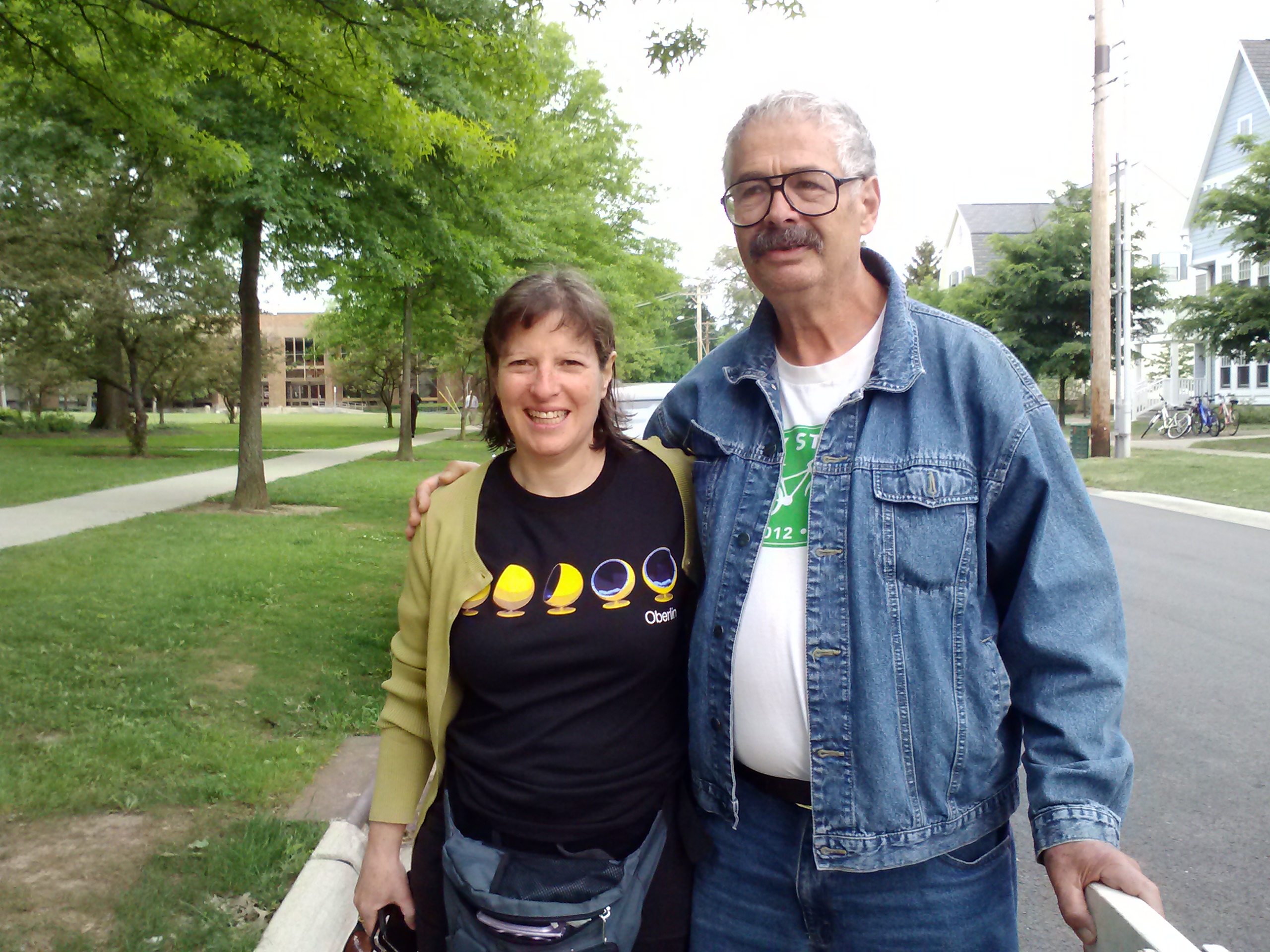
Me in “womb chair” in library (good for naps) My new womb chair/moon phase t-shirt