Just a few more photos from Sydney

We arrived home last night, recovering from our jetlag. I wanted to post just a few more photos before saying goodbye to my blog for this latest journey. (Sadly, my Ipad was already packed away, so I had to take these inferior shots on my Iphone.)

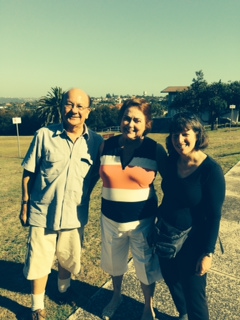
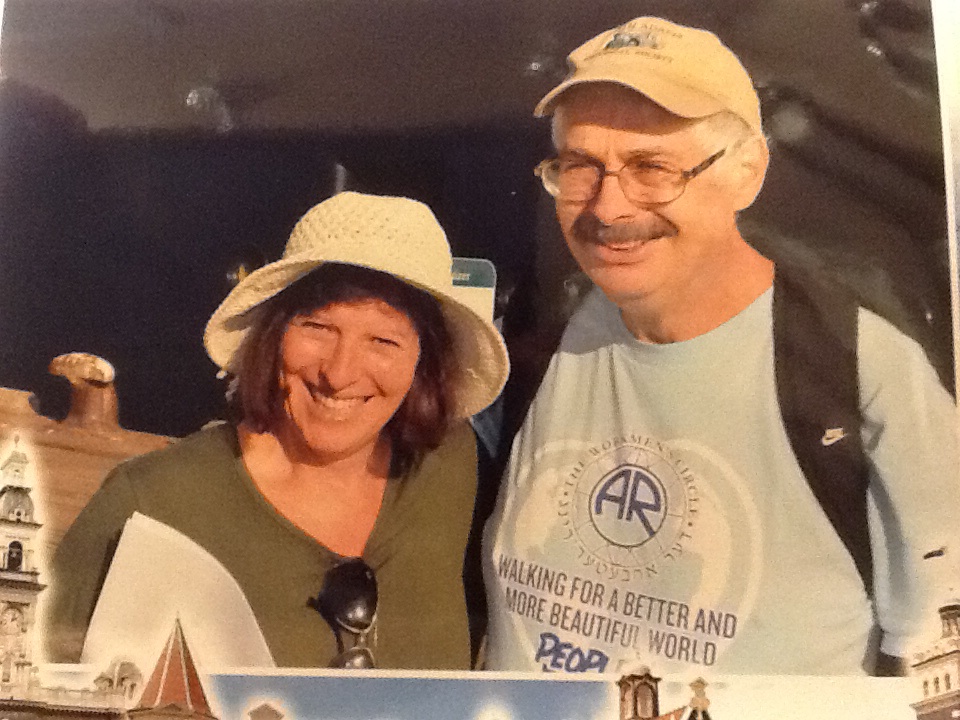
Bert and Dinah and me

Bert and Dinah and me

Bert and Dinah (folks who were on the ship with us and who also belong to the synagogue we attended on Shabbat) were kind enough to offer us a personalized tour of Sydney’s best views and some Australian history before driving us to the airport on Sunday morning. Bert and Dinah are both Egyptian Jews (he from a Sephardic family, she from an Ashkenazic one), though they met in Australia. They are terrific and knowledgable tour guides!

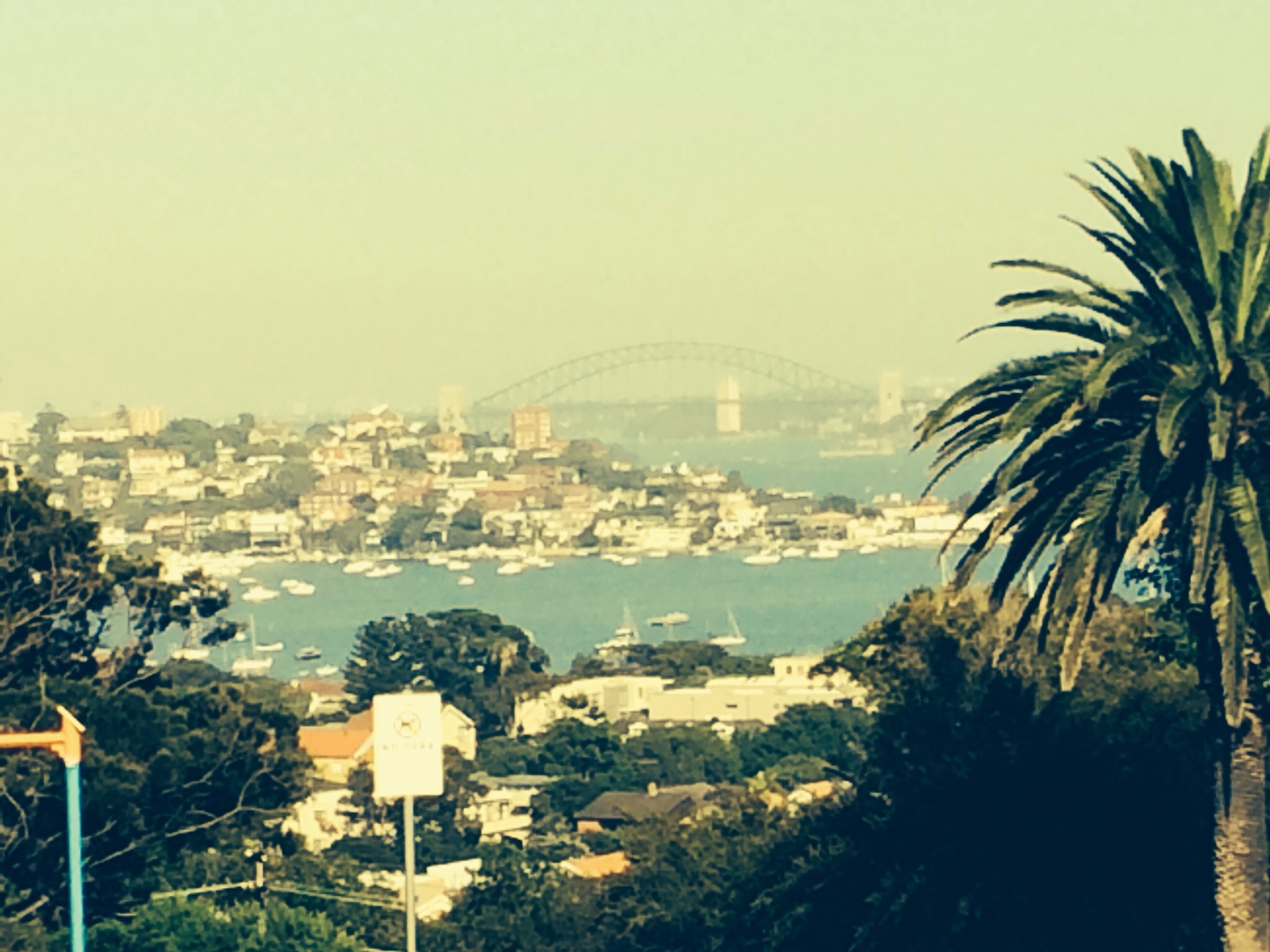
Harbor view (Harbor Bridge in background)

Harbor view (Harbor Bridge in background)

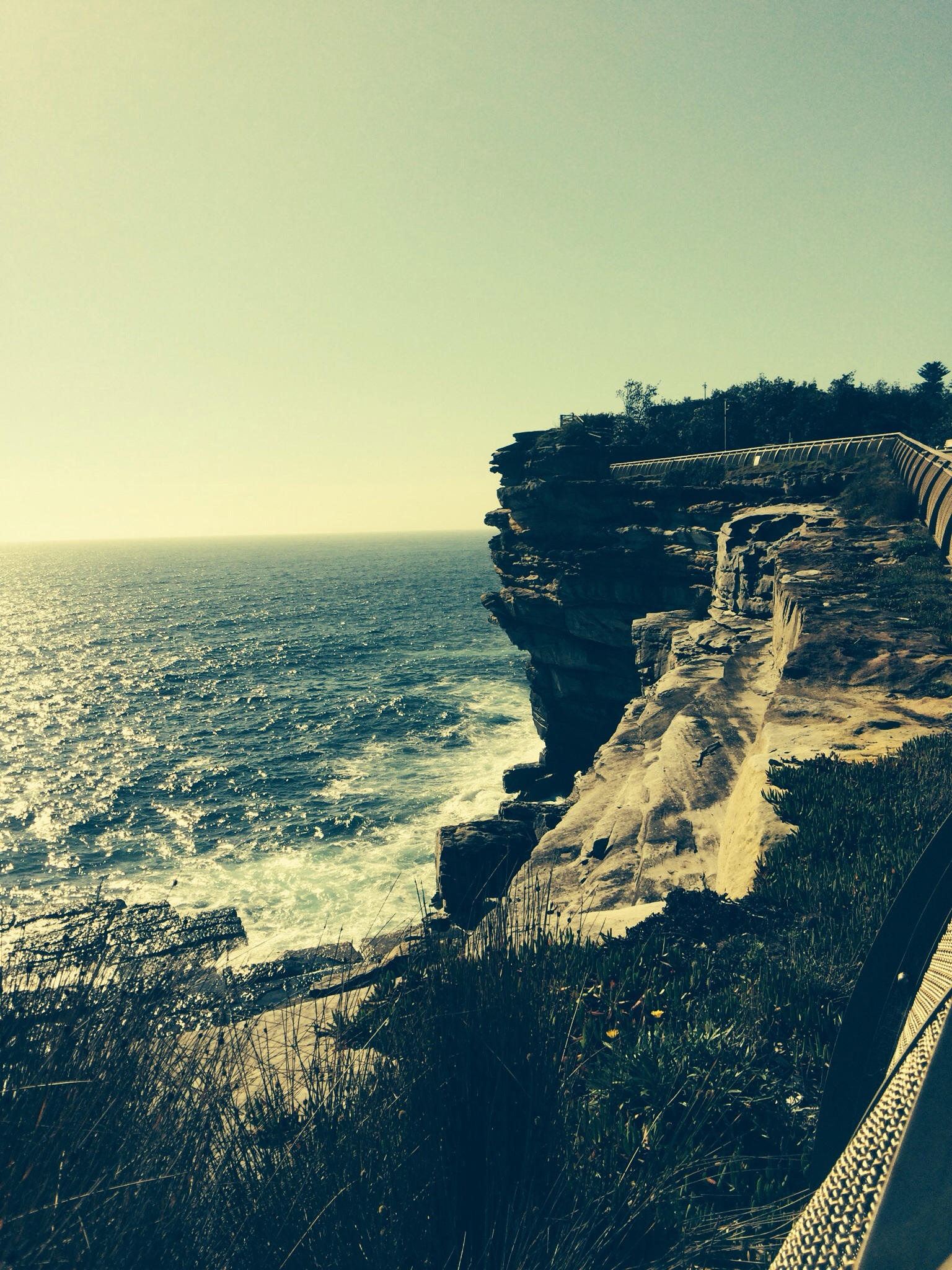
Hold onto hope, Help is always there. (Black Dog Institute)

“Hold onto HOPE. There is always HELP.” This quote was posted here by the Black Dog Institute due to the number of suicides at this site, South Head. In bad weather, the waves can reach the top of the cliff.

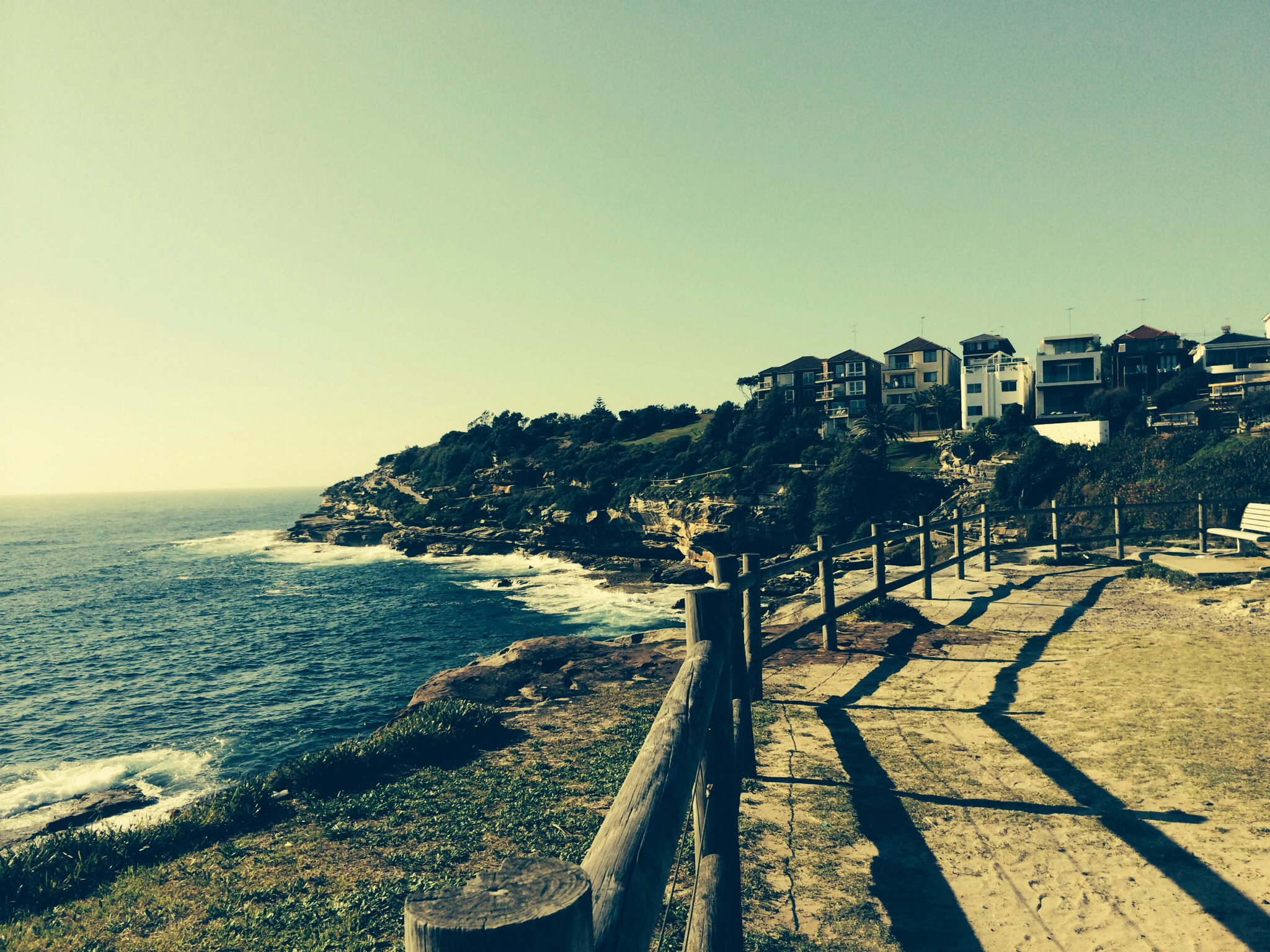
Bondi Beach

The famous Bondi Beach in Sydney. Just within the last 24 hours swimmers were evacuated due to multiple shark sightings there. In the harbor, nets protect swimmers from shark, but here in the ocean, swimmers must stay within the posted flags to be protected by the volunteer “lifesavers” (lifeguards).

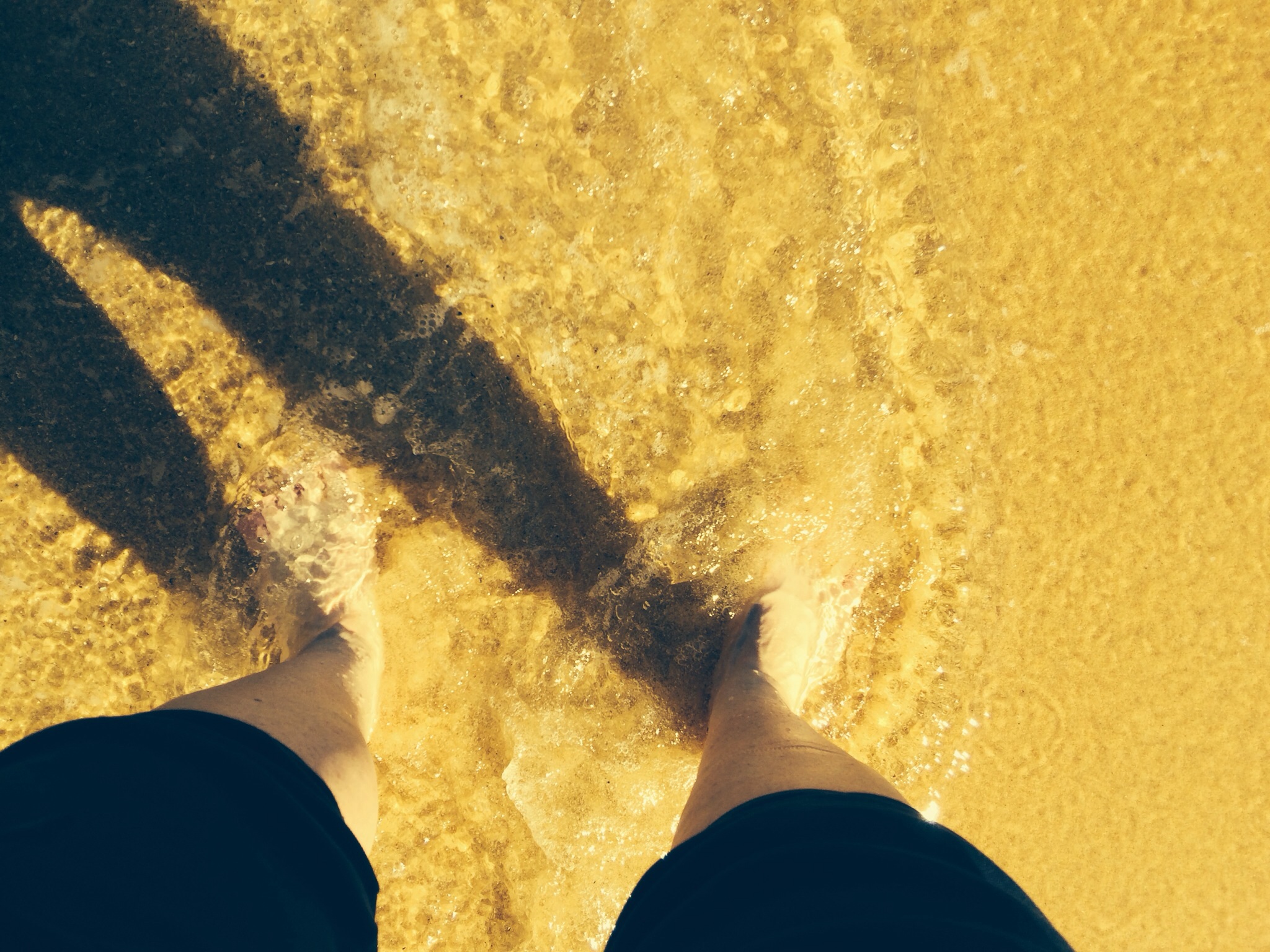
Dipping my feet at Camp Cove

Dipping my feet at Camp Cove. I had plenty of opportunities to swim in beautiful harbors and ocean waters throughout the trip, but there was always something else I chose to do instead. Finally, on my last day, Dinah urged me to take off my shoes and let the water flow!

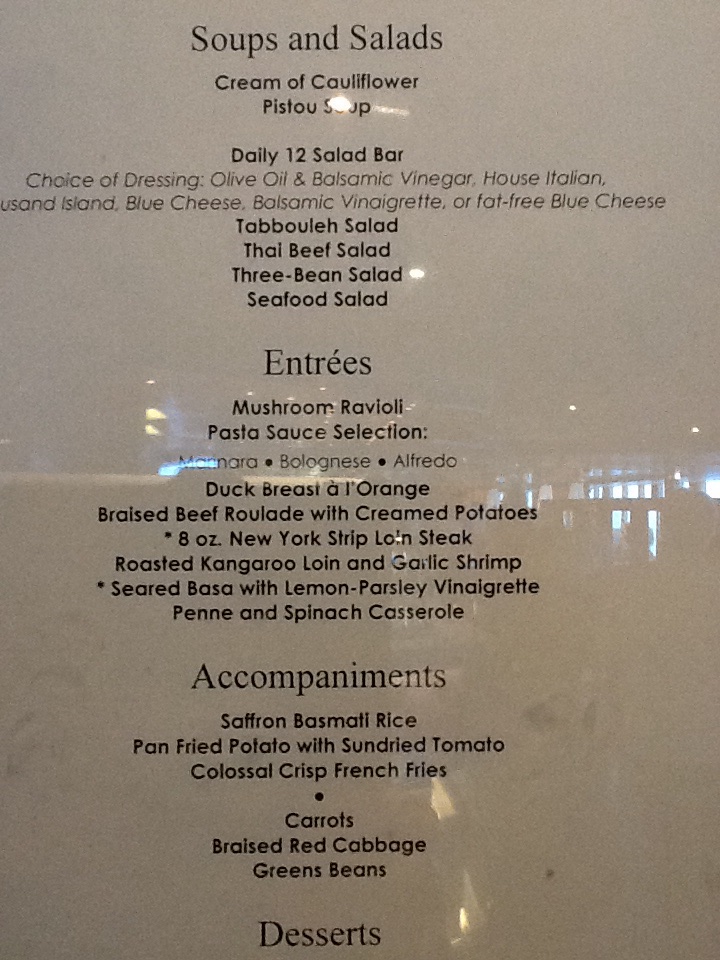
What follows is a menu from the ship on one of the first nights of the cruise. I was hesitant to post it earlier. I recommend that vegetarians and animal rights activists close this post now so you are not offended.

Kangaroo?

Kangaroo, anyone? (If you can’t read it, one of the entrees listed is Roasted Kangaroo Loin). Kangaroo and crocodile meat are both delicacies in Australia.

Blessings to all!

Bye-bye, Cruise! Hello, Sydney!

January 3, 2015

Shavua tov and happy new year!

The last days of the cruise included:

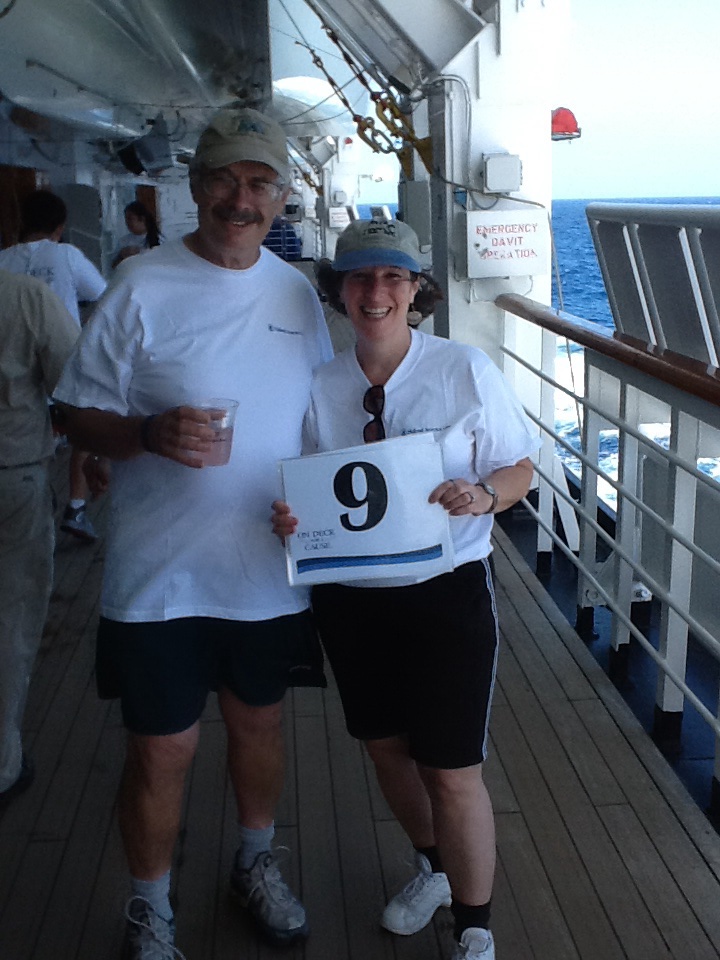
1. The 3-mile walkathon on December 31.  Three times around the deck is one mile, so here I am holding the sign for our last lap.
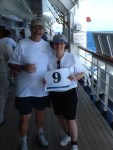
On Deck for a Cause (onboard cancer walkathon)
On Deck for a Cause (onboard cancer walkathon)

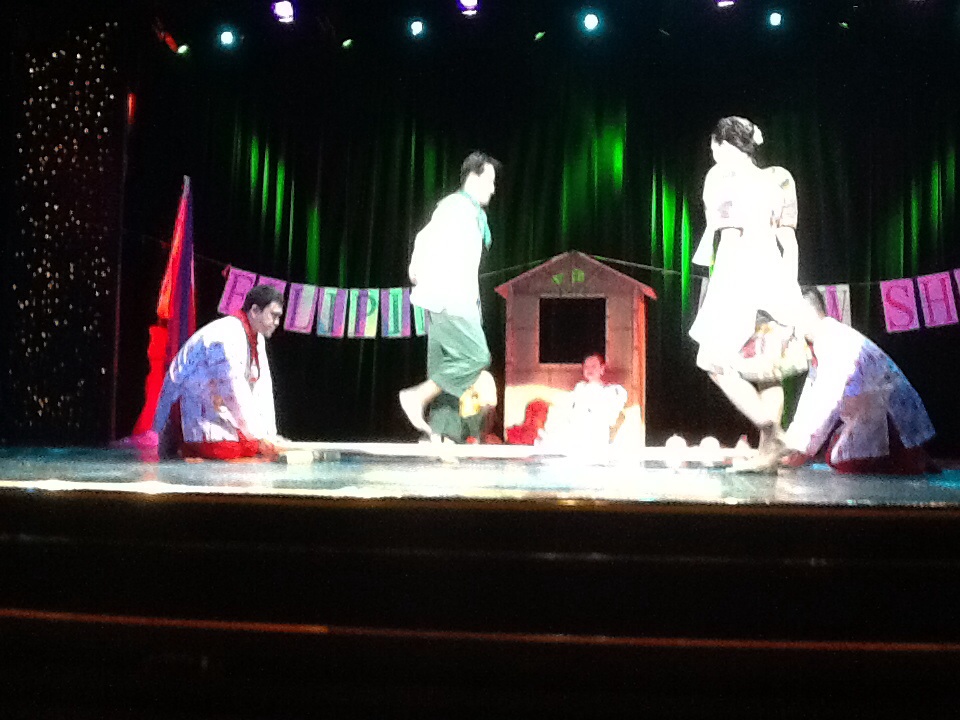
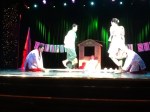
Filipino bamboo dance
Filipino bamboo dance

image

2. New Year’s celebrations. (This is the first year in several that I actually was still awake at midnight!) I hear that I missed something special by not already being back in Sydney on New Year’s Eve, however. Since it is the largest city that first rings in the new year, they apparently do it really big with grand firework displays over the harbor and opera house.
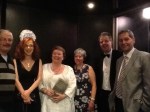
New Year's Eve (anyone surprised that Chaim is suit-less?)

New Year’s Eve (anyone surprised that Chaim is suit-less?)

3. My meeting with the ship’s captain on January 1. This was not a relished event (though I did want a photo for posterity’s sake). When the captain had made his daily announcement on December 31, I found it to be reactionary, offensive, potentially racially charged, and utterly perplexing. I felt I had a moral responsibility to respond, even if it means I don’t get invited for future cruises. I asked the cruise director what to do and he arranged a meeting. The captain graciously met with me to discuss the matter and then went back on the air to make a more acceptable new year’s greeting. Score one for speaking up!

By the way, when I first thought I might title this post “O Captain,! My Captain!” I googled it to remind myself of the Walt Whitman reference. I had forgotten that the captain he was referring to was Abraham Lincoln navigating the USA and exulting in the end of the Civil War and of slavery.
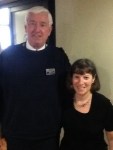
The captain and me
The captain and me

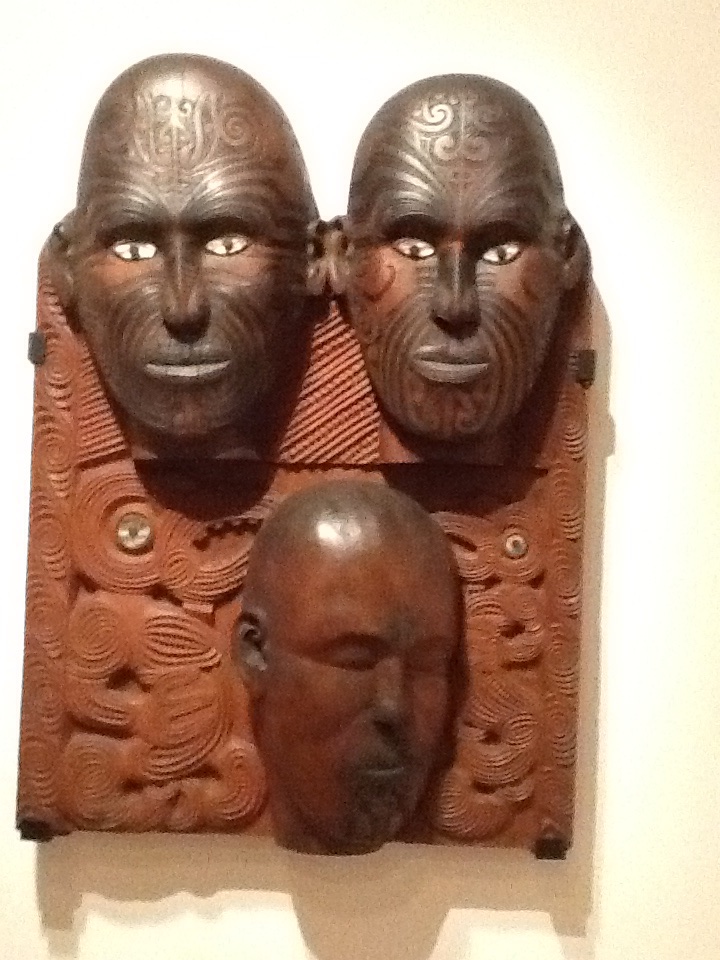
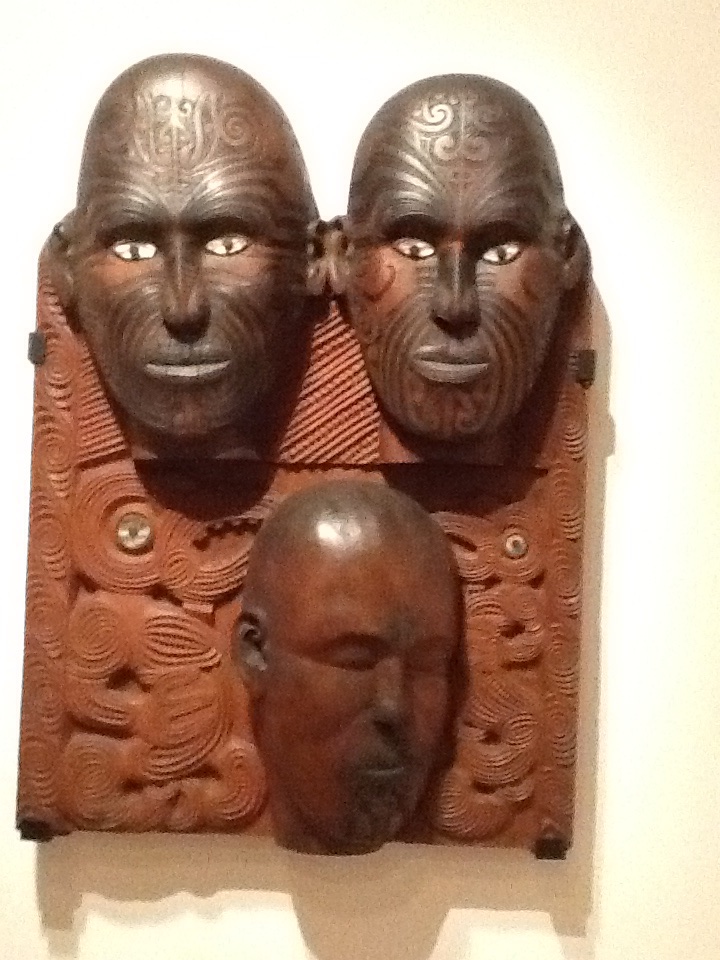
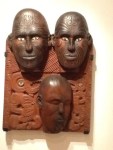
Contemporary Maori art
Contemporary Maori art

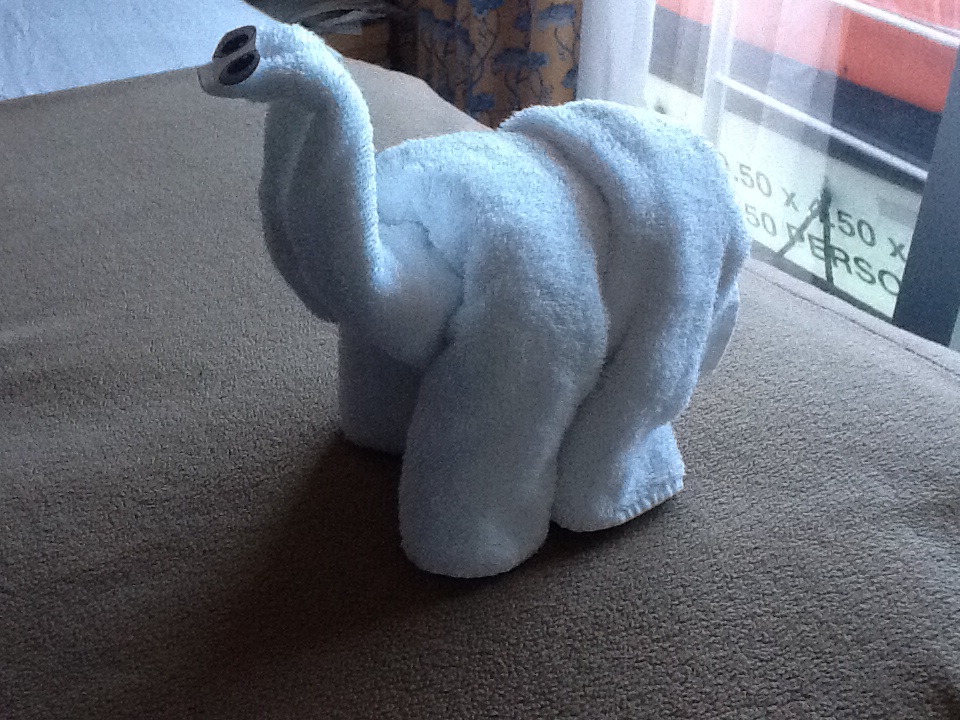
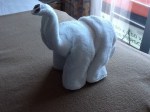
Towel creation by our cabin steward Anton (he made a different animal each day)

Towel creation by our cabin steward Anton (he made a different animal each day)

4. A wonderful performance of traditional Filipino dances presented by some of the Filipino staff onboard, including a mesmerizing bamboo dance in which the bamboo sticks are rhythmically tapped together while the two dancers skipped and danced in and out between them without getting hit.

Chaim and I disembarked from the ship yesterday (Friday) morning, took a cab to our hotel in Bondi Junction with a cabbie who shared his family’s fascinating story about growing up Chinese in Vietnam, having left everything behind in China under Mao and then again in Vietnam because of the war before coming to Australia to start all over yet again. His daughter’s name is Emily for Emily Bronte and his son is Jackson for Jackson Pollock! Everyone has a story; I’ve loved some of those I’ve unwittingly happened upon.

Chaim and I settled into our wonderful little studio apartment in a trendy neighborhood (at least 5 organic and health food stores AND an Apple store within 5 blocks) and then walked in really hot and humid weather to shop for today’s Shabbat lunch in a kosher market. We didn’t need to prepare for dinner as we had a Shabbat dinner invitation with Rabbi Jeffrey Kamins and his wife Caz.

It turns out that Chaim didn’t join me for synagogue and dinner as I made a boo-boo and had us walk in the wrong direction to Ocean Street in Bondi rather than Ocean Street in Woolahra (two different neighborhoods in Sydney with the same street name?) where the synagogue is located, and it was so hot and humid that Chaim was wiped out by the time we made it home (where I had to locate the rabbi’s home address in case I missed the end of the Shabbat service at the synagogue and to pick up a credit card to take a cab now to synagogue in hopes of making it before the end, which I did!).

Jeffrey Kamins is the American-born, HUC-trained rabbi of the 1500+ member Emanuel Synagogue which has both a Masorti (Conservative) and a progressive (Reform) service each Shabbat, as well as an occasional Renewal service. Jeffrey and Caz are great hosts, great company (another HUC colleague, Jordan Cohen, who is here on sabbatical from his Canadian congregation joined us, as well), and great cooks. We had a wonderful time learning about each other and talking differences in Australian, American, and Canadian Jewry.

Chaim and I started at the Masorti service this morning which Rabbi Kamins was leading and where Bert and Dina, two of my “congregants” from the ship, attend, and then went to part of the progressive service, as well. I was particularly impressed by a beautiful prayer for “traditional land owners” which they add to the end of each service, which recognizes the aboriginal First Nation peoples of Australia and the sacredness of the land on which we walk. I wonder if any of the progressive synagogues in New Zealand acknowledge the Maori population in the same way. And I also wonder what it would mean to add such a prayer in the US acknowledging Native Americans.

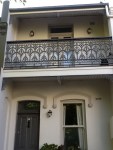
After lunch and a Shabbos shluf (nap), Chaim and I walked in the beautiful Centennial Park and wandered the side streets to locate good examples of Sydney lace, the metal lattice work found on the upper porches of many homes.

Bert and Dina will be picking us up early tomorrow morning to take us on a little tour of the city’s sights before our flight back to NY (where I see that the weather will, unbelievably, be in the 60’s and less shocking than I would have expected returning to).

If I end up with any good last-minute photos of Sydney, I’ll post from NY. Otherwise, I can’t predict when I will be blogging next. I am a sporadic writer, as you know, though it’s been so much fun!

Blessings to all for 2015!
image

Centennial Park, Sydney

Chaim in Centennial Park, Sydney

Sydney lace

Sydney lace
On Treaties, Apologies, and Whale Riding

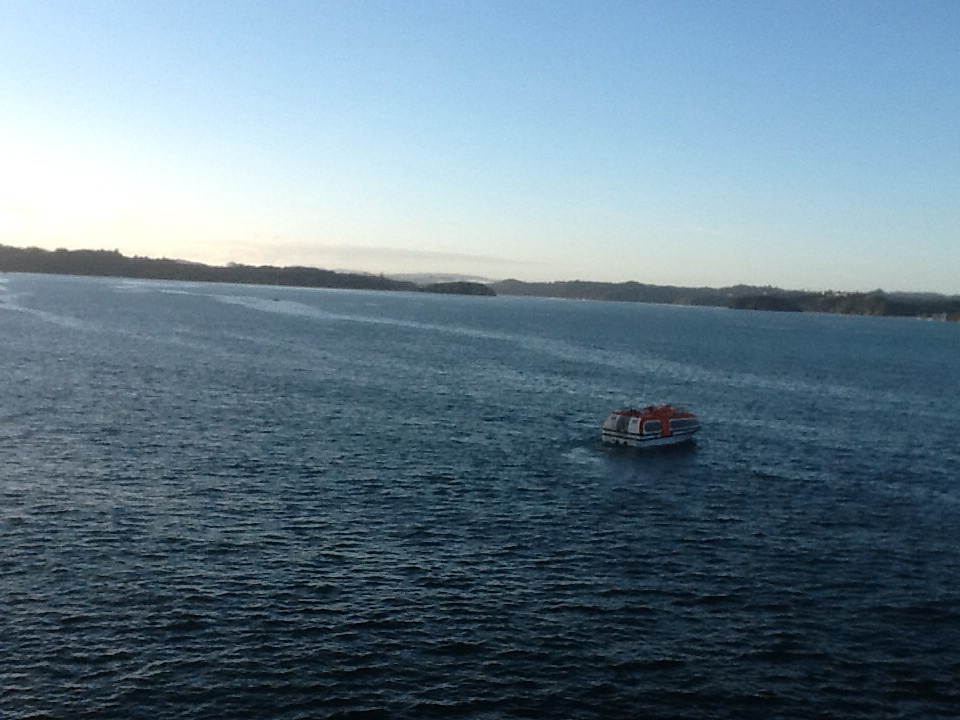
A tender boat transporting us to shore

A tender boat transporting us to shore from the ship. Not all our stops had docks for disembarkment.

December 31, 2014

This will be my last post before welcoming in the year of 2015, which will fall here about a day before it arrives to those of you in the U.S. Yesterday our stop (the last before we return to Sydney) was the Bay of Islands (specifically Waitangi), considered by guidebooks to be the second most beautiful spot in New Zealand. (Milford Sound and Fjordland National Park on the South Island where we started our voyage is considered THE most beautiful).

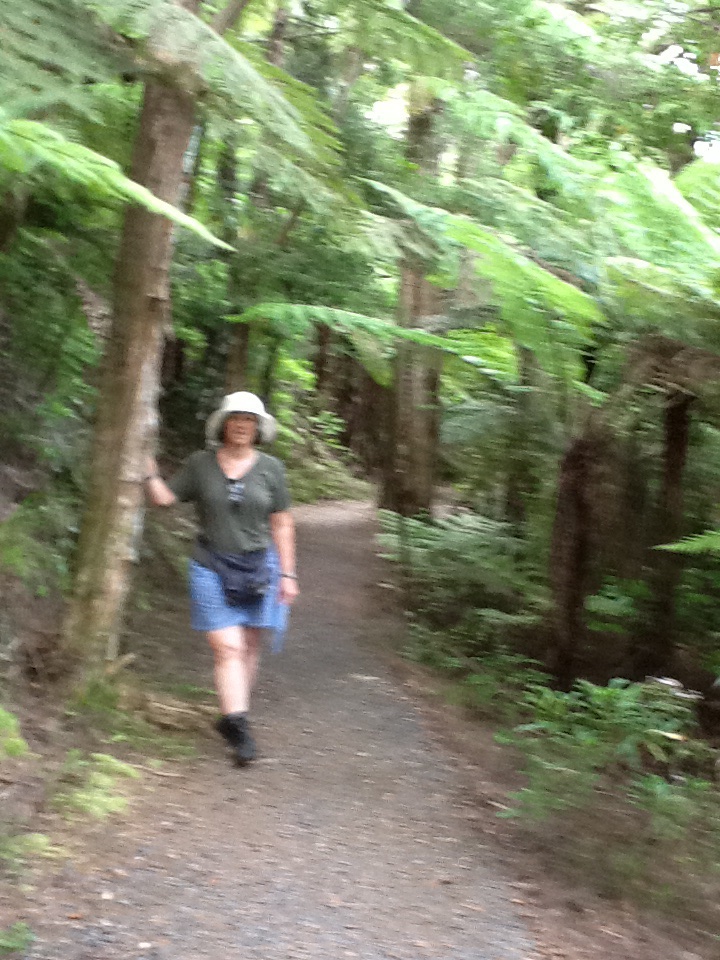
Here we walked into the little tourist town of Paihia and took a forest walk before returning back to Waitangi to visit the historic Treaty Grounds, where representatives of the British Crown (Queen Victoria) signed a treaty with over 500 Maori chiefs in 1840. The treaty is considered the founding document of the modern state of New Zealand.

Sadly, the English version of the treaty differed in some significant ways from the Maori version which the chiefs had signed. Therefore, some of the Maori’s sovereign and economic rights and privileges were, in fact, NOT protected. Not until the 1970’s after massive Maori protests did the Queen of England officially apologize to the Maori people for this breach. The Waitangi Tribunal was established in 1975 to address ongoing Maori concerns.

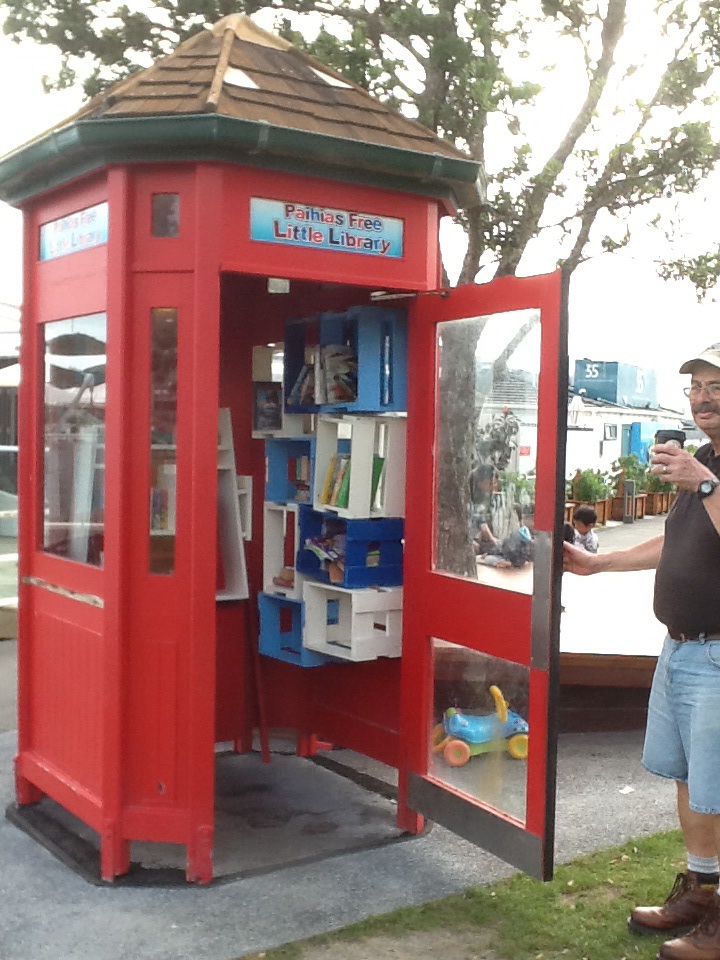
The Free Library of Paiua

The Free Library of Paihia –smallest in world?

Opua Forest Trail, Paiua

Opua Forest Trail, Paihia

image

Waka is made from large K tree

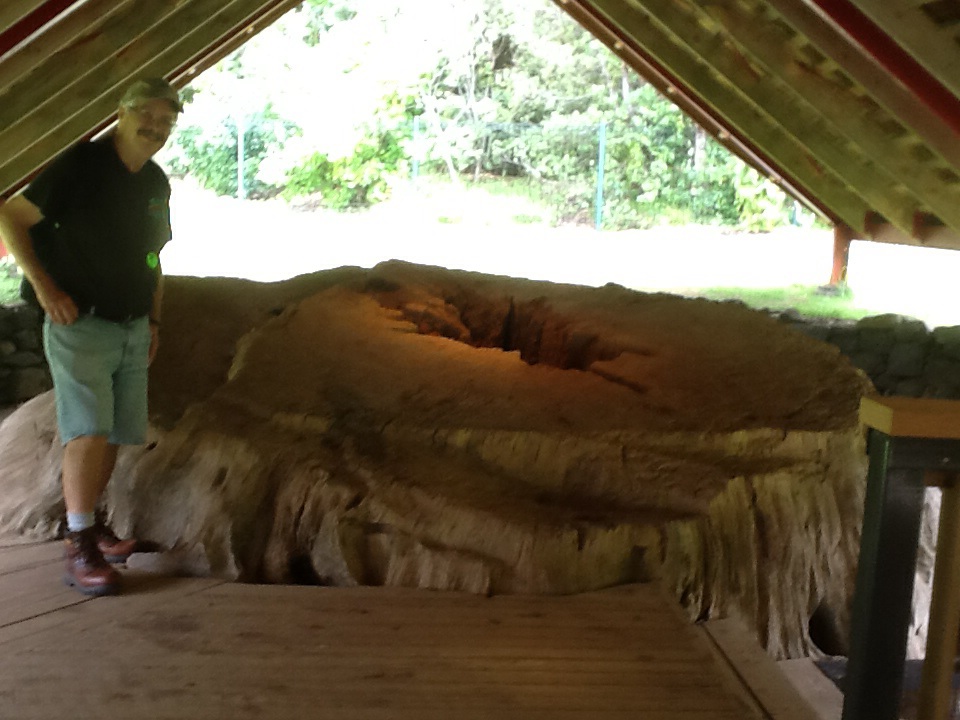
Waka is made from large Kauri tree

Female ancestor

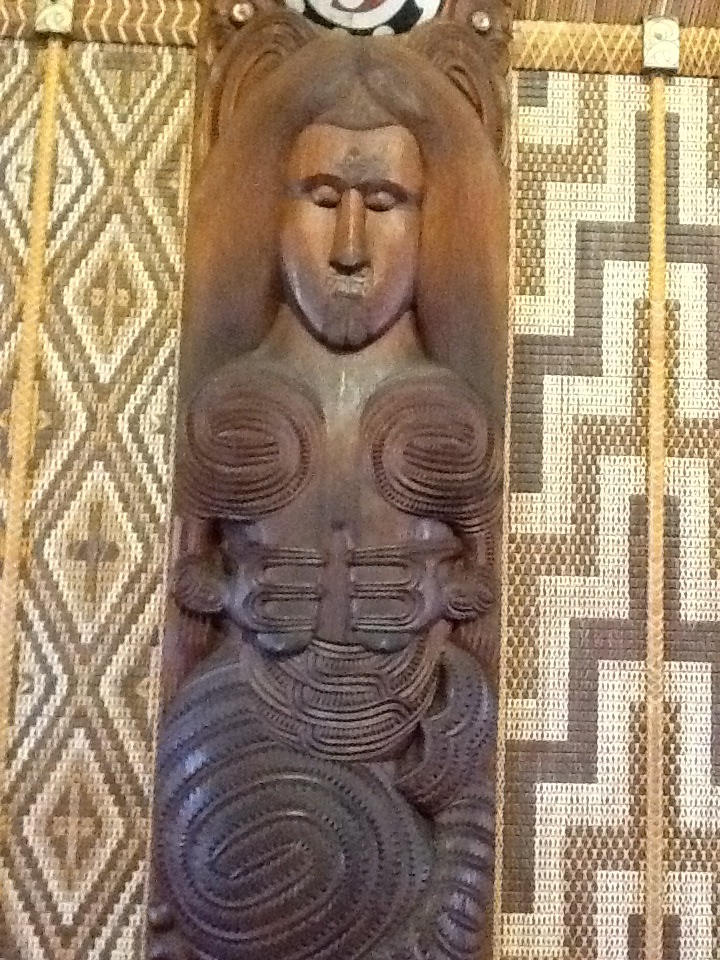
Female ancestor in marae (meetinghouse)

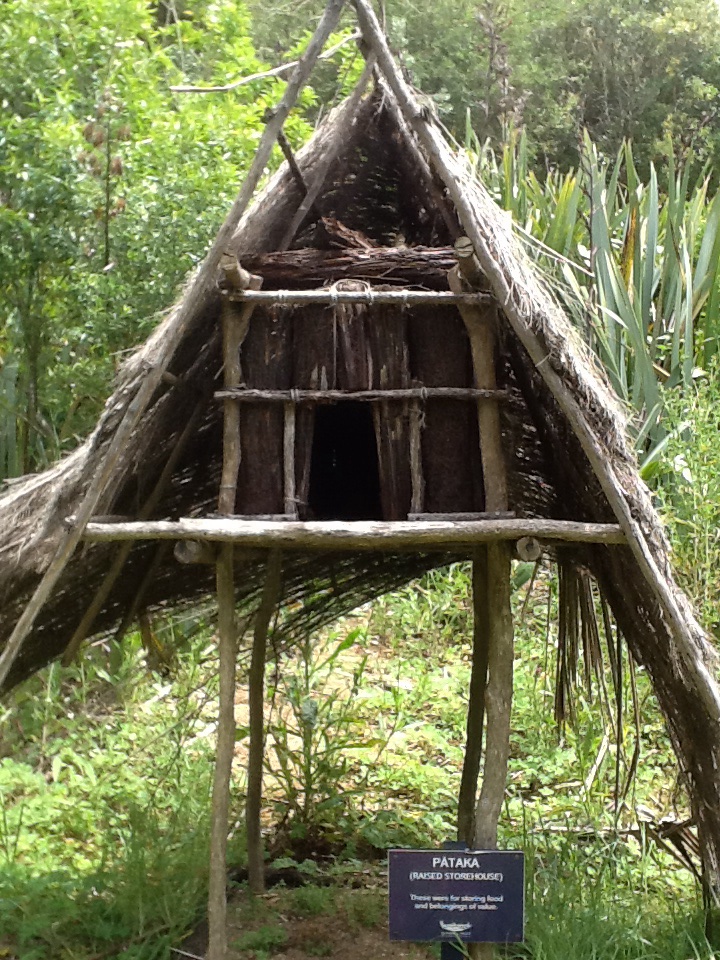
Traditional Maori storage house

Traditional Maori storage house

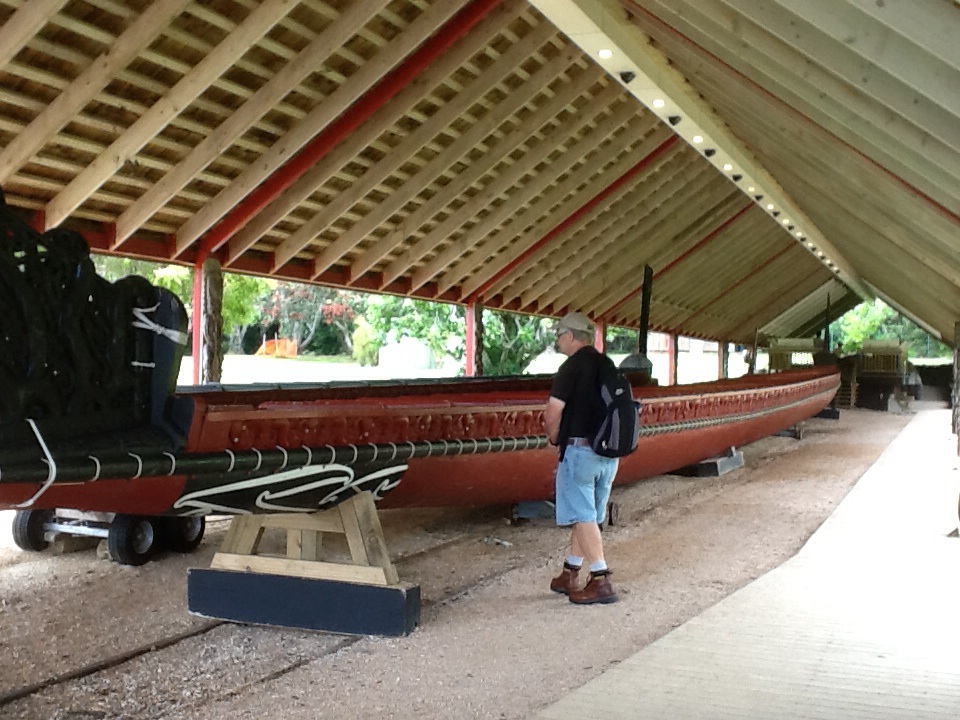
Waka at Treaty Grounds

Waka at Treaty Grounds, approx. 120 feet long, largest in world. It is launched each year on the anniversary of the treaty signing, February 6. It requires 76 paddlers to maneuver it safely. 

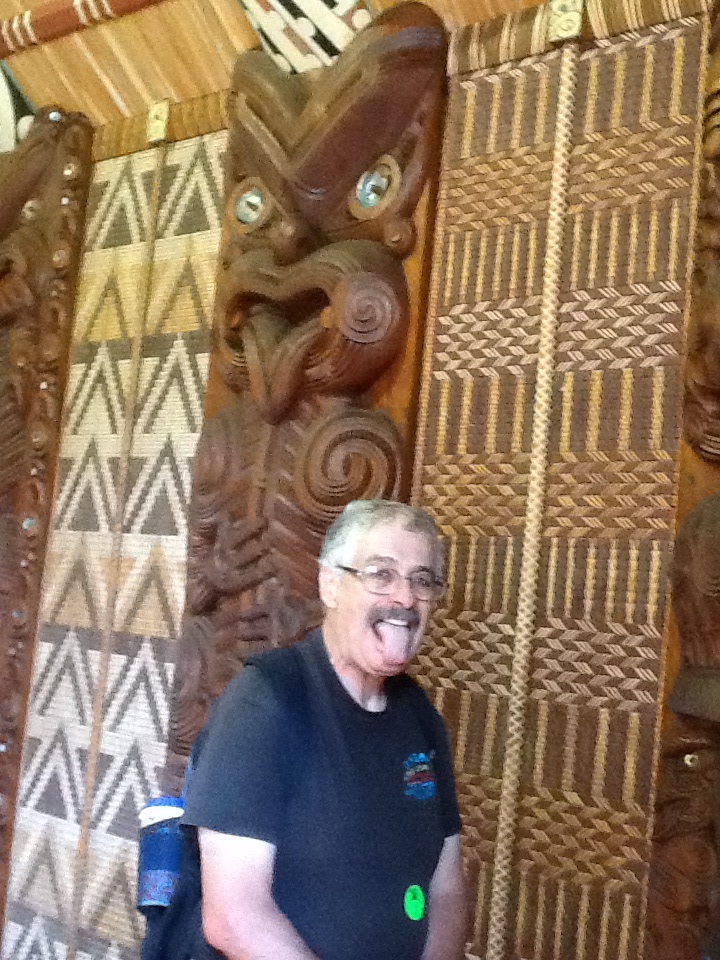
I'm going to eat you!

I’m going to eat you!

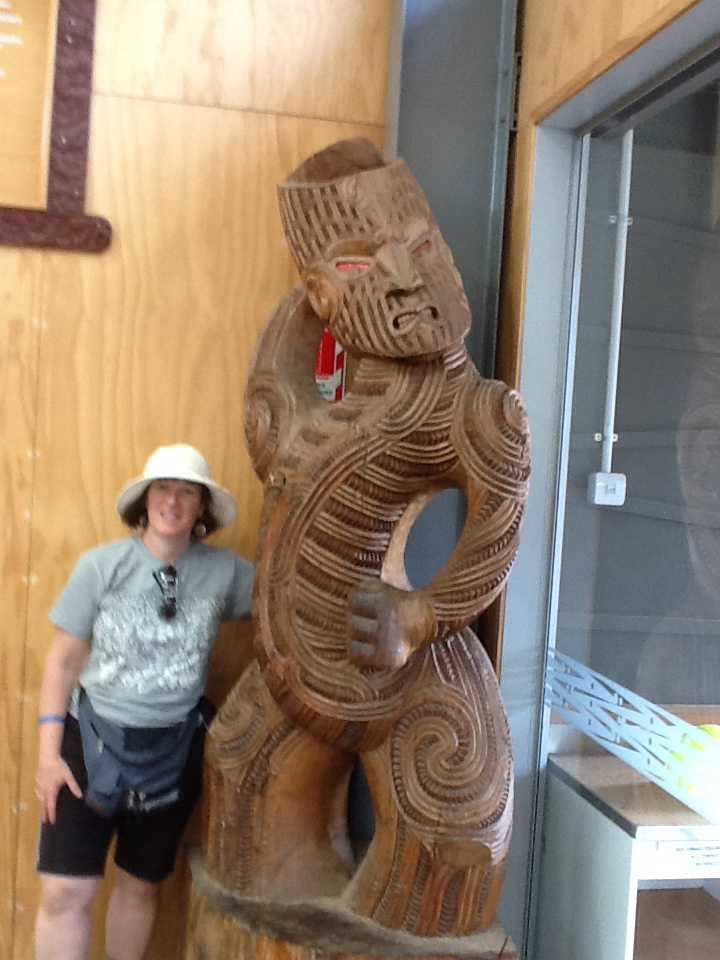
Wood carvings in the Marae (meetinghouse) feature the Maori ancestors. Those with their tongues out (as the carving and Chaim demonstrate in this photo)  indicate a warrior position, meaning “I am going to eat you!” The haka, a ceremonial war cry and dance, features this facial expression. The haka has become internationally known because the New Zealand rugby team (the “All-Blacks”) perform it before their games. (You may recall that the movie “Invictus” features an important game between the All-Blacks and S. Africa’s Springbok team.)

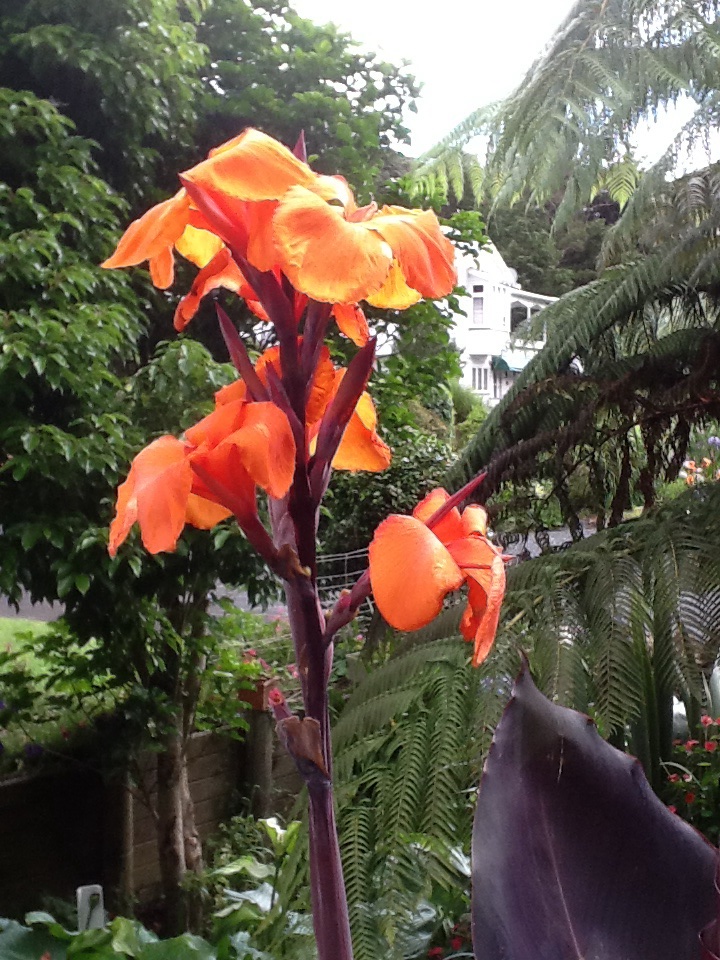
Iris? (My very favorite flower)

Iris? (My very favorite flower)

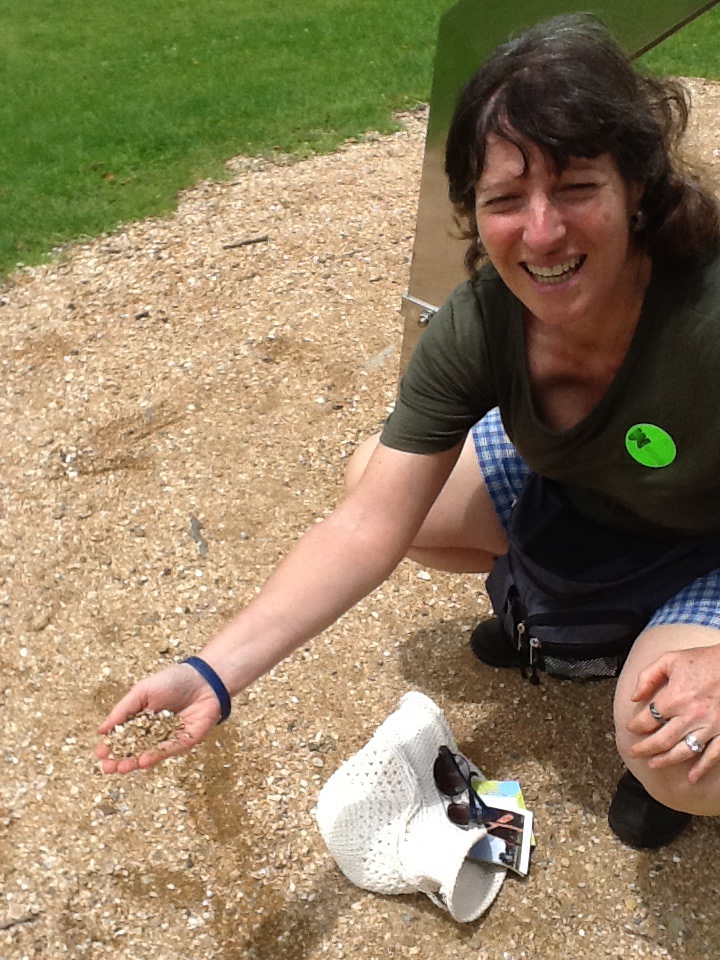
"You haven't been to Waitangi until the kirikiri (sands) have run through your fingers."

“You haven’t been to Waitangi until the kirikiri (sands) have run through your fingers.” 

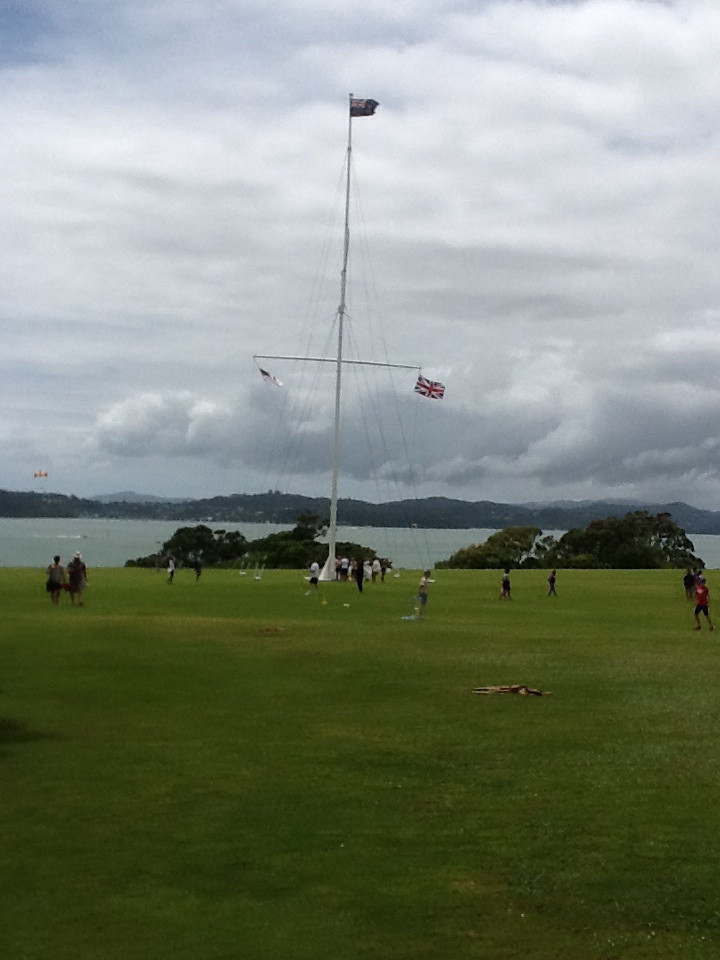
Flagpole on Treaty Grounds

Flagpole on Treaty Grounds at the site of the 1840 signing

When we returned to the ship, we went to a showing of the film of “Whale Rider,” a beautiful film about a young Maori girl who has spiritual gifts to become chief. I had seen and loved this film a number of years ago, but appreciated it so much more now that I understand more of Maori culture and language. I was sobbing at the end.

This afternoon Chaim and I will walk in Holland America’s “On Deck for the Cure” walk-a-thon which they do on every cruise to raise money for cancer treatment and research. Tonight our own Jewish “tribe” onboard will meet for a secular New Year’s “l’chaim” (“to life!”) to ring in 2015 together.

Happy new year!

Kiwi, Kiwi, Kiwi, Geyser! (You’re it!)

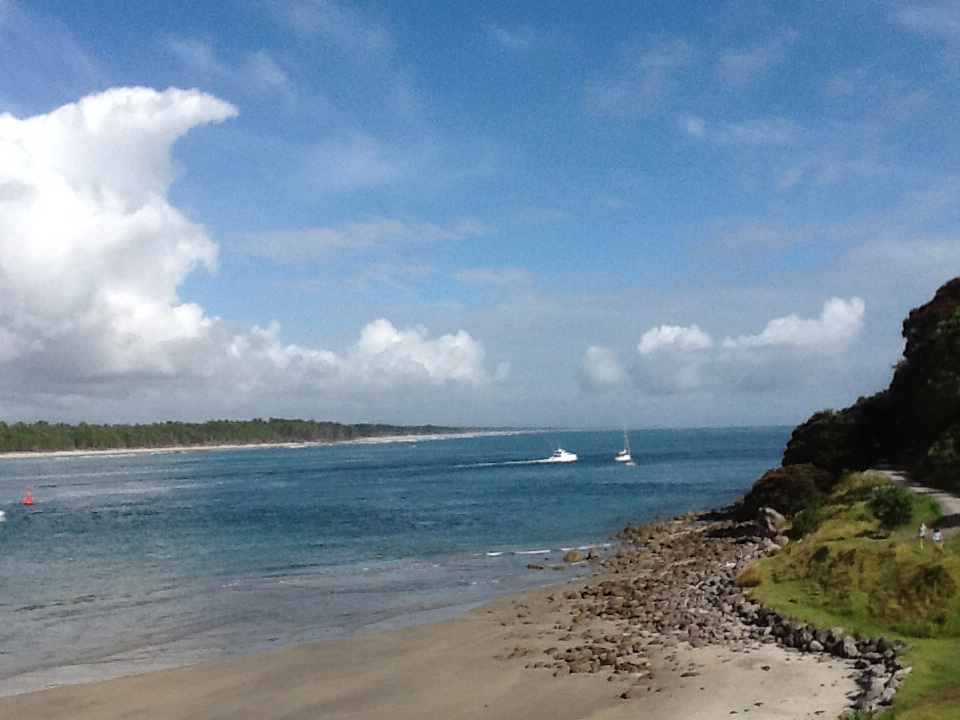
Tauranga Harbor

Tauranga Harbor

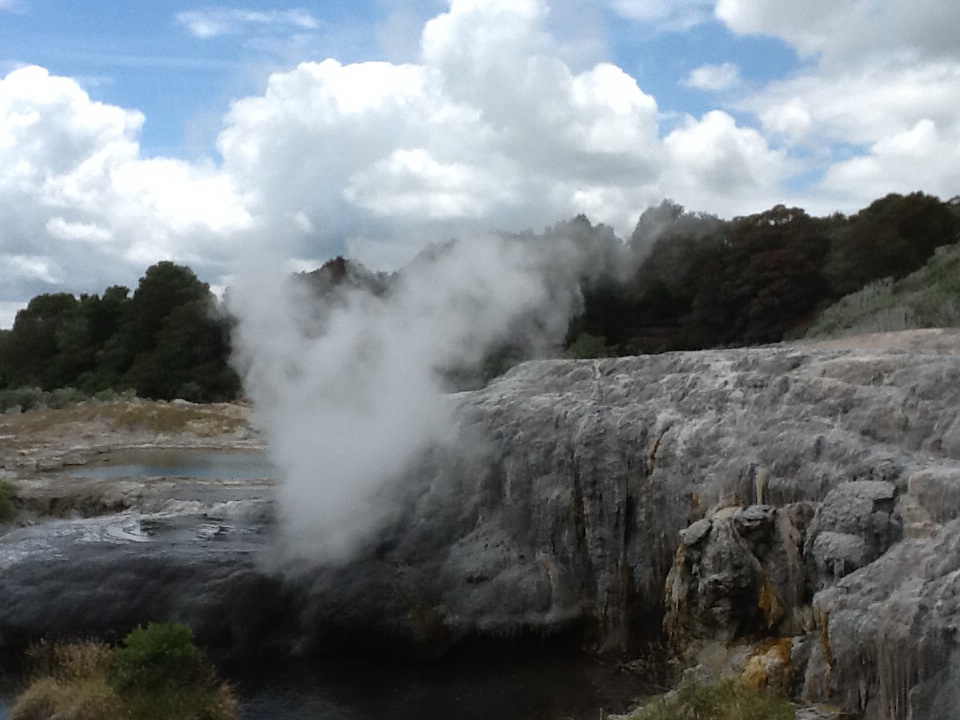
We landed in beautiful Tauranga (the largest port in New Zealand) yesterday morning, Sunday the 28th, and walked along the pristine harbor and up a bit of Mt. Maunganui (a non-active volcano) before getting on our tour bus to Rotorua, about an hour’s drive away. Rotorua is both the heartland of Maori culture but also a geothermal wonderland.  You can see steam coming up through the ground in many places. We chose to go to an active geyser park (and Maori visitor center/crafts center) called Te Puia, though we only saw spurts of geyser, nothing as large as Old Faithful in Yellowstone National Park. We did see thermal springs, hot bubbling mud pools, and smelled the distinctive odor of sulfur (rotten eggs) everywhere.

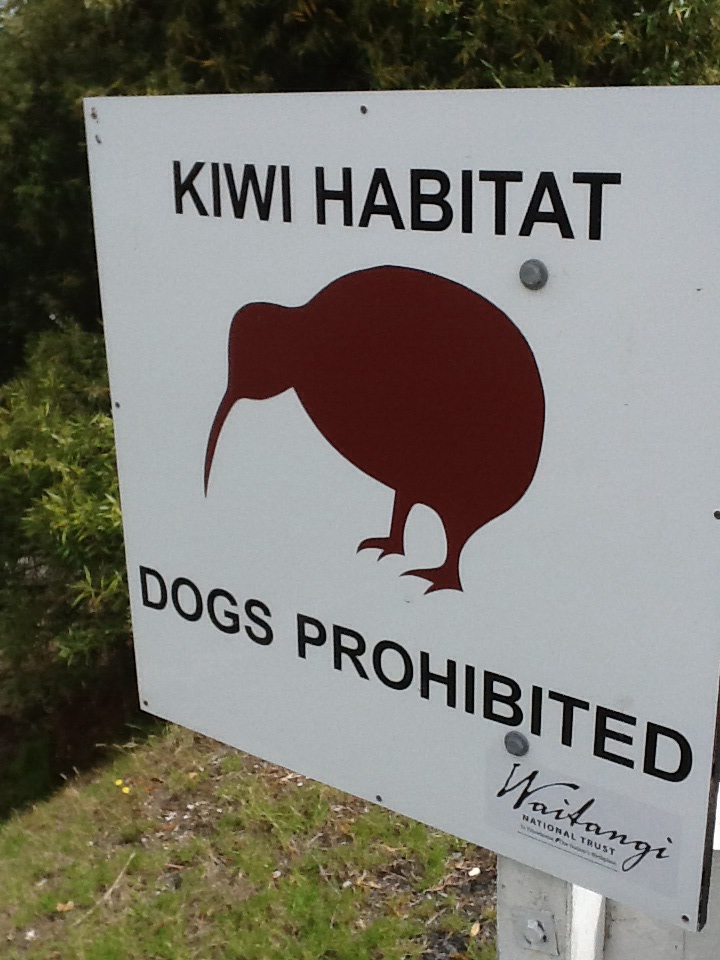
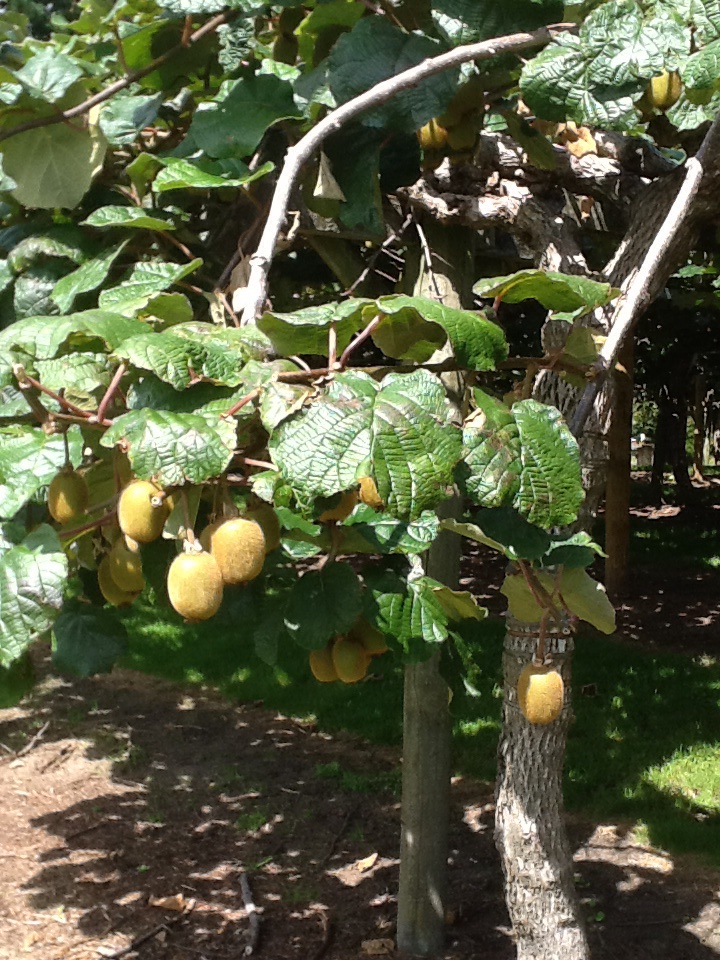
En route we stopped at a kiwi farm where we took a tour of the farm and free kiwi ice cream (tart but good!)

Kiwi fruit

Kiwi fruit

Geyser

Geyser

Definition — Kiwi

1: a nickname for New Zealanders;

2: a fruit first brought to New Zealand from China in the early 20th century, when it was called a Chinese gooseberry. Main fruit-picking and packing season is from April-June and demands thousands of seasonal workers, many from abroad. Demand for workers is so high that government unemployment and welfare benefits are not paid to local residents during this time period, as work is so plentiful. Today Italy is the largest producer of kiwi fruit, and New Zealand actually imports from Italy in their own off-season. The fruit is good for digestion and is packed with nutrients such as vitamins A, C, E, and potassium.

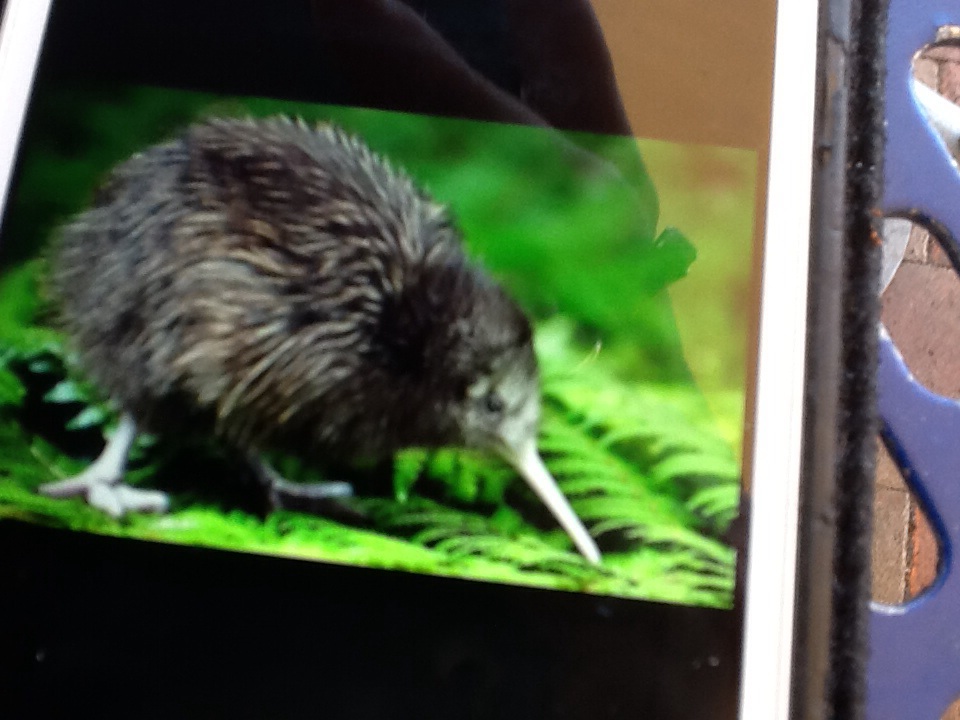
3: the national bird of New Zealand, which has many mammal-like features such as no tail, marrow-filled bones (rather than air-filled), powerful legs, hair-like plumage, two working ovaries (for females), good smell, large ear openings, etc.

Kiwi bird

Kiwi bird

Waiting for geyser at Te Puia

Waiting for geyser at Te Puia

Maori welcome at Te Puia

Maori welcome at Te Puia

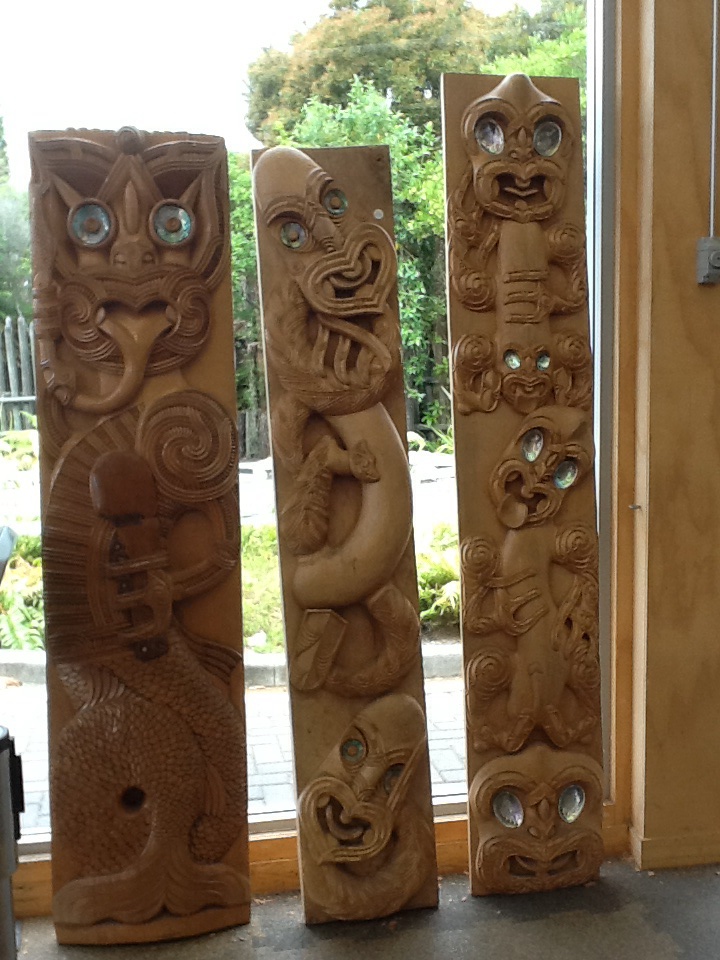
Maori carvings with inlaid paua (abalone)

Maori carvings with inlaid paua (abalone)

My newest boyfriend

My newest boyfriend

Maori fashion

Maori fashion

Maori fashion

Maori fashion

Today we are having a leisurely day in the large city of Auckland. We have walked the downtown wharf areas, visited both Victoria and Albert parks, seen lovely architecture, and discovered free WIFI at the local library where I now sit. Tomorrow will be our last day ashore (at the Bay of  Islands, Waitangi (the site of the original treaty signed between many Maori chiefs and the British Crown) before our 2+ day journey back to Sydney, where we will disembark on Friday morning.

Art Deco and Miracle Rendezvous in Napier


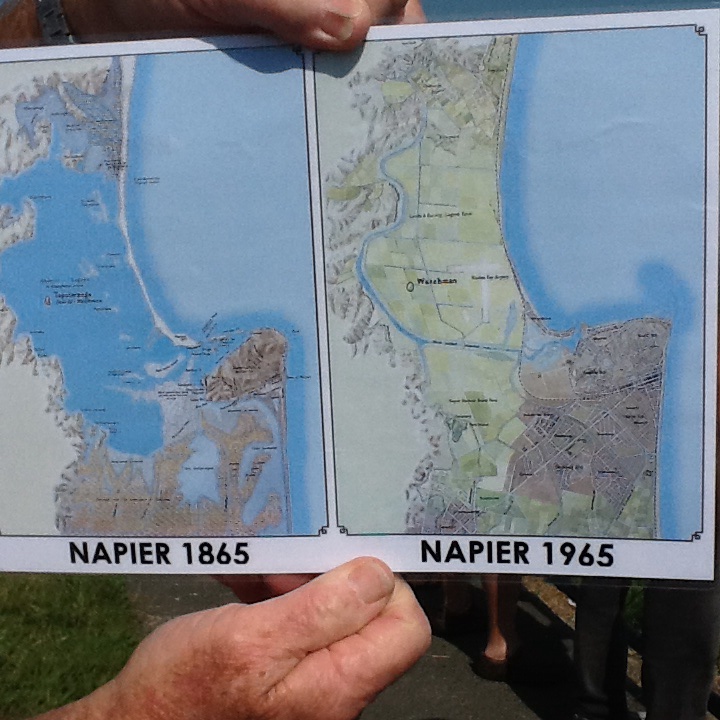
Napier, pre-and post-earthquake

Napier, pre-and post-earthquake

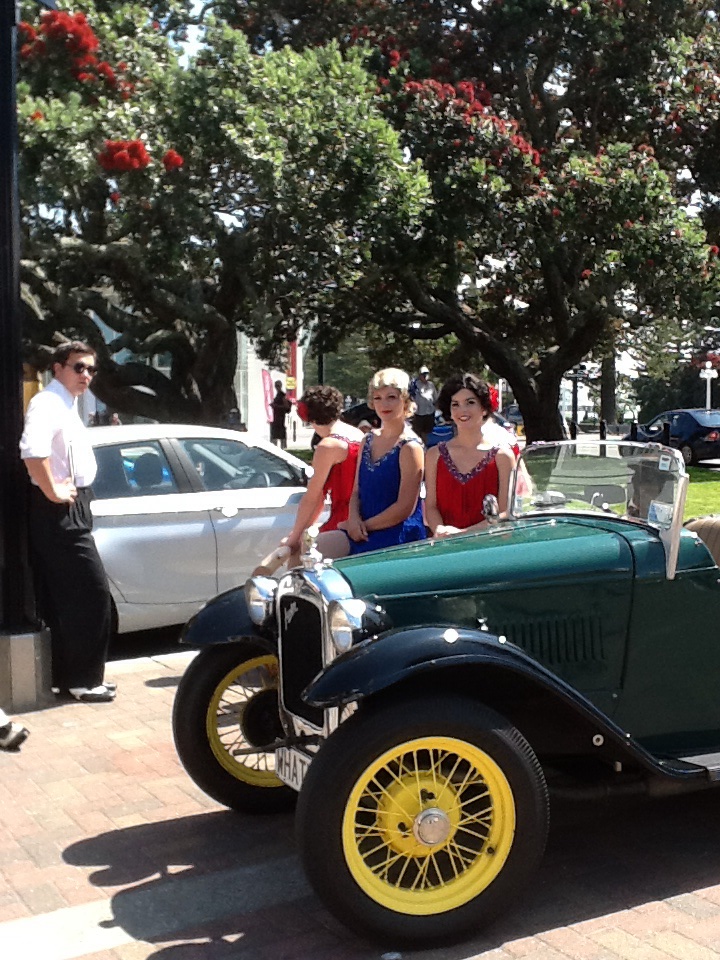
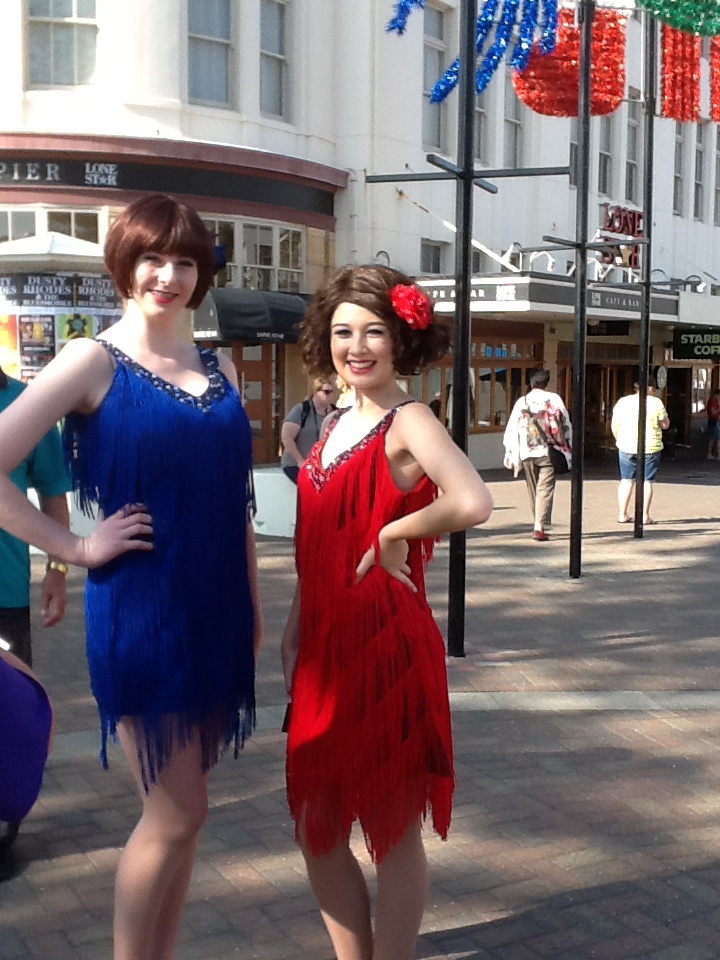
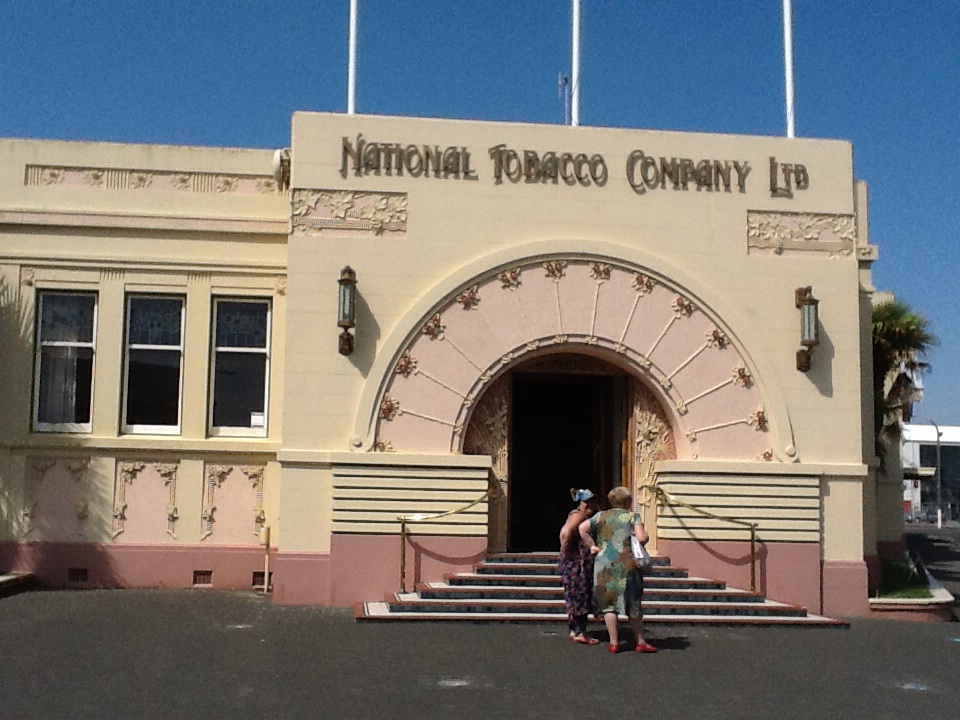
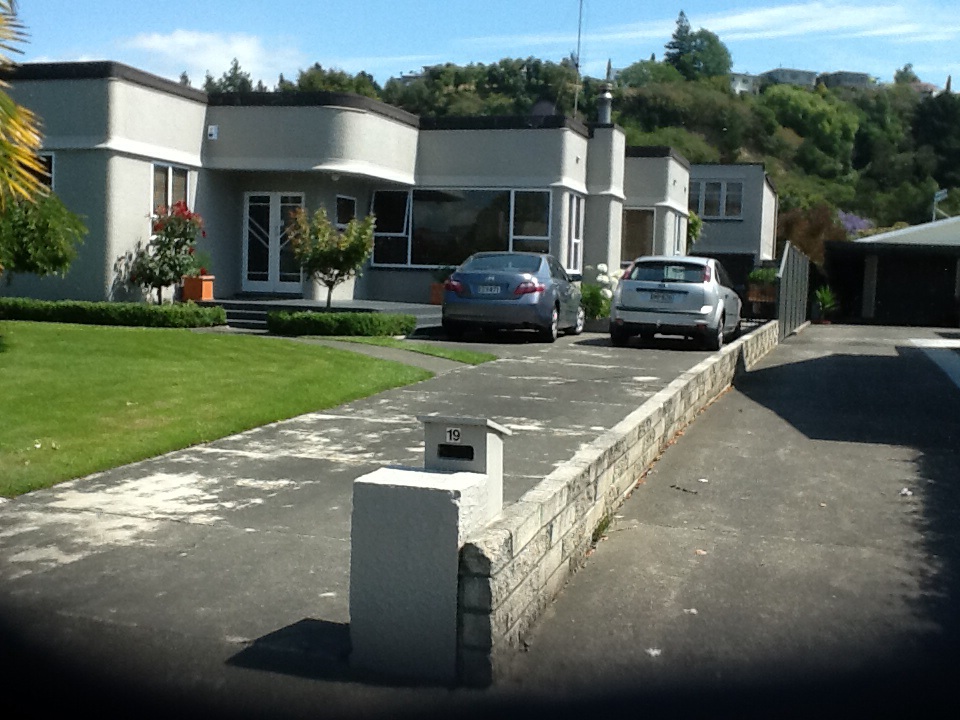
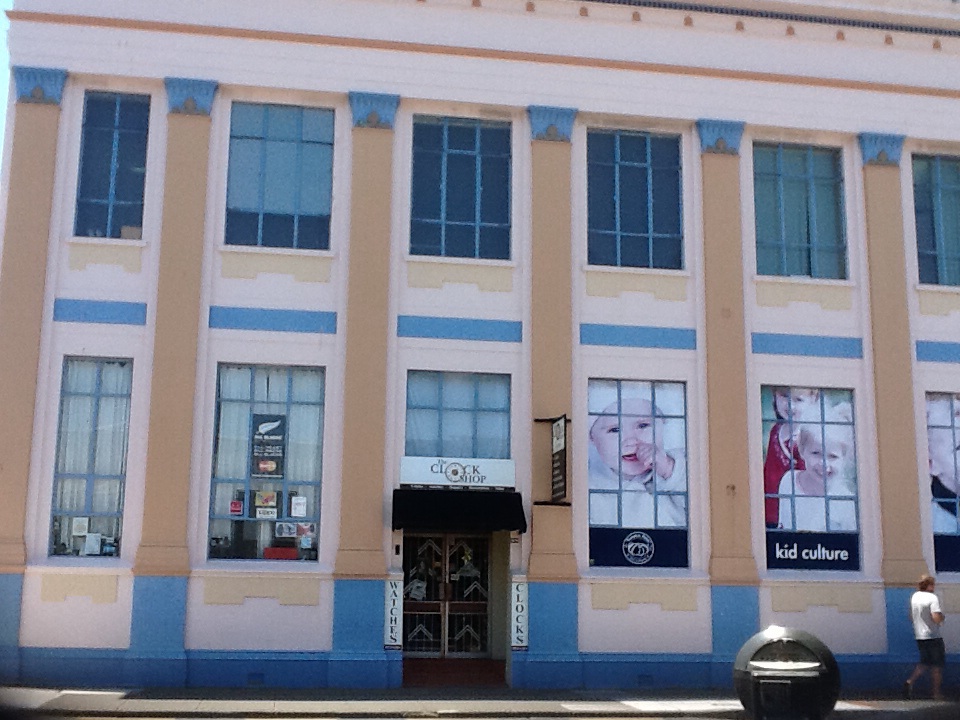
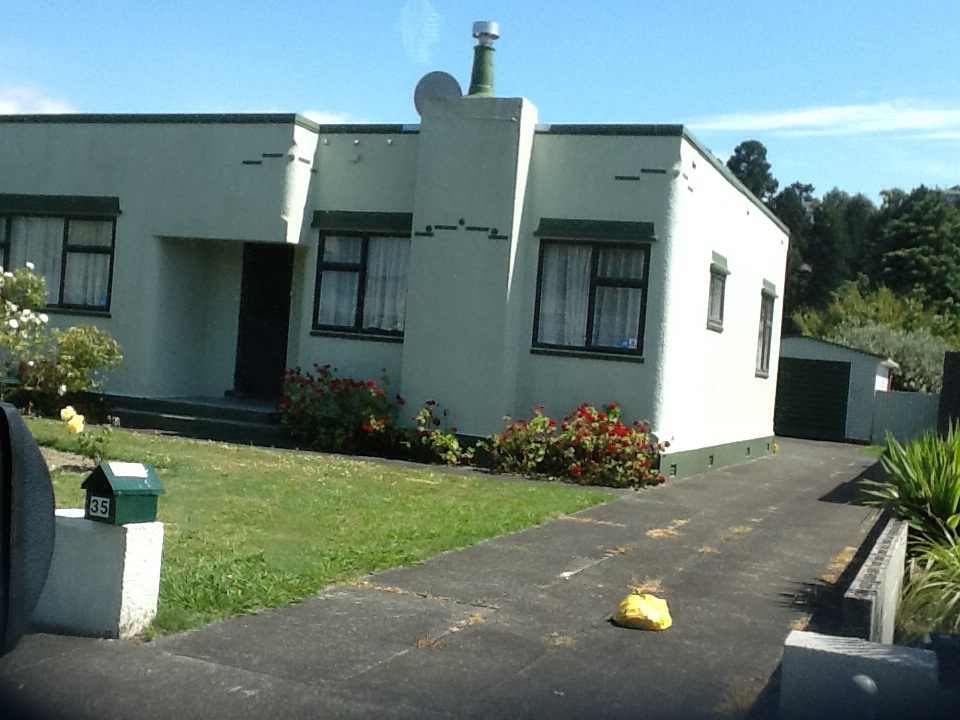
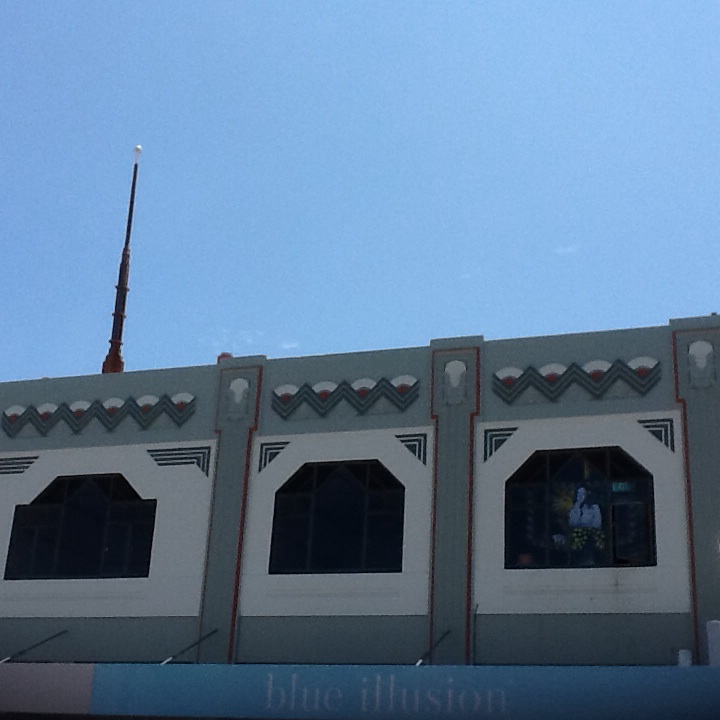
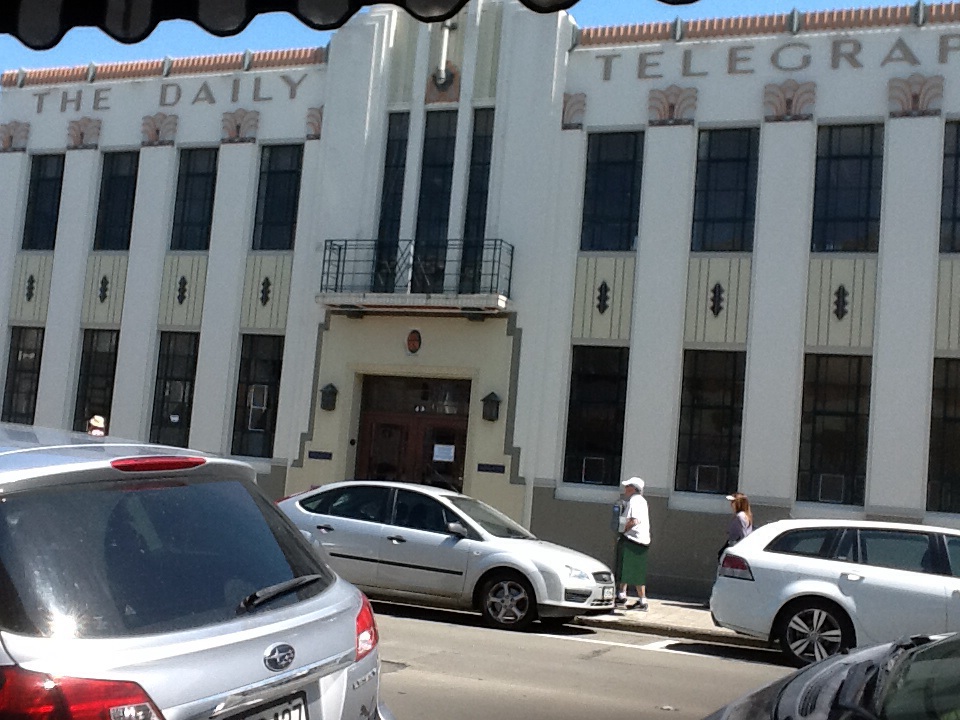
On February 3, 1931 (my birthday, but not my birth year!) a 7.8 earthquake and a resulting fire destroyed much of Napier, New Zealand. However, the effect was like a reverse tsunami in which the land was raised and all of the water from the harbor drained out, leaving an extra 8000 acres of land in its wake (see before and after maps). Within 2 years, due to the “benign dictatorship” of a businessman and a civil engineer, the city had rebuilt itself  mostly in the Art Deco style, with some Spanish mission buildings thrown in for good measure. Today Napier’s hawkers dress the parts of 1920’s flappers, dancing in the streets and driving vintage cars to entertain visitors. Considered the Art Deco capital of the world, people from around the world come each February for a full weekend of celebration with air shows, vintage car parades, and dress-up for the whole family.

I spent a lovely day visiting the sites of this bustling beach town which reminded me a lot of Santa Cruz, CA where I lived from 1982-1986 (and where I will be going in February to serve as scholar-in-residence, teaching Mussar). Lots of buskers and tourists, coffee and ice cream shops, fascinating architecture and history, a lovely farmers’ market, and mild weather year-round.

image


Charleston, anyone?

Charleston, anyone?


Tobacco Co., Ahuriri

Tobacco Co., Ahuriri

Art-deco home, Mawera

Art-deco home, Mawera

image

Art-deco home, Mawera

Art-deco home, Mawera

Upper floor

Upper floor


Daily Telegraph Building

Daily Telegraph Building

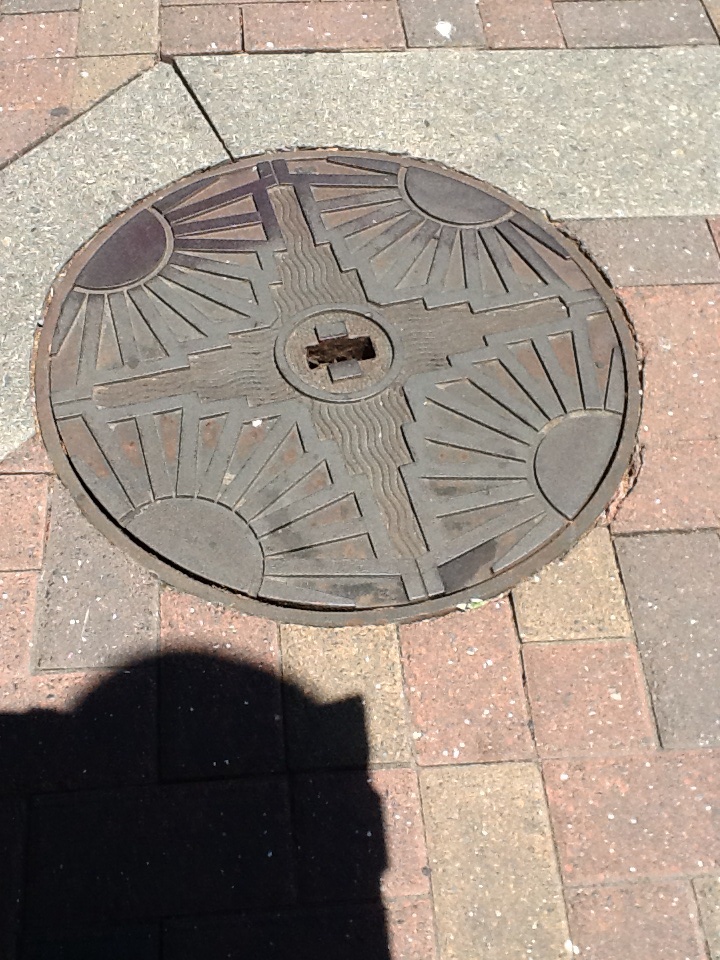
Manhole

Manhole

image

So sad was I to leave Napier, I almost didn’t even make it to the last shuttle back to the boat.  As we paused at the aquarium, I saw my old friend, rabbinic school classmate, and colleague Rabbi Lisa Edwards outside on the terrace there! I screamed to the bus driver to please stop the bus so I could say a quick hello to her and Tracy, my dearest friends when I was in rabbinical school. Lisa is the rabbi of BCC, one of the two LGBT congregations in LA. This was a post-Chanukah miracle in my book.

And, yes, I was the last passenger back on the boat (of approximately 2000)! Did not want to leave Napier.

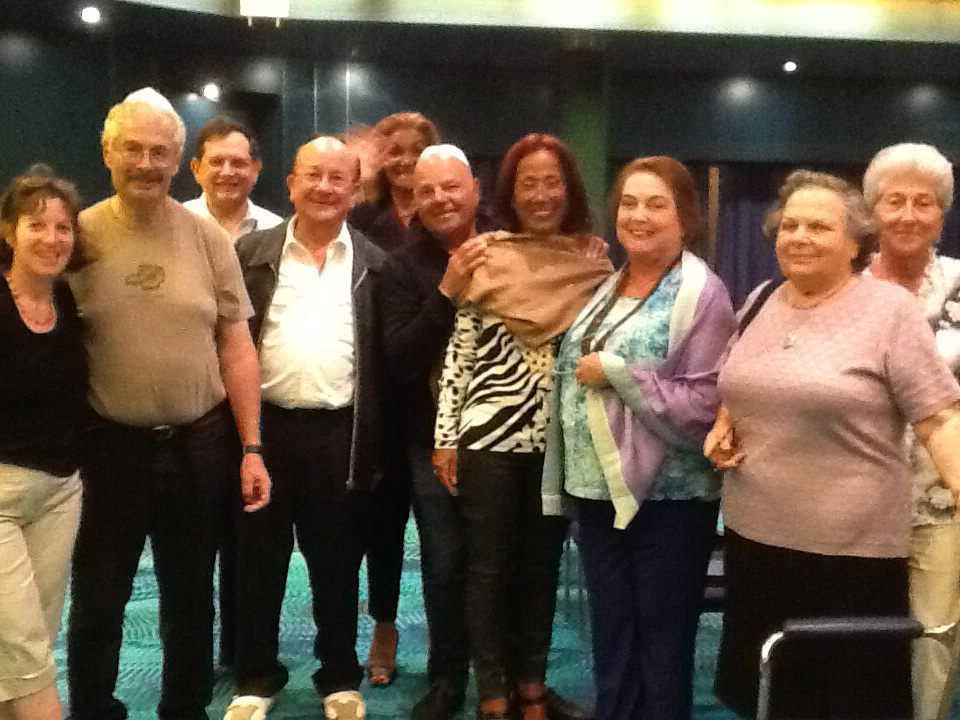
Above, some of my onboard “flock” following havdalah this evening.

Shavua tov.


Akaroa, Christmas, and Wellington

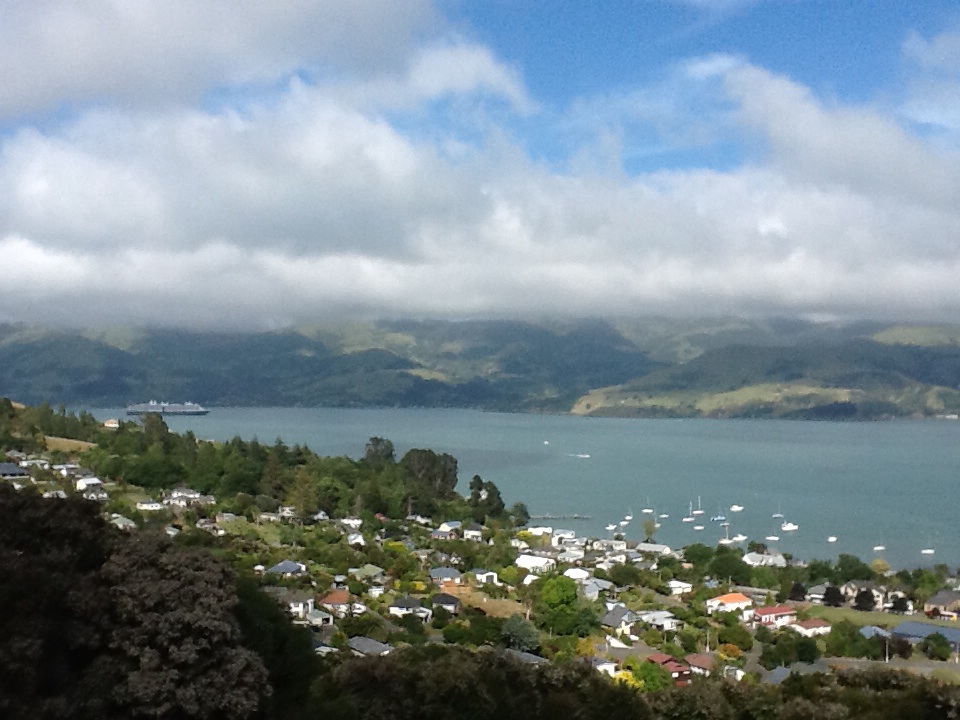
On the 24th we visited this lovely French town, Akaroa since Christchurch, the closest city, is still recovering from the earthquake of a couple of years ago and is not accepting cruise ships into its port. All Akaroa’s street signs were in French, as were many of the names of the restaurants and stores. We played miniature golf at “Le Mini Golf” and took a steep and beautiful hike which afforded us fantastic views of the harbor.  I collected a nice wad of wool from trees where I assume the sheep had scratched themselves. Back on the wharf I bought some beautiful paua (abalone) jewelry.

Akaroa Harbor, Stanley Park view

Akaroa Harbor, Stanley Park view

New friends, Akaroa hike

New friends, Akaroa hike

A portrait of me

A portrait of me

Later Christmas Eve aboard ship,  our Jewish gathering for Chinese buffet and showing of “Jersey Boys” was a great success. On Christmas Day, I made three clay flutes though I don’t think any of them work very well. (On the other hand, I rarely can get a sound out of a shofar either, so the problem may be mine and not the instrument’s!) The Maori are known for getting lots of incredible sounds from their wood and clay flutes. I’d love to hear them with a shofar!

I was named for my mother’s cousin Pearl, and my Hebrew name Penina means “pearl.” I therefore made it a point to go to a workshop on pearls where I learned a lot about the topic (ask me, your pearl expert!) and then bought myself a stunning pair of earrings. Sadly, I had recently lost one of my  pearl earrings given to me as a bat mitzvah gift from my dear friend Laura. (I’m sorry, Ms. L.G.) so this purchase was made to console myself.

The Maori women, after teaching me to make a clay flute

Jo-Jo and the other Maori women, after teaching me to make a clay flute

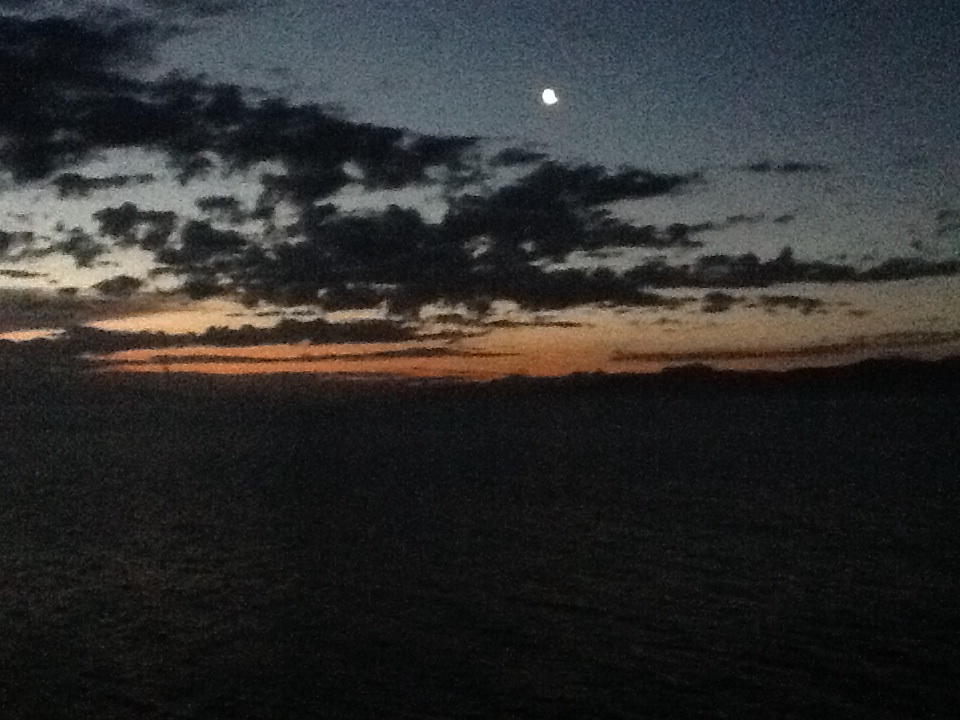
Sunset from the ship, Christmas

Sunset from the ship, Christmas

Today we are in Wellington, New Zealand’s beautiful capital city with a beautiful waterfront and modern architecture, lots of contemporary art and sculpture all over the place, as well as a maritime and immigrant history. We took a cable car up the mountain for views and a leisurely walk through the botanical gardens. In a little Japanese garden displacing a piece of a building from Hiroshima, we learned that Wellington declared itself a nuclear-free city in 1982, two years before New Zealand as a whole declared itself nuclear-free.

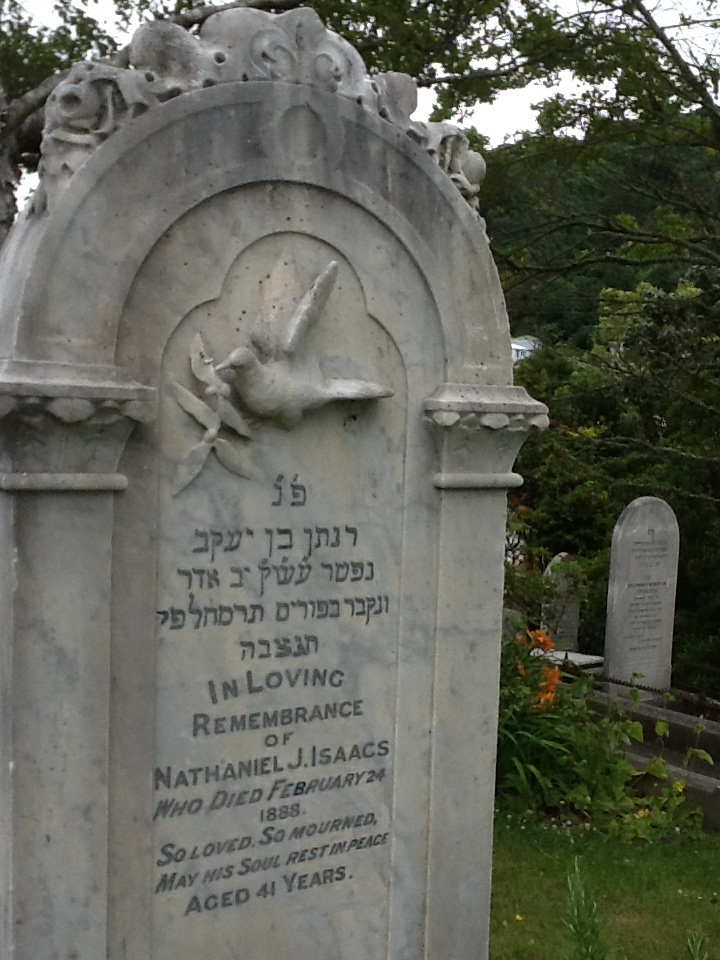
By chance, we happened upon the old Jewish cemetery on our walk back down to the city, where we spent several hours in the amazing National Museum of New Zealand,Te Papa, a combination of a natural history museum, a museum of the history of New Zealand, and an art museum, all of it breathtaking.

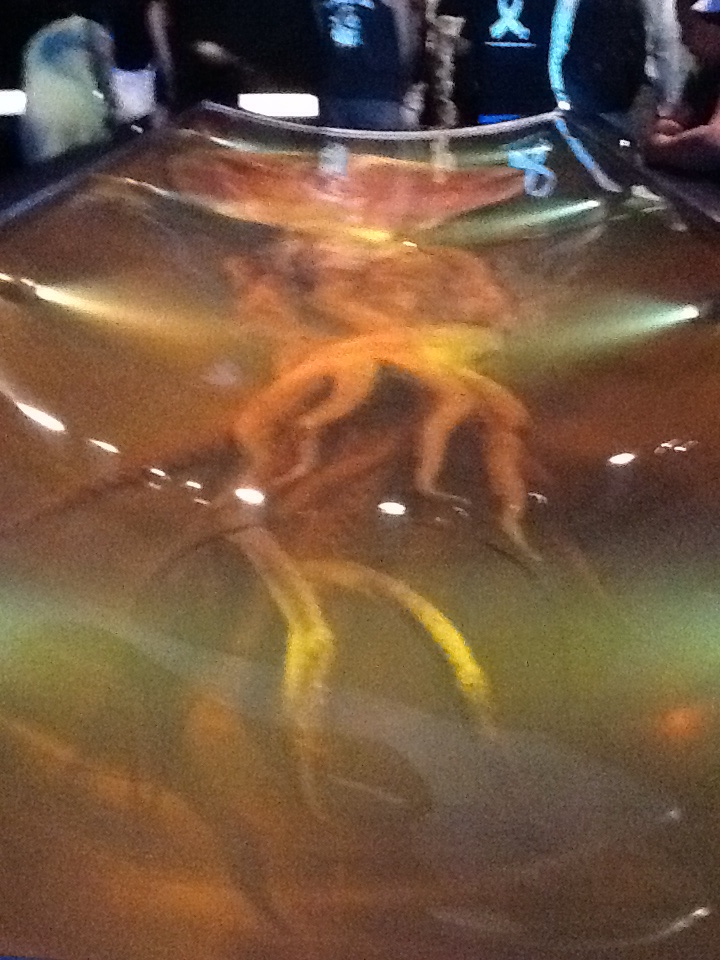
Largest squid on display worldwide

Largest squid on display worldwide

I could have spent another 3 days there without getting bored. The Maori history and artifacts, the contemporary Maori art, an exhibit that should be at Mass MOCA in North Adams, MA by an artist named Bill Culbert, an exhibit about bringing “the other” into the fold of New Zealand (women, gays, Maori), New Zealand immigrant  and contemporary refugee history, Lord of the Rings and dinosaur displays,  and the giant squid all under one roof!

Back on the ship after a long, exhilarating day and off to lead services and then gather my international “flock” for Shabbat dinner, for which 37 have signed up! This has been such great fun thus far, and we still have another week before we disembark in Sydney.

Shabbat shalom!

Old Jewish cemetery, Wellington

Old Jewish cemetery, Wellington

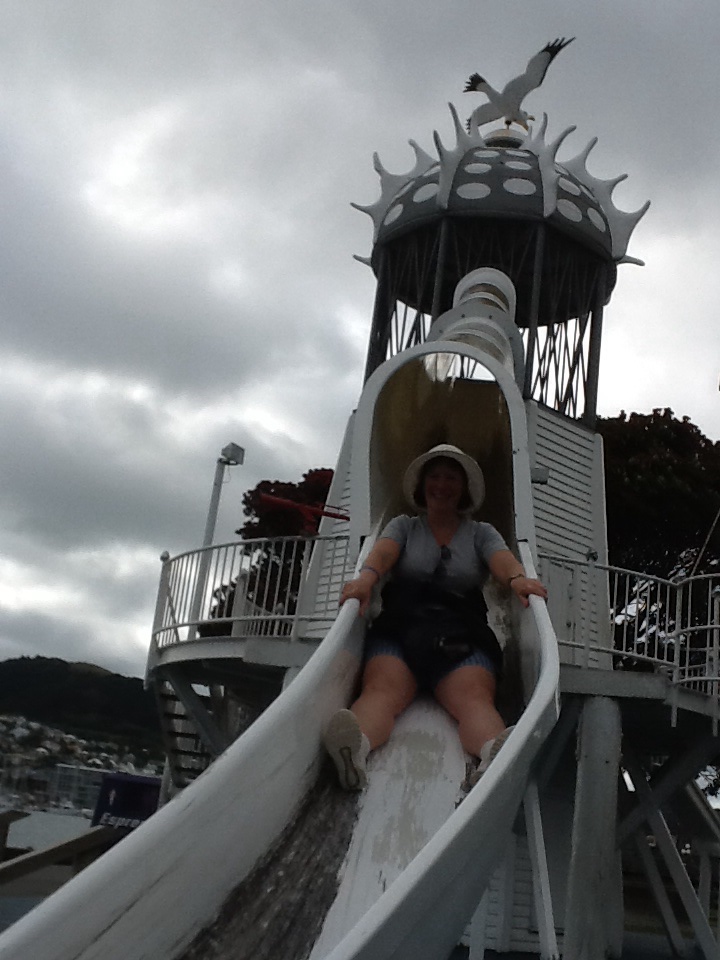
Wellington slide --fun!

Wellington slide –fun!

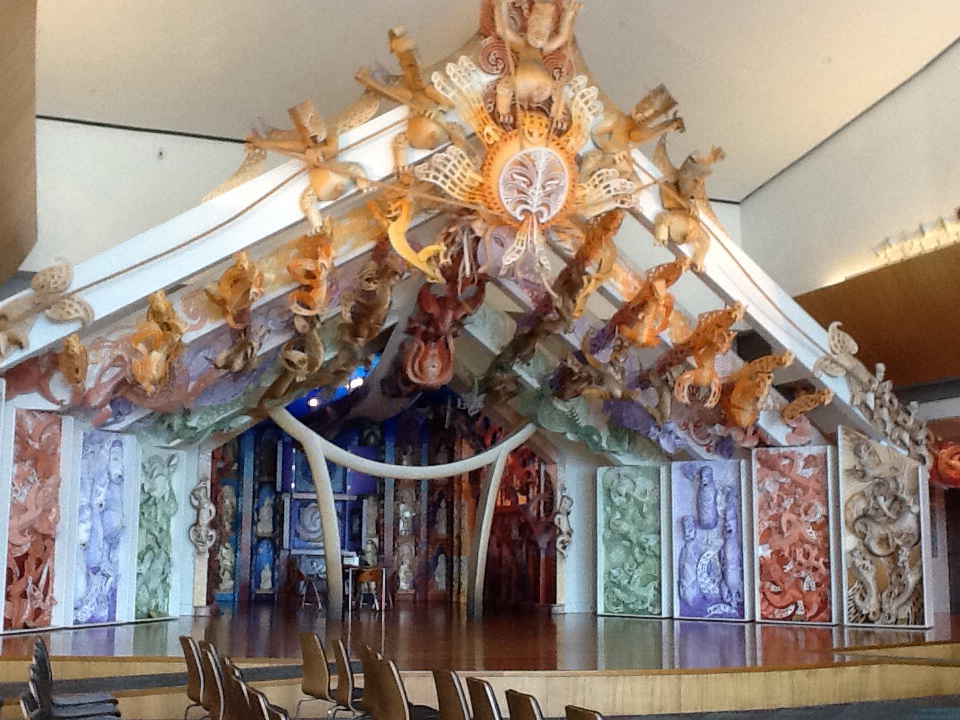
Contemporary marae, Te Papa Museum

Contemporary marae, Te Papa Museum

Maori wood carving

Maori wood carving


Ki Ora — a Maori hello, be well, and thank you!

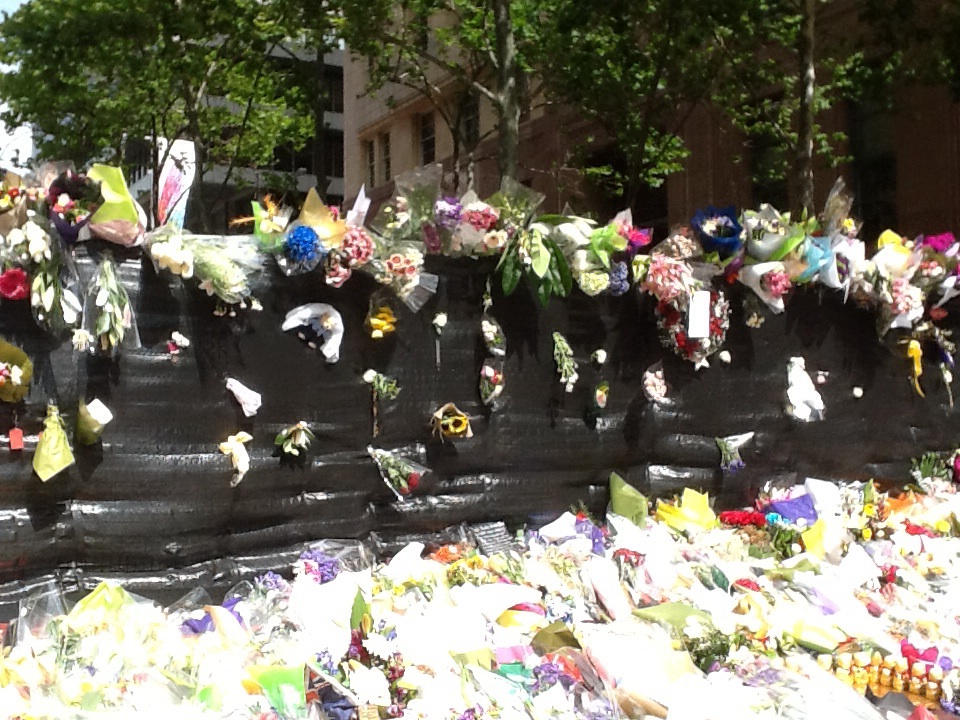
Flowers at the Lindt Cafe

Flowers at the Lindt Cafe

I am one lucky rabbi. For Chanukah this year I got a (mostly) all-expense paid trip for me AND Chaim to the Antipodes (a term my British friend Mark taught me, referring to Australia and New Zealand for those of us in the Northern Hemisphere) to serve as the rabbi on a 2-week cruise from Sydney to New Zealand. Somehow these cruise lines think Chanukah is up there on the list of most-important Jewish holidays! I served on this very same ship (Holland America’s Oosterdam) two years ago for Rosh Hashanah.

In my Sydney wanderings, I chanced upon the amazing flower memorial in front of the Lindt Cafe only days after that horrific hostage siege which left two innocent people dead along with the hostage-taker. From across the street, it looked like a flower market, and I went to admire the display, not even knowing until I was right in front, what it actually was. So many people came with flowers  to add to the memorial even while I was standing there.

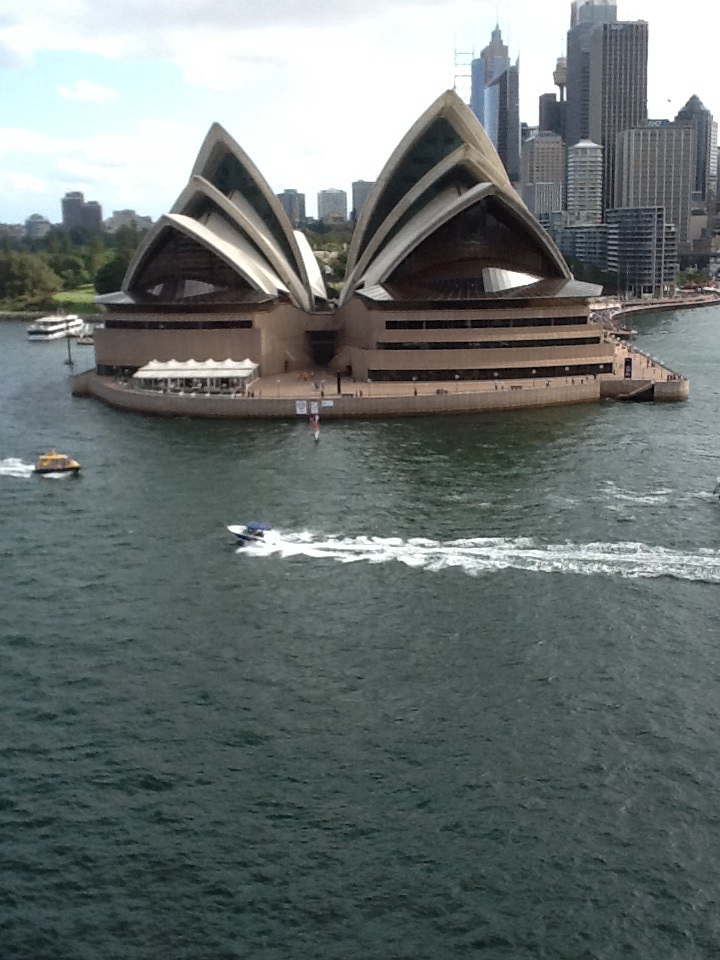
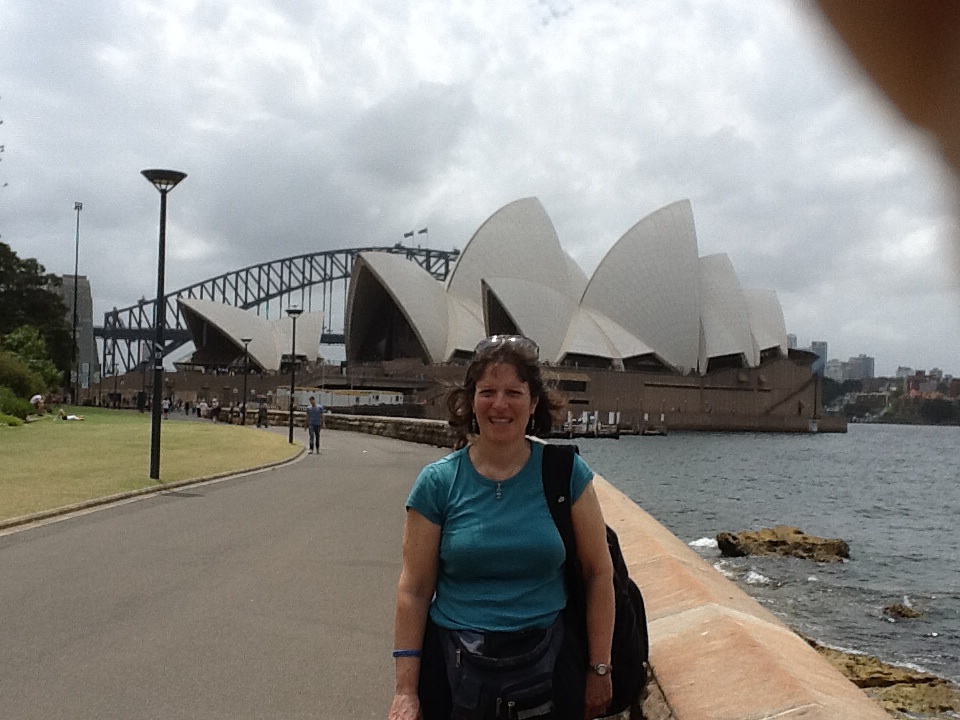
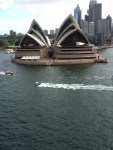
I was delighted to see the famous Sydney Opera House “live,” after admiring its iconic shape from afar for so many years. It sits right next to the Royal Botanic Gardens, which gave me hours of walking pleasure, as well.

Sydney Opera House and me!

Sydney Opera House and me!

We left Sydney on Friday afternoon only a couple of hours before I was “on” for my first service. My on-board congregation of about 40+ Jews is quite international. There are Aussies, Brits, Algerians, Swiss, French, Tunisians, Americans, Canadians, and one American who works for the State Department in Indonesia. We are having a great time.

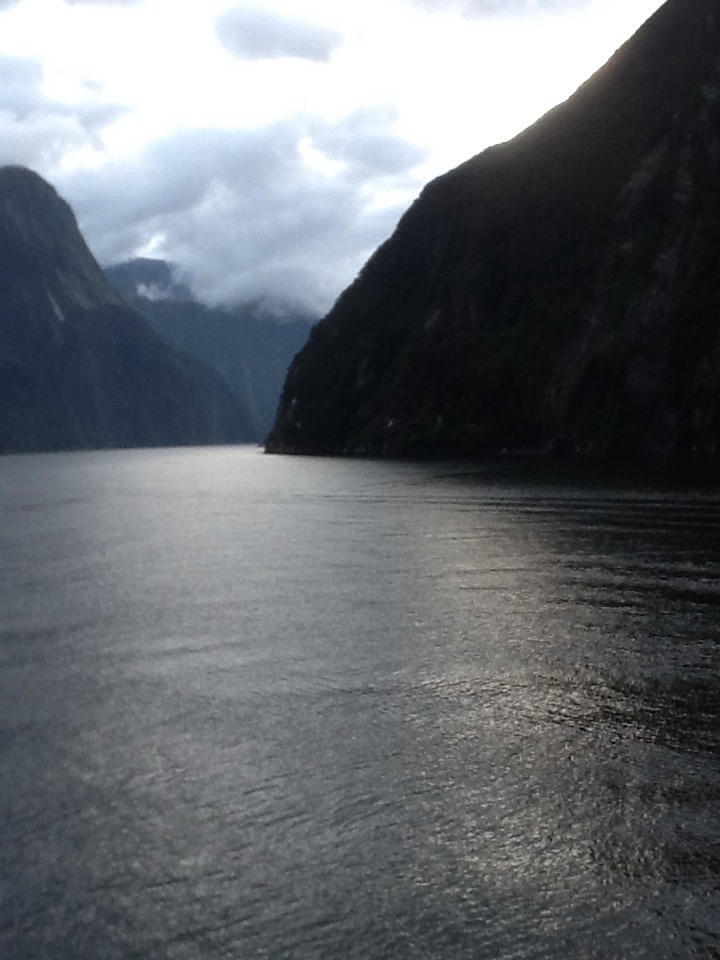
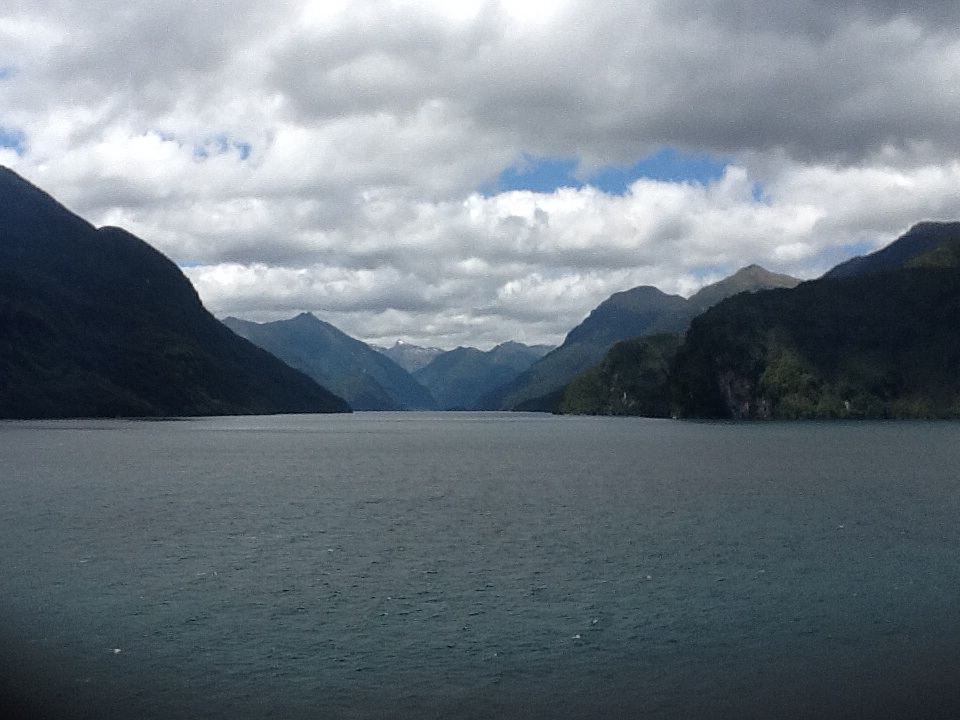
Milford Sound, Fjordland National Park

Milford Sound, Fjordland National Park

After being at sea for 2-1/2 days without spotting land, we reached Fjordland National Park, cruising through three beautiful fjords. Our Maori friends onboard (a cultural-educational troupe called Te Kapu) performed  a welcome-to-the-land ceremony to celebrate our official arrival to New Zealand, though we didn’t disembark. They have offered a number of fascinating workshops onboard. Klutzy me has mastered a hand-eye coordination game called titi-torea in which I threw two short sticks in quick succession to my partner to catch while she threw two back at me (which I caught!). We actually mastered several lengthy volleys with different rhythms, and I believe this will be a hard-to-beat highlight of the cruise for me, seeing as it causes me to totally revise a hardwired (and obviously incorrect) notion of myself.

I have invited our Maori friends for a Jewish-Maori dialogue tonight to celebrate our 8th night of Chanukah. I believe we share much — issues of assimilation, loss of mother-tongue, connection to homeland, connection to the earth. Sundown here is long past 9PM, so the light-in-the-darkness theme we northern folks emphasize doesn’t fly the same way with the Aussies. It’s been an edifying trip thus far on many fronts.

Sophie , my titi torea partner, and the Maori "warriors" who taught us

Sophie , my titi torea partner, and the Maori “warriors” who taught us

Dusky Sound, Fjordland National Park

Dusky Sound, Fjordland National Park

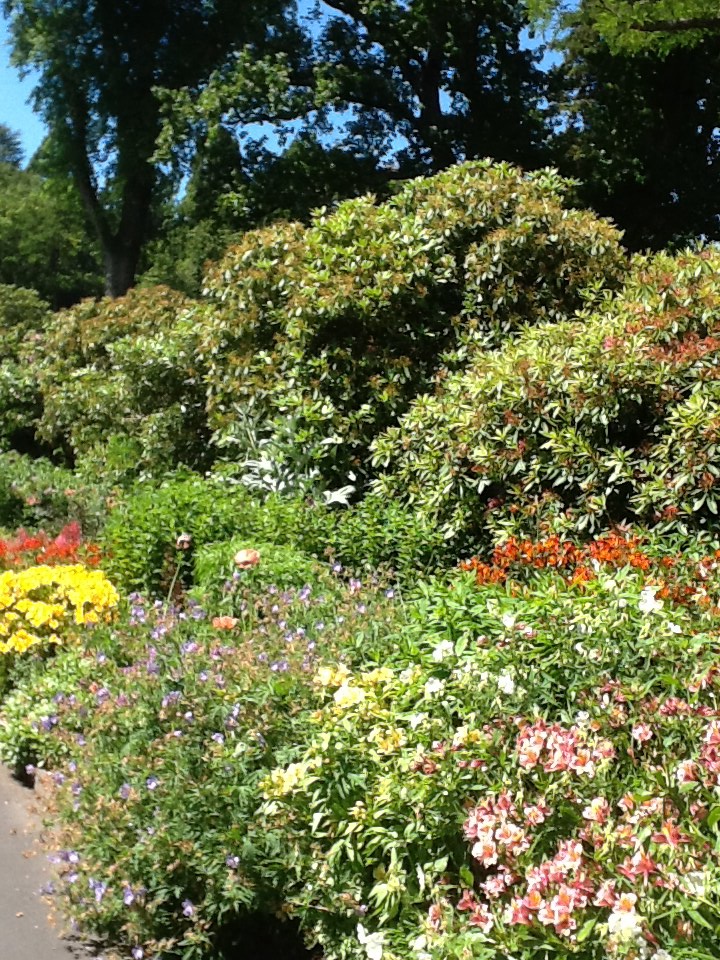
Today, day 4 of the cruise, we got our land legs back in Dunedin. Chaim and I walked to see the old synagogue in town and then the new one (nondescript, almost invisible, with a small sign only in Hebrew with its name, Beit Yisrael). And then we walked some more, to the north of the city,  to Woodlaugh gardens and then to the oldest botanic gardens in New Zealand (opened only days before the botanic gardens in Christchurch). And then we walked back and visited the Flemish Renaissance-style railway station. I had no time to shop!

Back in our room in time for “take-off,” I just got a call from the events manager who manages my schedule. She had forgotten to tell me that tomorrow night on Christmas eve, they have prepared a Jewish movie night and Chinese buffet for us! Amazing.

Happy Chanukah to those celebrating Chanukah, and Merry Christmas to those celebrating Christmas!

Chaim in the Dunedin Botanic Gardens

Chaim in the Dunedin Botanic Gardens

Dunedin Botanic Gardens

Dunedin Botanic Gardens

Dunedin Railway Station

Dunedin Railway Station


“I Can’t Breathe” — IMO Eric Garner

BREATH

noun

1. the air inhaled and exhaled in respiration.
2. respiration, especially as necessary to life.
3. life; vitality.
4. the ability to breathe easily and normally.
5. time to breathe; pause or respite.
6. a single inhalation or respiration.
7. the brief time required for a single respiration; a moment or instant.

***

Most of us take breathing for granted most of the time. It enters us and departs as a matter of course, no thought or effort required.

Those of us who have ever practiced mindfulness meditation know what it means to consciously watch the breath in and out, in and out, to keep that as a purposeful focus, letting go of other intrusive thoughts. As a secondary gain of this spiritual practice, we may attain a heightened awareness of the miracle of breath.

There are, of course, those for whom breathing is compromised due to illness or disease, who are regularly attuned to the miracle and vicissitudes of breath. My client Linda Moss, of blessed memory, fell into this category. Her fear and panic about whether she could take in enough air and whether she could catch her breath taught me to stand in awe for each unencumbered breath I am privileged to take. Her courage despite her suffering remains an inspiration — how she lived in that fear, yet continued to take as many breaths as she could for as long as she could.

We worked a lot with the Hebrew understandings of the interconnection between breath/n’shima and soul/n’shama, how God breathed life into the first man (adam), how breathing is therefore symbolic of the God-breath, the vital stuff of life, in all of us. Breath is a manifestation of grace in action, the greatest gift.

If we understand breath to be synonymous with life, the police officer’s callous non-responsiveness to Eric Garner’s “I can’t breathe,” is already a first step toward homicide, long before the coroner ruled it one.

“I can’t breathe” is a terrifying thought. “I can’t breathe” is an even more terrifying feeling.

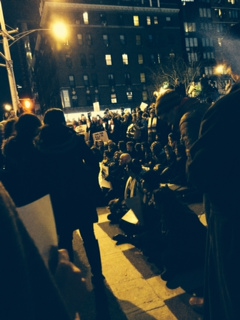
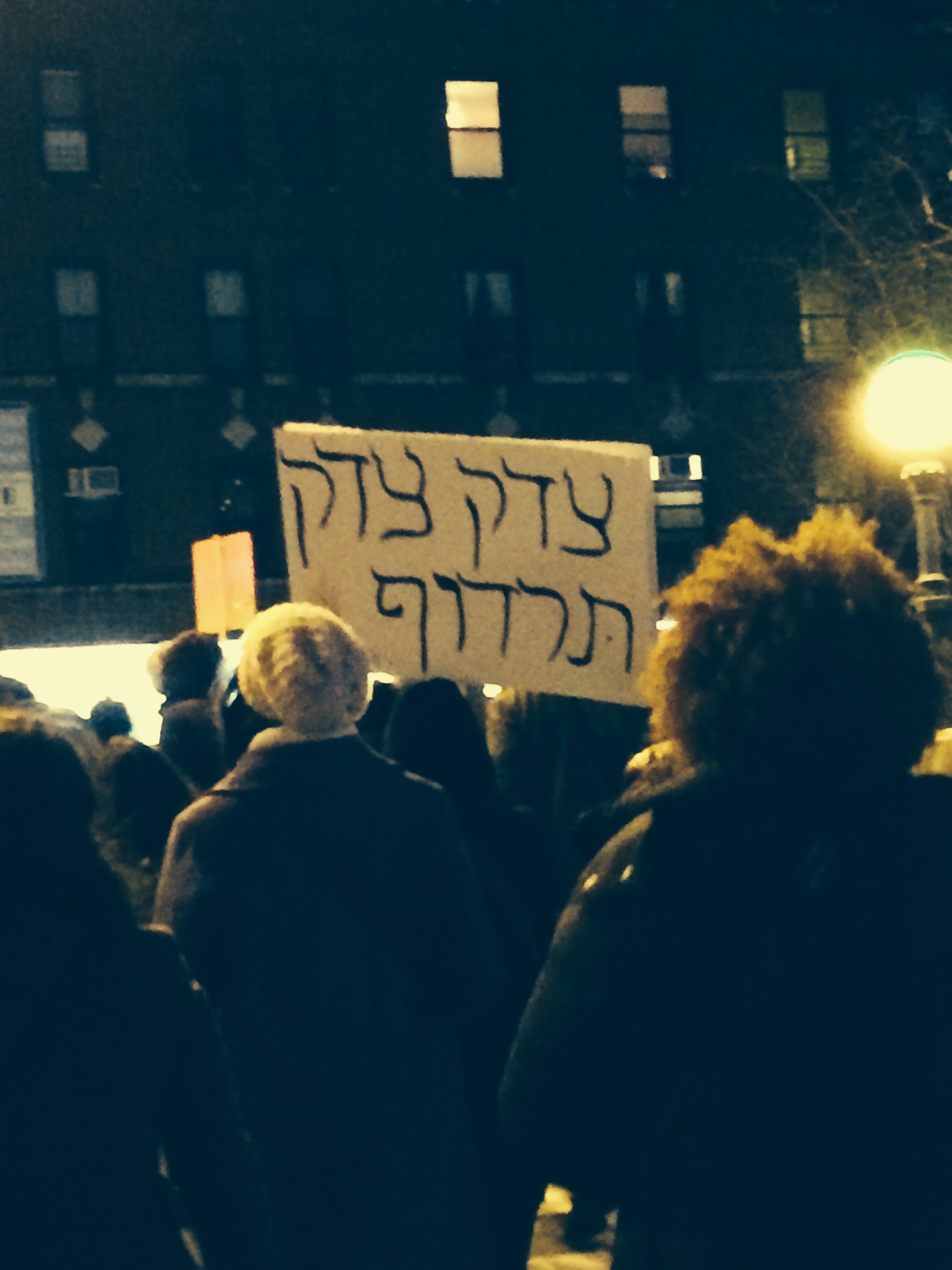
Undoubtedly, an injustice was perpetrated by the police officer. A further injustice was perpetrated by the grand jury that refused to indict him. So I marched tonight with a few hundred Jews, candles, and signs, to protest, under the auspices of Jews for Racial and Economic Justice (JFREJ) and T’ruah: The Rabbinic Call for Human Rights. We chanted “No justice, no peace” and “Black Lives Matter!”, and shouted the names of Eric Garner and Michael Brown. We recited the Mourner’s Kaddish and sang “Oseh Shalom/May the One who makes peace in the high heavens, make peace for us…” Those who were willing to be arrested sat down in the middle of Broadway at the corner of 96th Street, shutting down traffic moving southbound on Broadway. Twenty-five of our fellow protestors, some of them my friends and colleagues were, indeed, arrested and driven in two police vans downtown to Police Plaza.

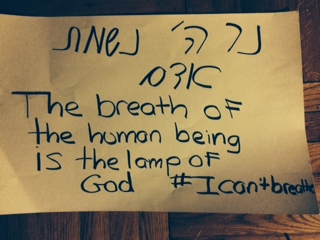
This is the sign that I carried tonight, a quote from Proverbs 20:27, "The breath of the human being is the lamp of God," followed by "I can't breathe."

This is the sign that I carried tonight, a quote from Proverbs 20:27, “The breath of the human being is the lamp of God,” followed by “I can’t breathe.”

Sit-in on Broadway

Sit-in on Broadway

Tzedek, tzedek tirdof (Justice, justice shall you pursue) - Deuteronomy 16:20

Tzedek, tzedek tirdof (Justice, justice shall you pursue) – Deuteronomy 16:20

I was shocked and outraged by the failure of the grand jury in Missouri to indict Ferguson police  officer Darren Wilson in the death of Michael Brown just two weeks ago. But New York is MY city, and my shock and outrage is somehow even greater now, because the pain is closer and deeper. As a result,  the injustice seems even less comprehensible to me than that perpetrated in Ferguson.

This is a paradox — if something is already unfathomable, how can it ever be even more unfathomable? and yet, it is. It just is, like the Zen koan that my UU colleague Reverend Meredith Garmon shared with me this morning:

Once I saw mountains as mountains, and rivers as rivers. Then I came to the point where I saw that mountains are not mountains, and rivers are not rivers. But now I am at rest, for once again I see mountains as mountains, and rivers as rivers.

The difference is, I laughed at that paradox. It tickled me.

I am not laughing now. Injustice piles on injustice. I will never be at rest.


(see Truah’s statement about Eric Garner’s death by going to http://www.truah.org/who-we-are-general/634-justice-for-eric-garner-a-statement-from-t-ruah.html. You can also see more pictures of tonight’s march and rally by going to the JFREJ Twitter feed at https://twitter.com/jfrejnyc.)

Gates, Doors, and Archways

38th day of the Omer — Compassion in Bonding (tiferet sh’b’yesod)

Just a reminder: For those who missed getting the photos in my Morocco blog during those days I was having technical difficulties, you can go to http://www.paminjerusalem.com to review those posts, now complete.

Open for me the gates of righteousness; I will enter them and praise God.

(Psalms 118:19)

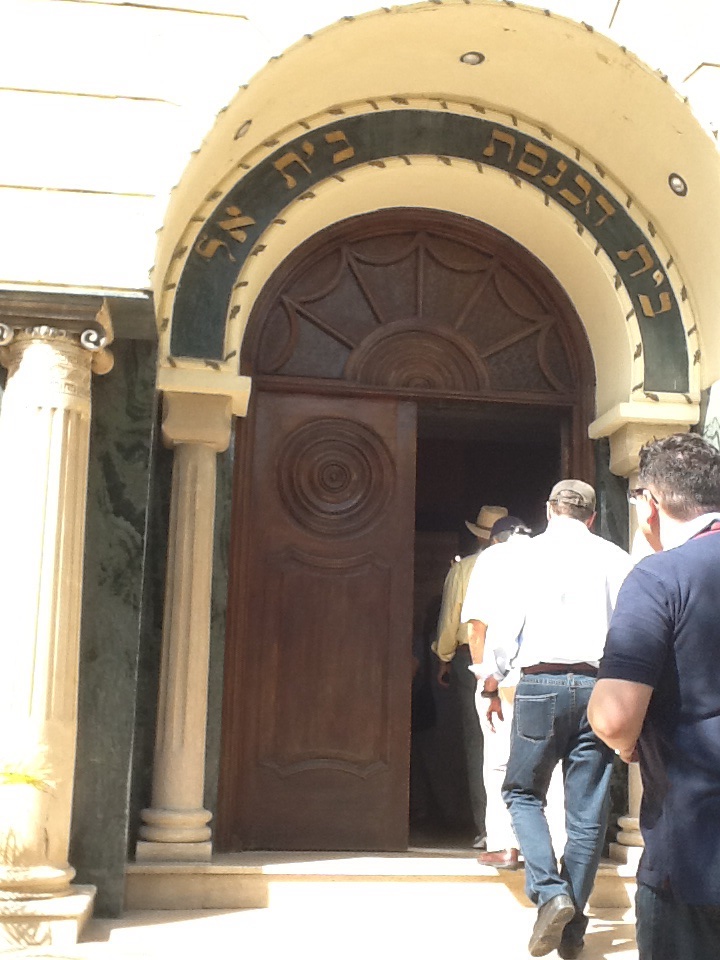
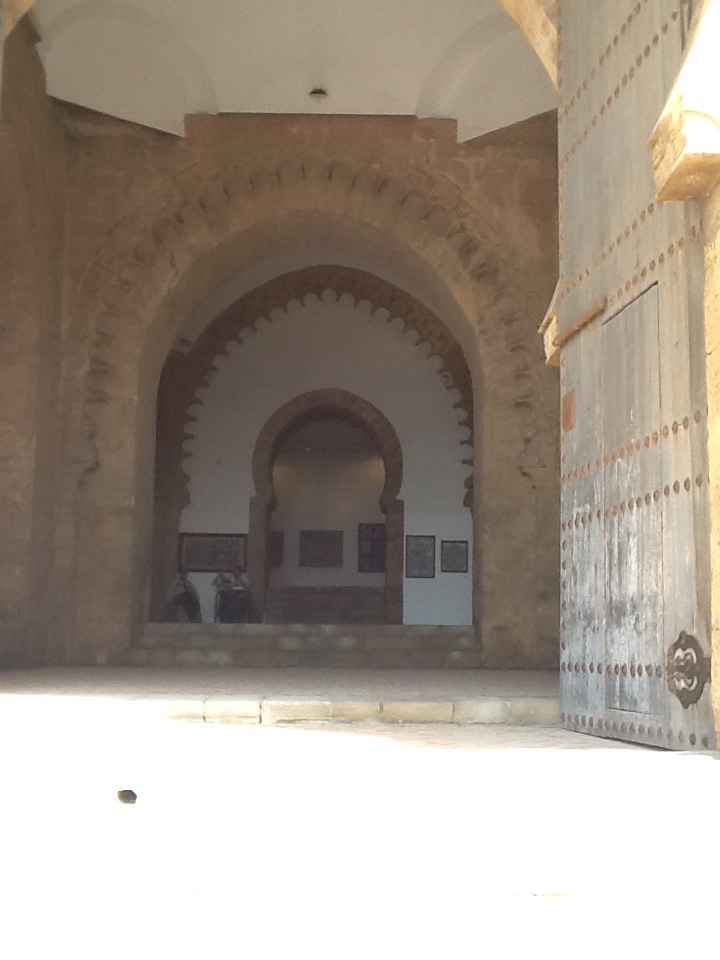
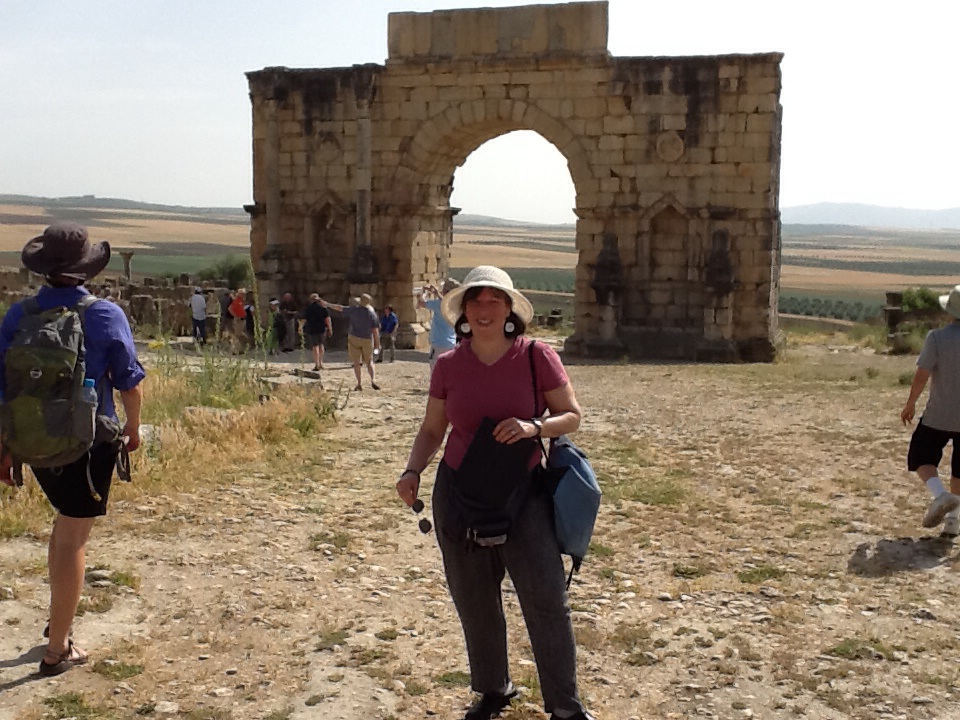
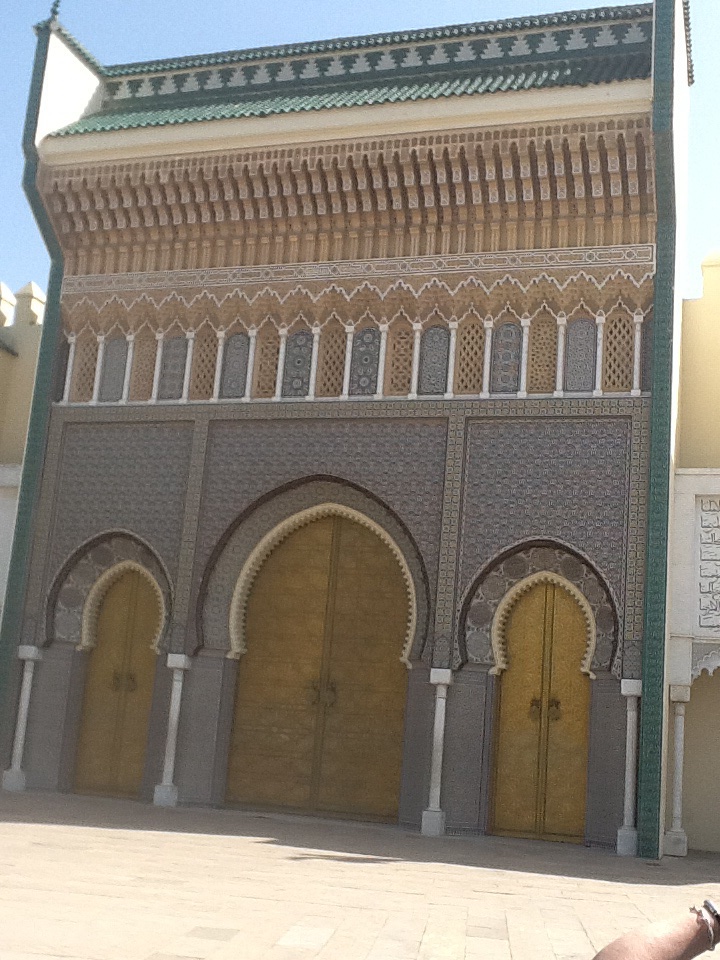
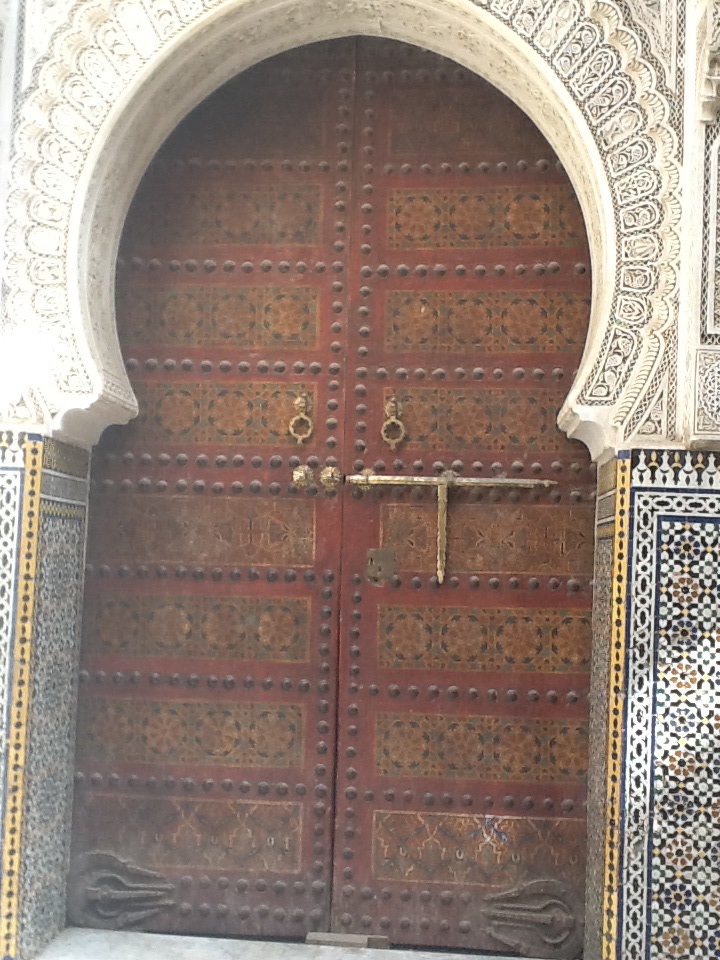
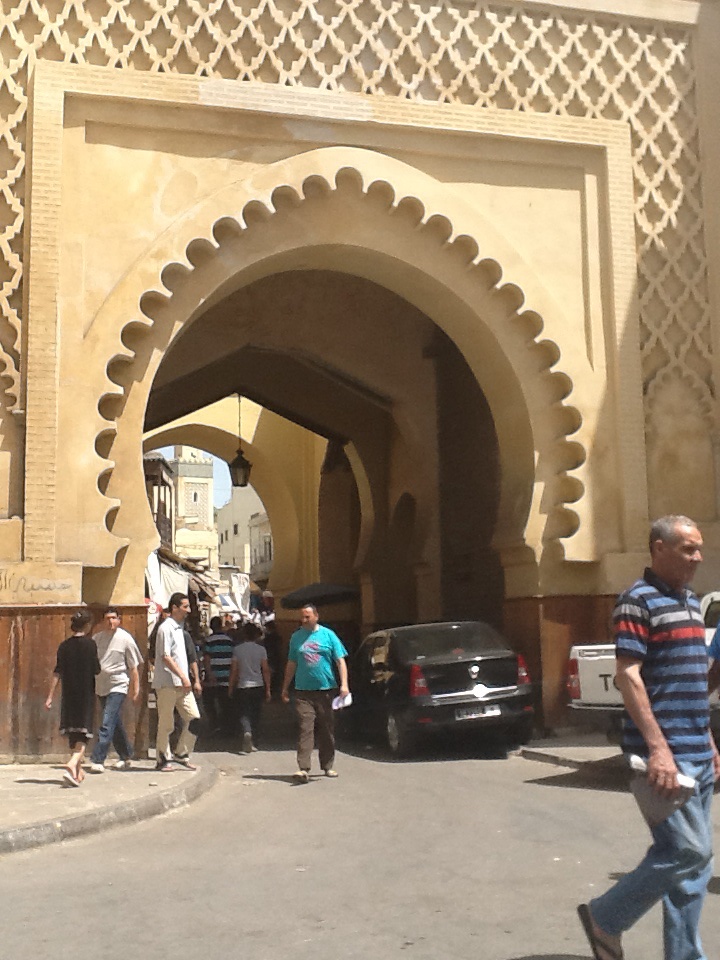
I’ve posted a number of doors and gates in other posts, but here are some others:

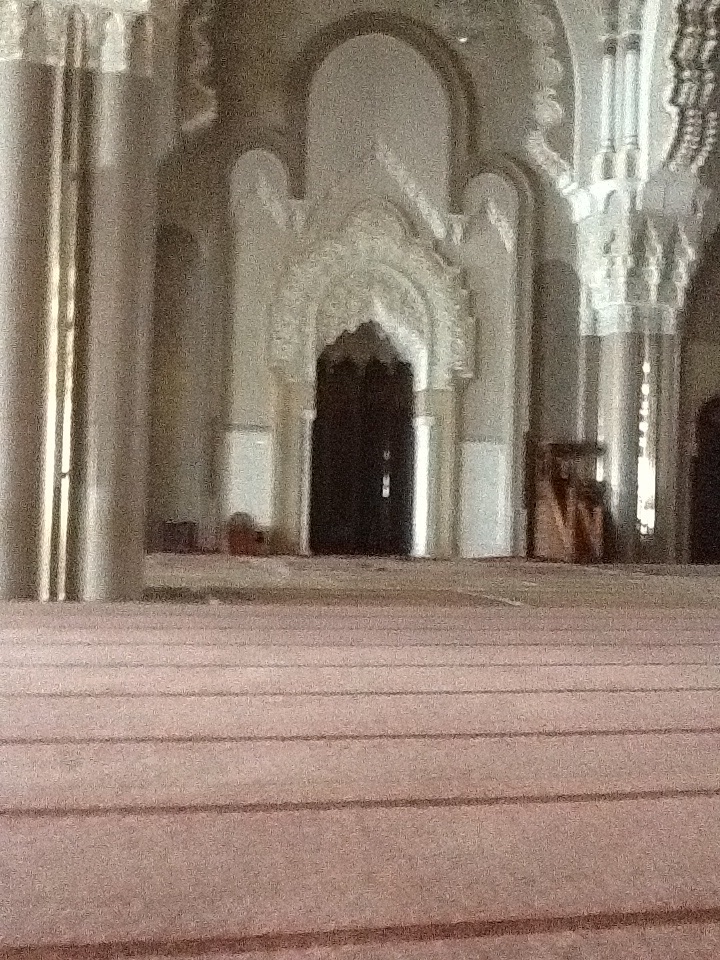
Mosque of King Hassan II, Casablanca (inside)

Mosque of King Hassan II, Casablanca (inside)

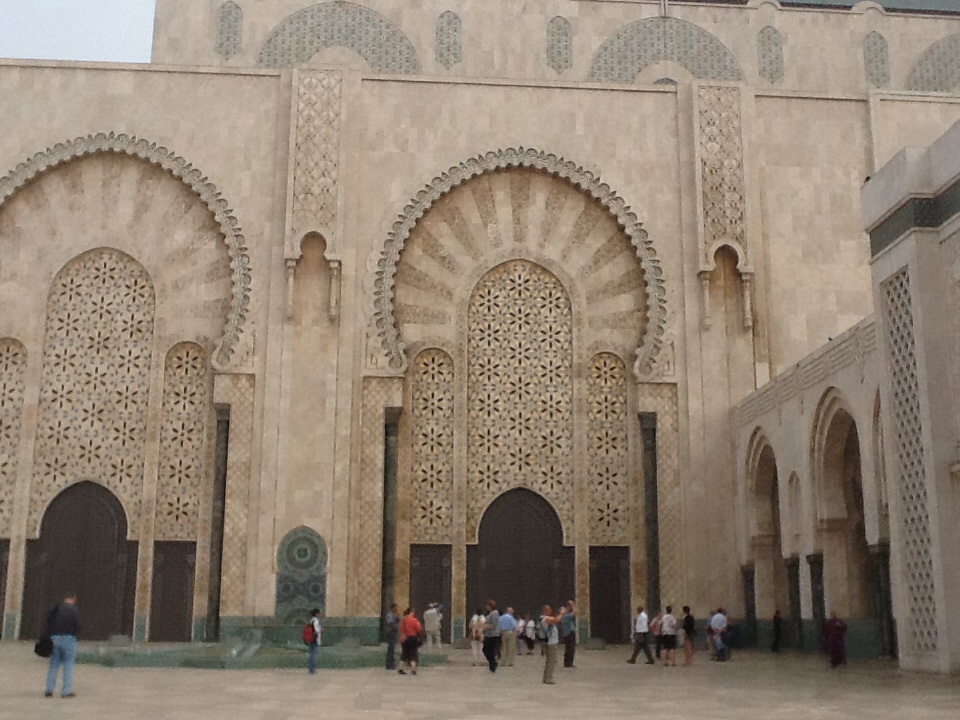
Mosque of King Hassan II, Casablanca (outside)

Mosque of King Hassan II, Casablanca (outside)

Casablanca

Casablanca

Mosque of King Hassan II, Casablanca (outside)

Mosque of King Hassan II, Casablanca (outside)

Rabat

Rabat

Volubulis

Volubulis

Fez mosque

Fez mosque

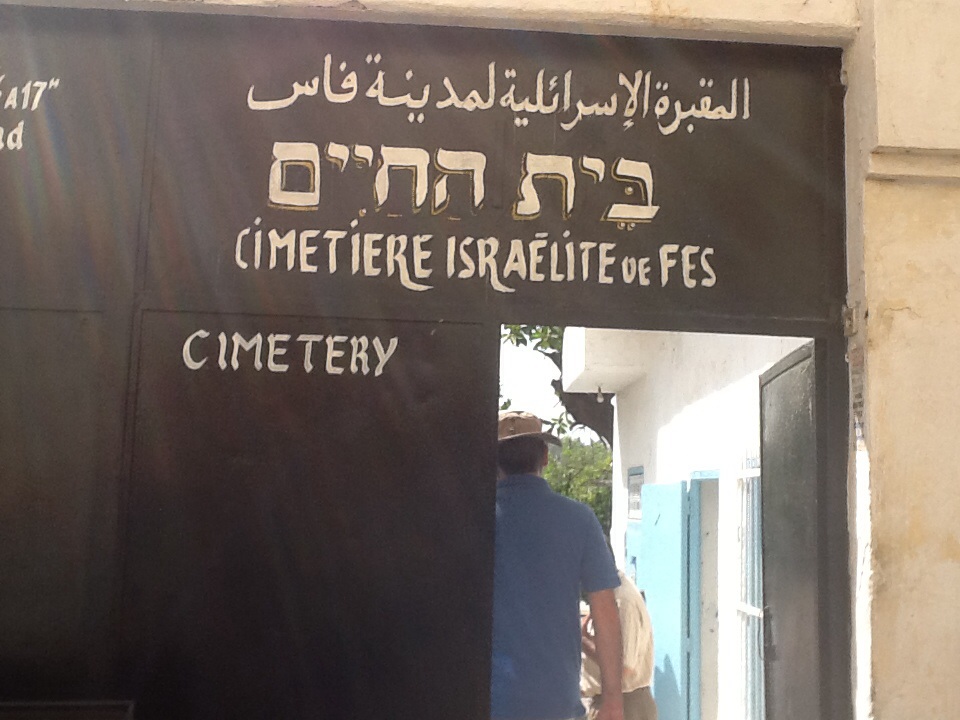
Entrance to Fez Jewish cemetery

Entrance to Fez Jewish cemetery

Madrasa Bou Inania, Fez

Madrasa Bou Inania, Fez

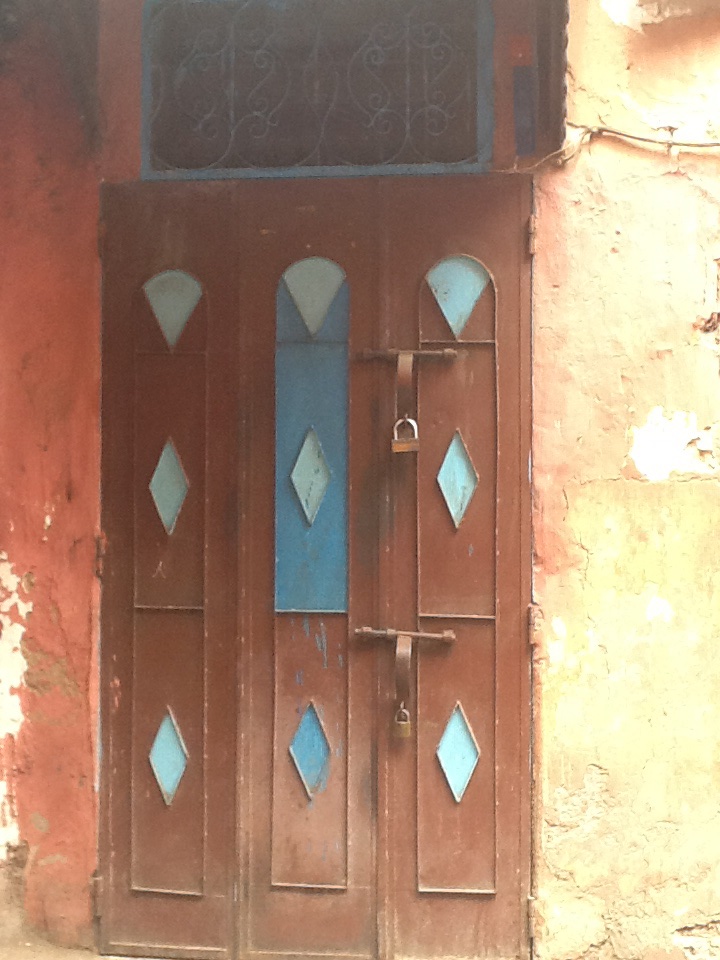
Fez

Fez


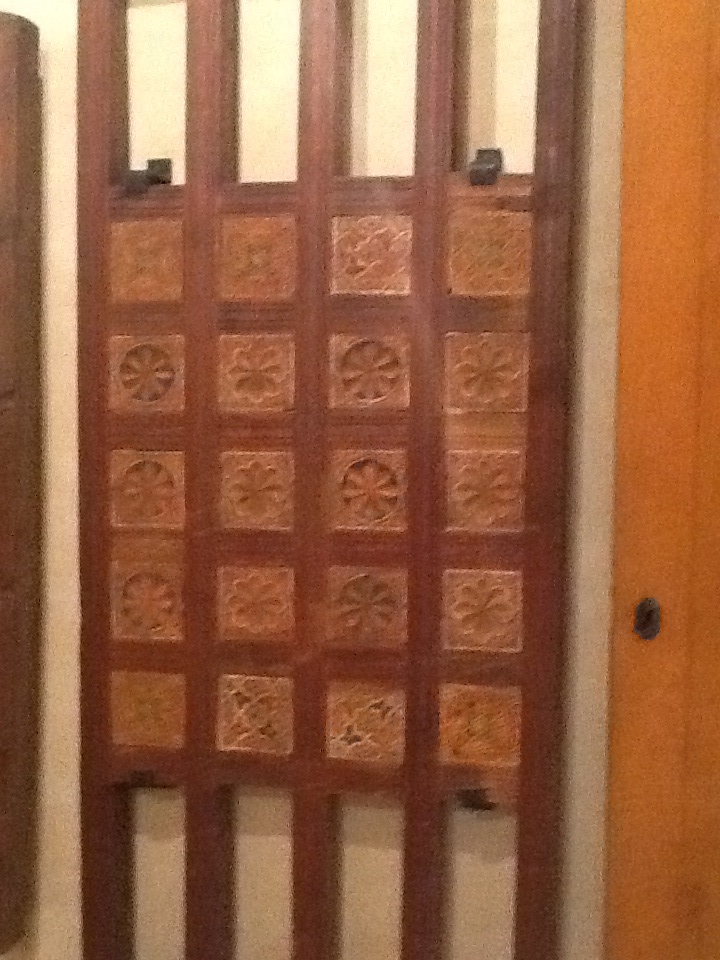
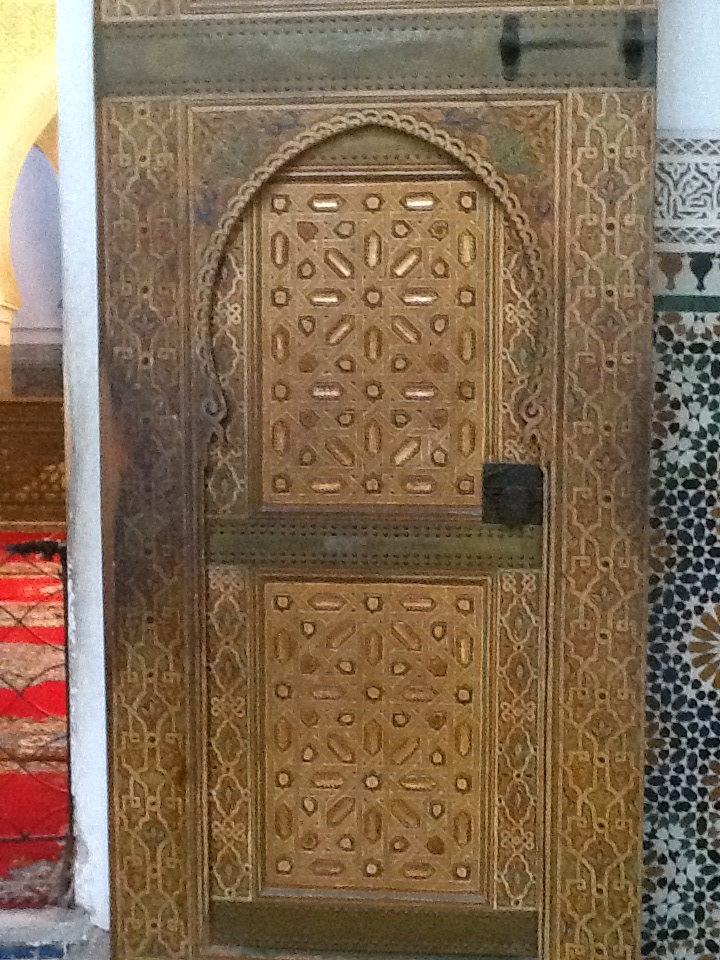
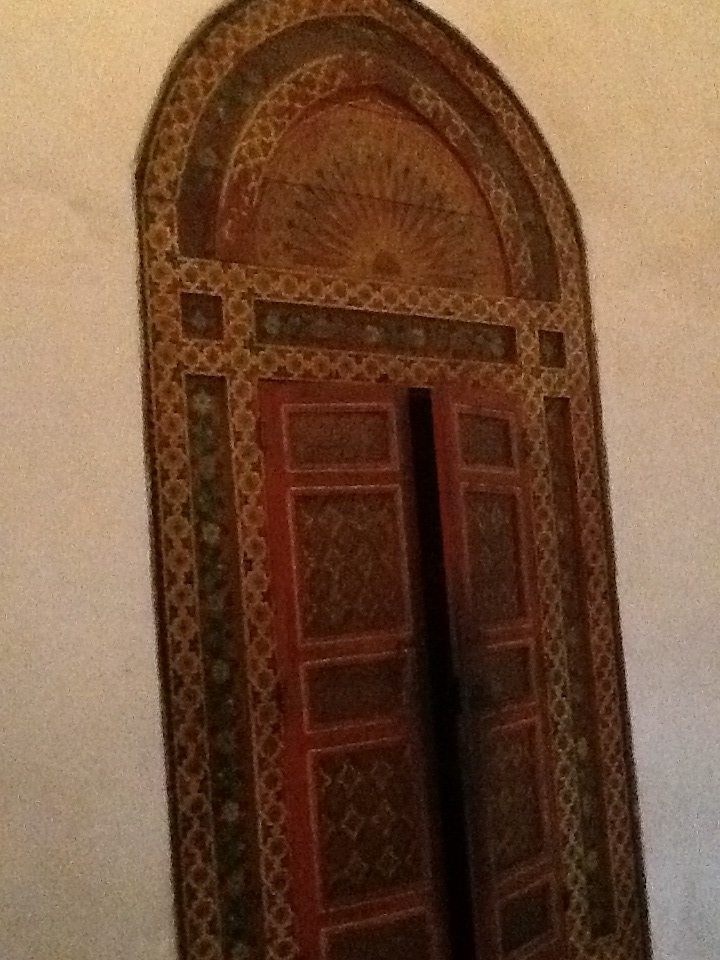
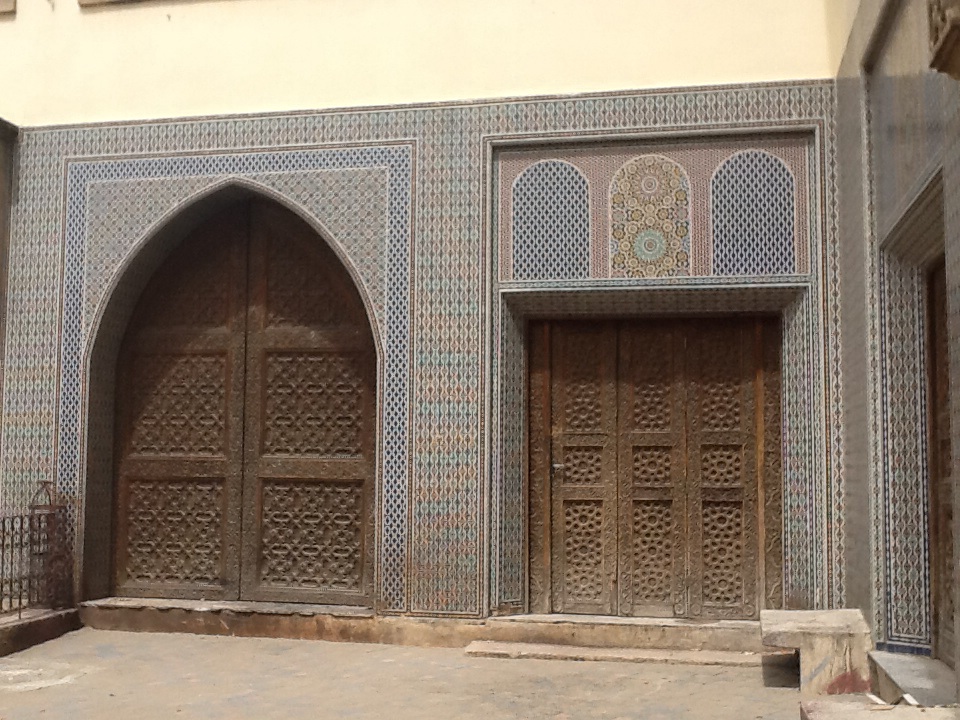
Door in Museum of Wooden Arts, Fez

Door in Museum of Wooden Arts, Fez

Fez, Museum of Wooden Arts

Fez, Museum of Wooden Arts

Elevator, Sofitel Palais Jamai, Fez

Musuem? Fez


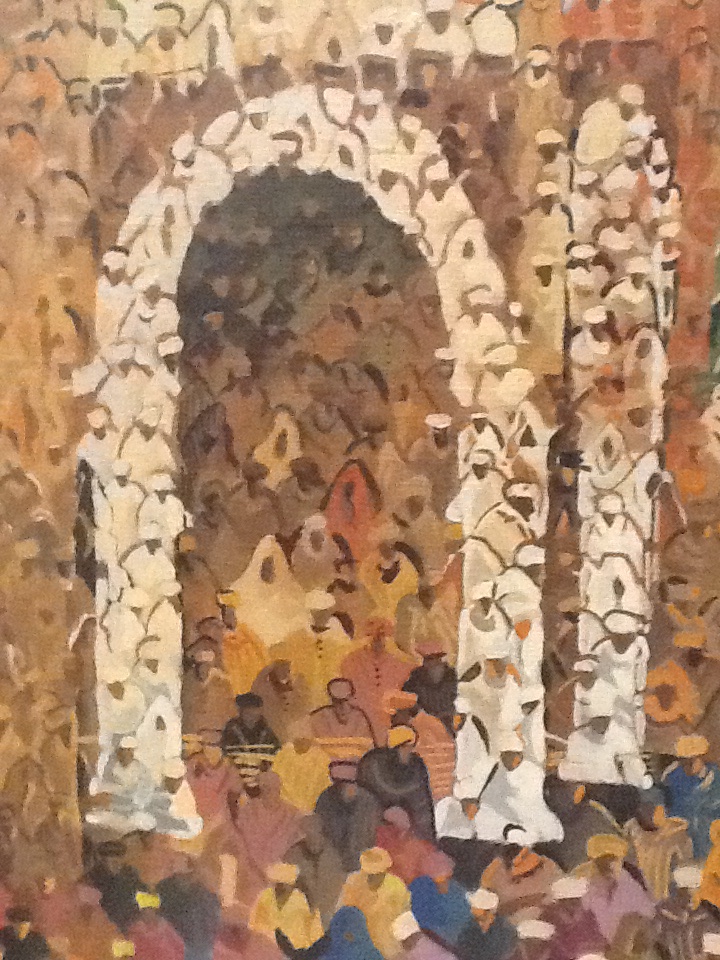
Painting by Hassan Mehdaoui

Painting by Hassan Mehdaoui

image

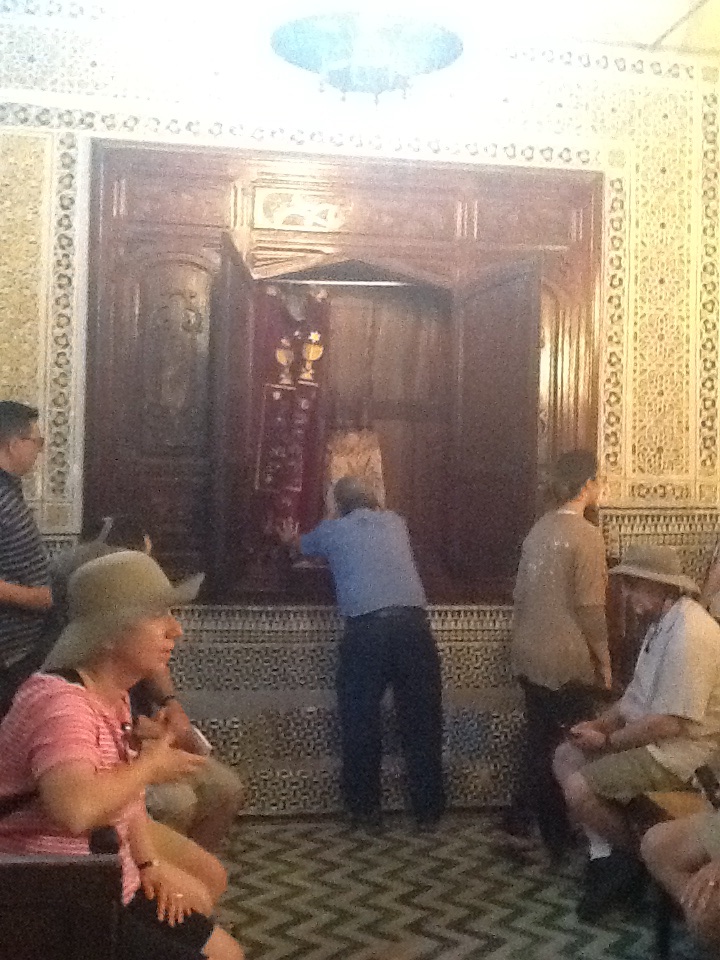
Ark at Fez synagogue

Ark at Fez synagogue

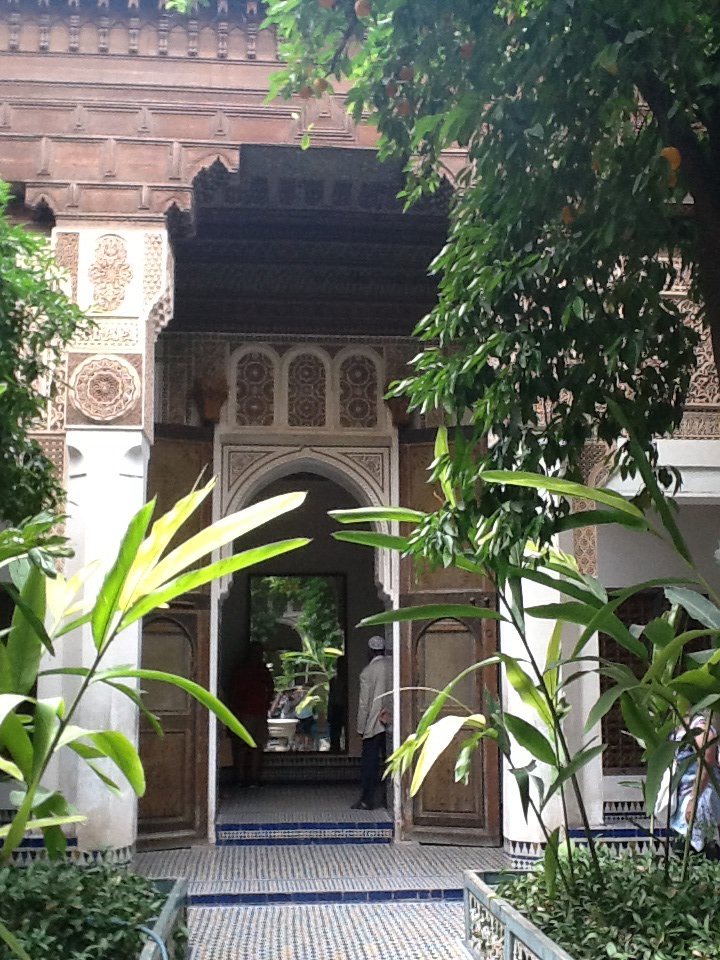
Bahia Palace
Bahia Palace, Marrakesh


Elevator, Sofitel Palais Jamai, Fez

Elevator, Sofitel Palais Jamai, Fez

Fez mosque

Fez mosque

Fez?

Fez?

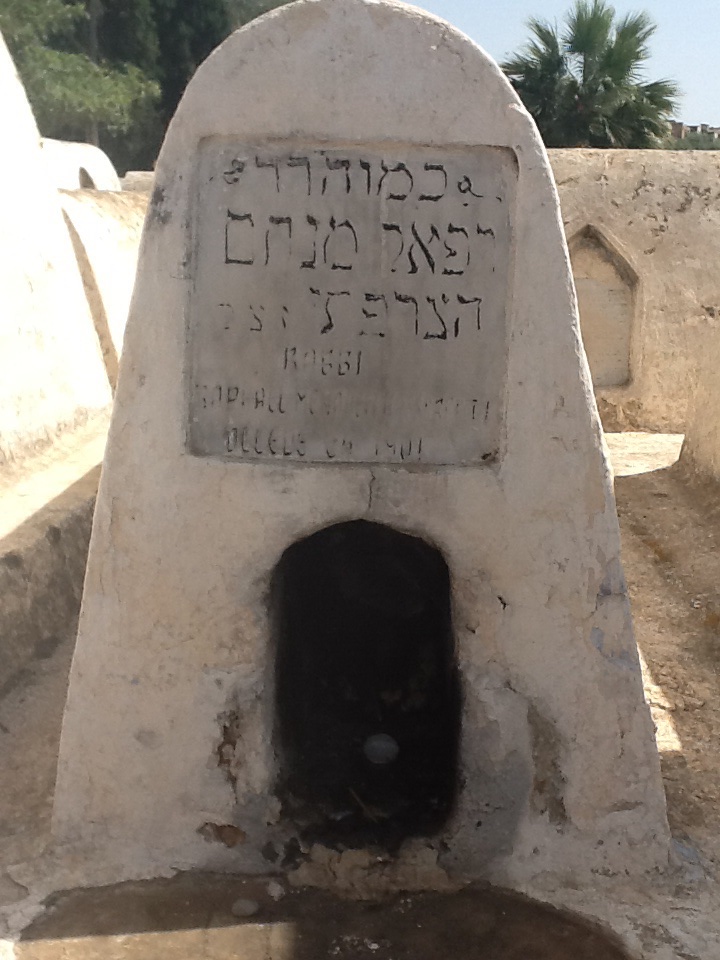
Fez Jewish Cemetery (hole for yahrzeit candles)

Fez Jewish Cemetery (hole for yahrzeit candles)

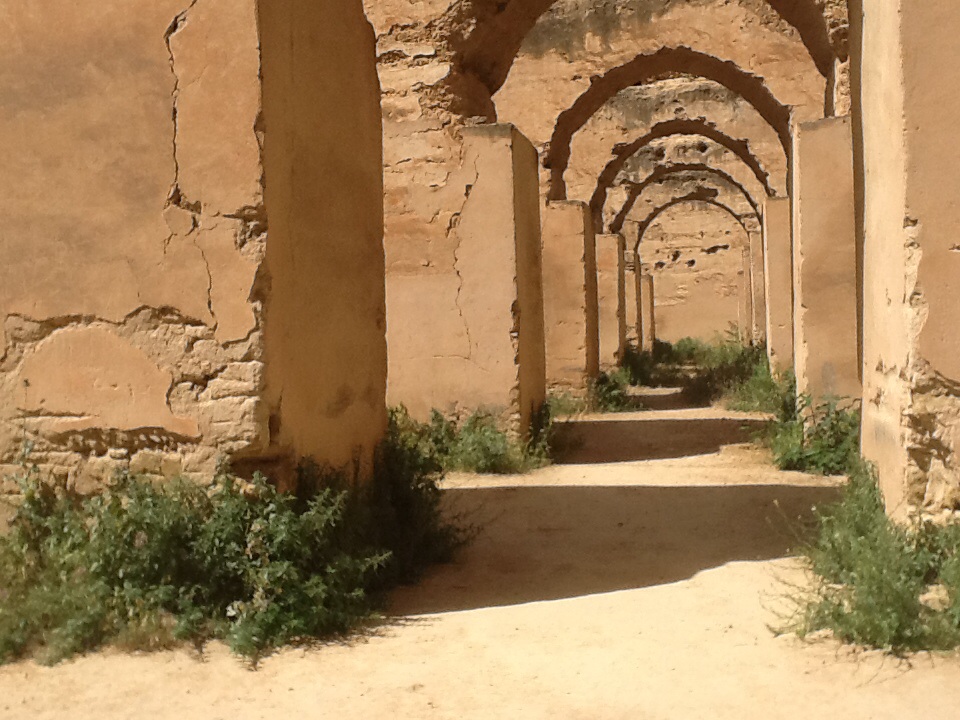
Royal Stables, Meknes

Royal Stables, Meknes

Hamsas – The Moroccan Hand of Fatima

37th Day of the Omer — Discipline of Bonding (Gevurah sh’b’Yesod)

Generally, a palm-shaped amulet derived from the word for “five,” a hamsa is popular throughout the Middle East and North Africa. You often find it on wall hangings or jewelry, or, as you will see below, on doors. Believed to ward off the evil eye, in Islam, the five fingers are thought to represent the five pillars of the Islamic religion.

In Judaism, I like to think of it as “the right hand of God.” I have collected them for years, as for me, the open hand represents my  pastoral work — spiritually keeping my heart and hands open to the relational encounter with the client and with God, as well as the physical act of holding someone’s hand in empathy or in prayer.

The Hand of Fatima refers to the prophet Mohammed’s daughter; in response some Jews call this symbol the “hand of Miriam.” There is also a teaching that the five fingers remind us to use our five senses to praise God.

However, not all hamsas are obviously hand- shaped, as you will see below. Some may look like flowers, like houses, or like weapons. Some may even appear sideways, as they do on two of the doors below.

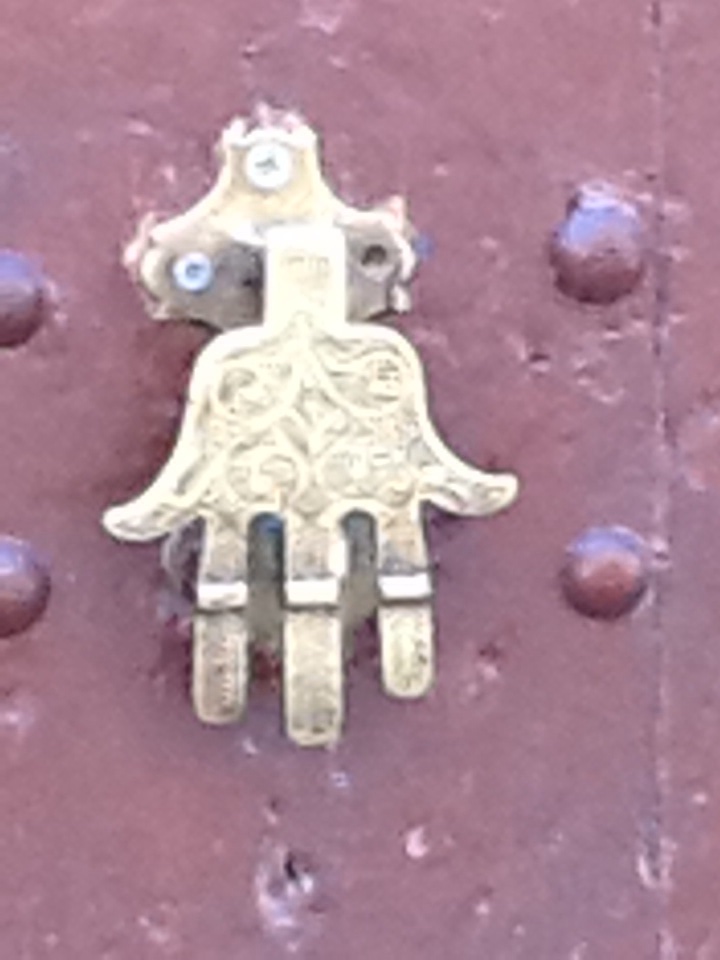
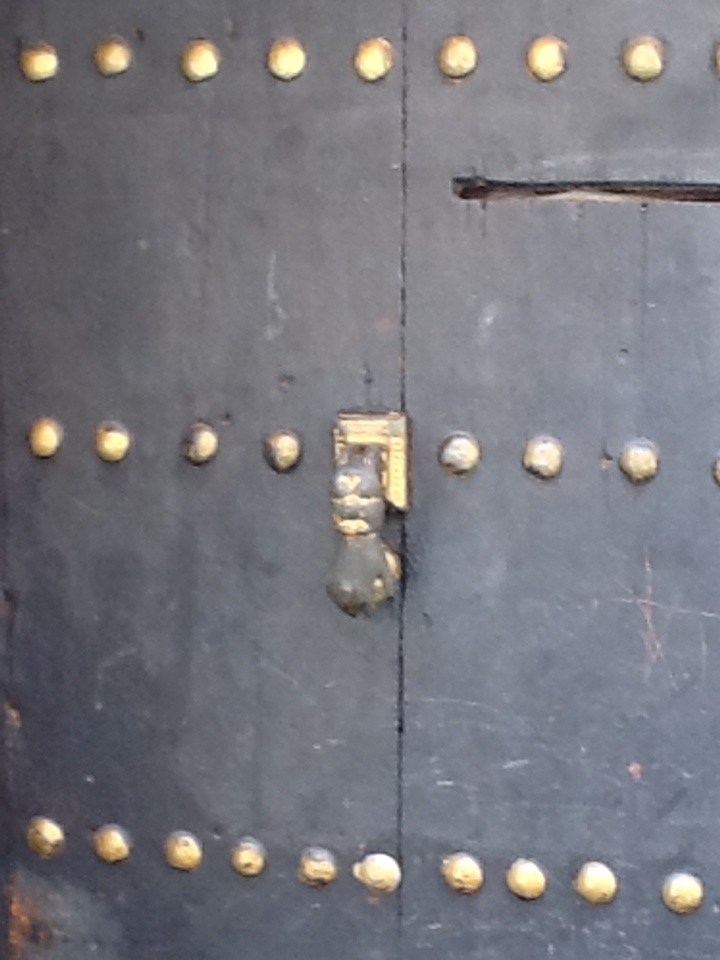
Door knocker

Door knocker; I bought one similar

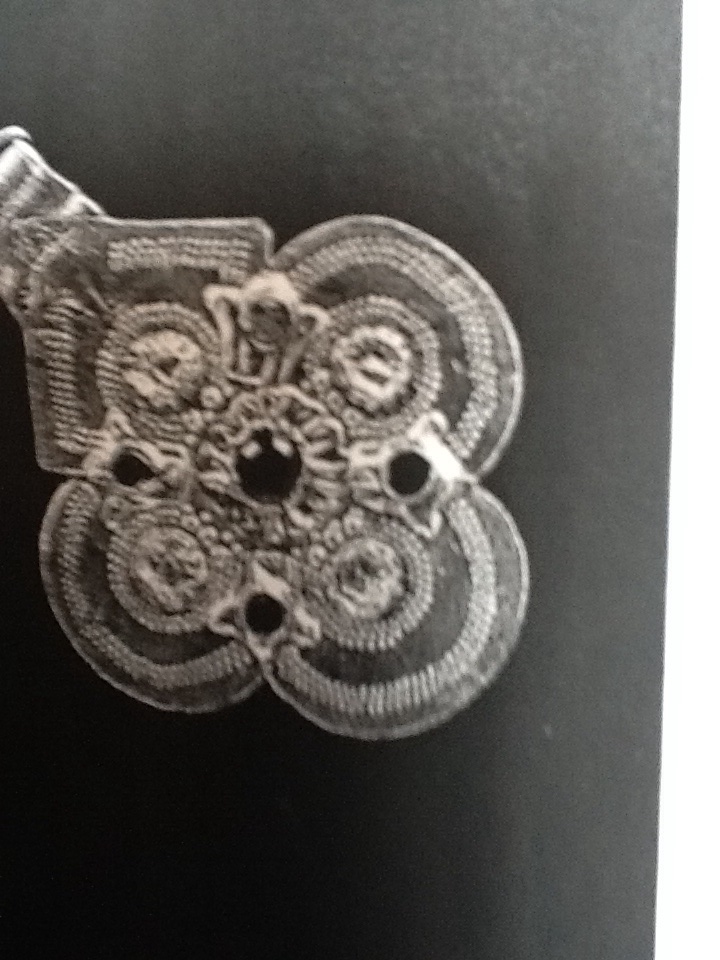
Rose hamsa

Rose hamsa

Handle is a hamsa hand

This door handle is a hamsa hand

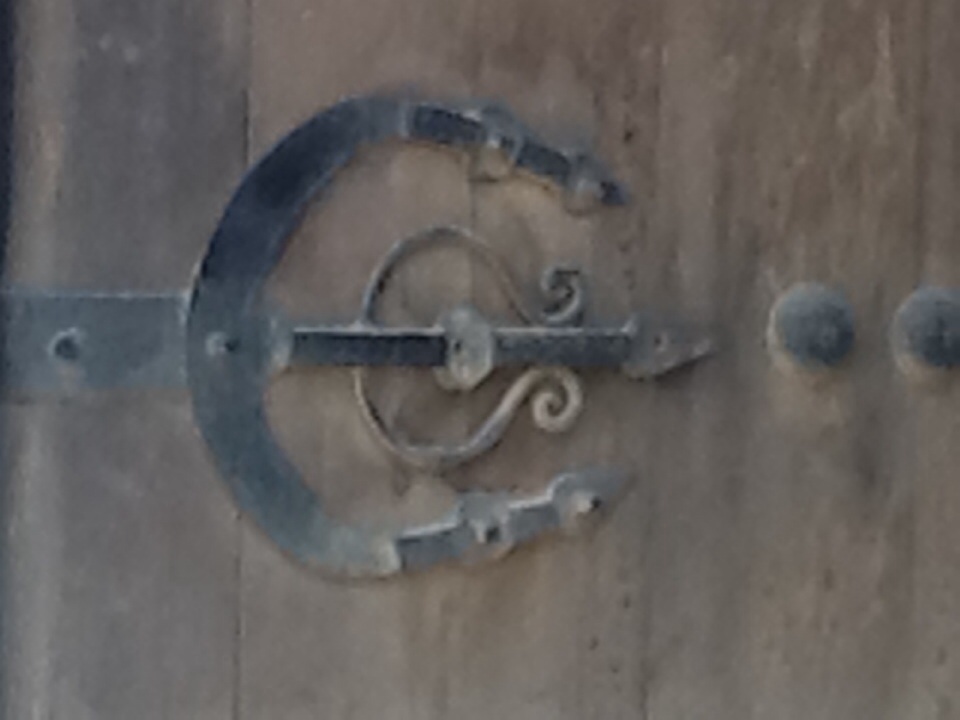
Hamsa, believe it or not

Hamsa, believe it or not, on door

image

This decoration is on most of the door

This decoration is on most of the door

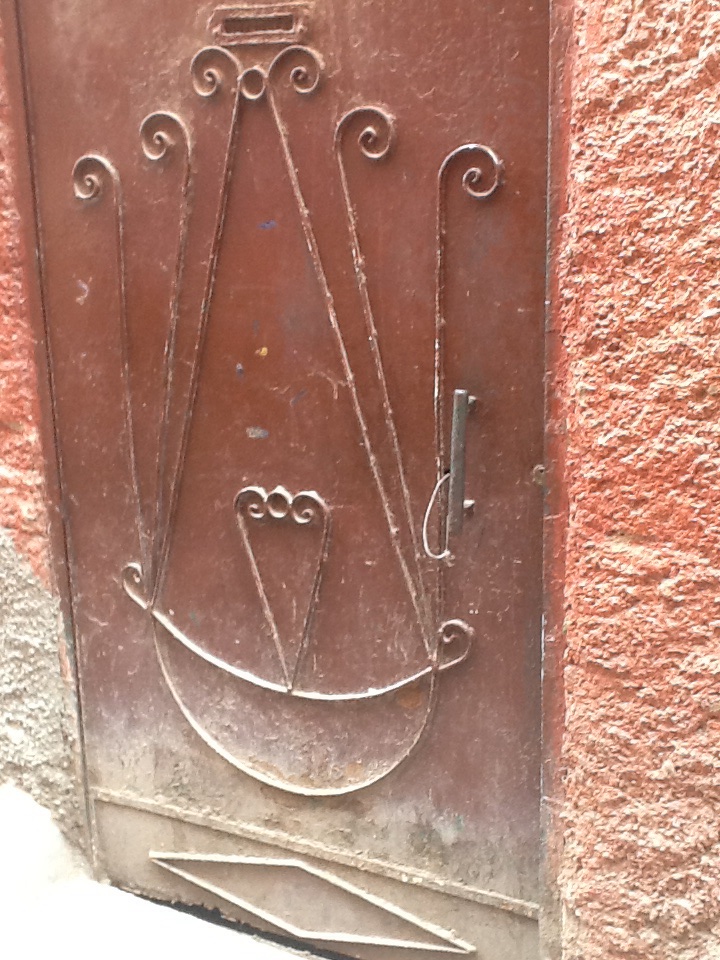
Not your typical hamsa

Door decoration, not your typical hamsa

Door knocker

Door knocker

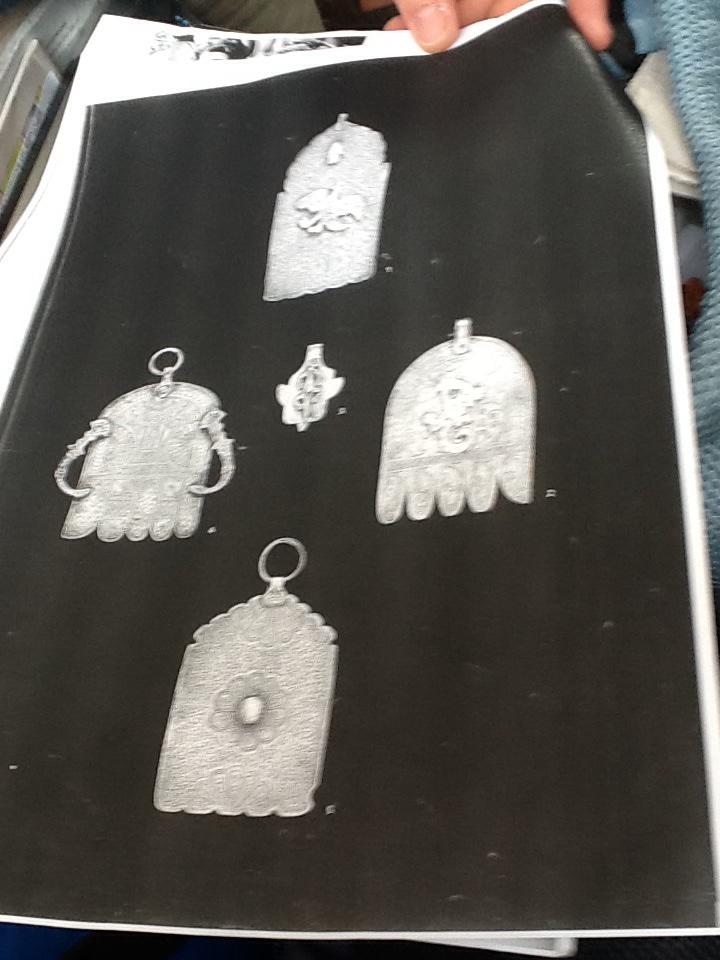
Other versions of Moroccan hamsas

Other versions of Moroccan hamsas

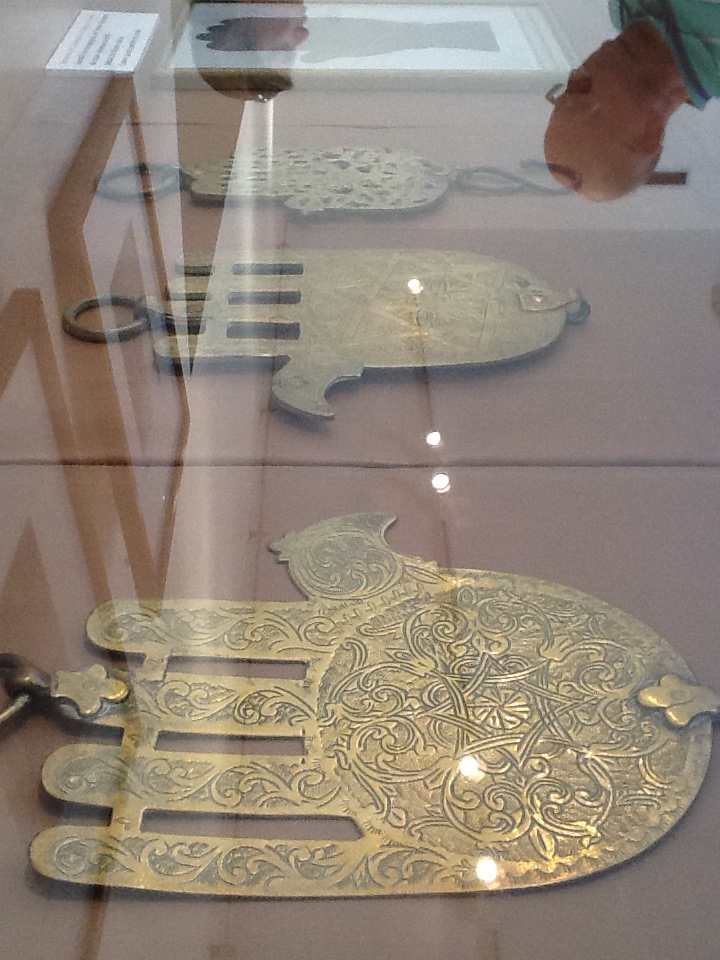
Display Case

Display Case

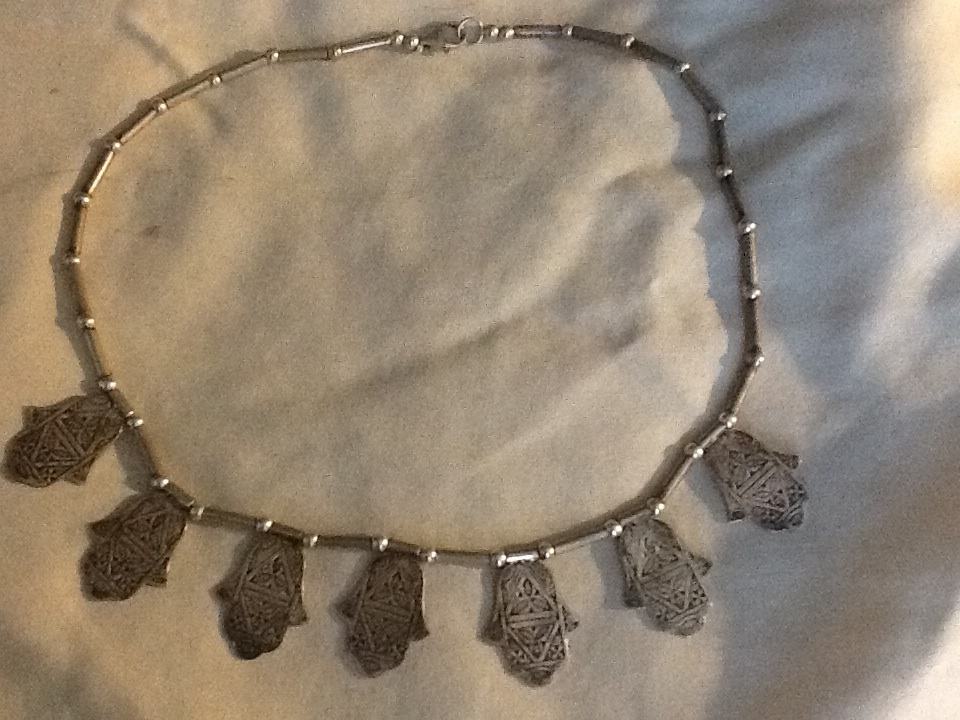
Hamsa necklace I bought for myself
Hamsa necklace I bought for myself