A New Song/Footloose/Shavua Tov (3)

Let us say before God a new song/V’nomar l’fanav shira chadasha.

We were to have dinner with Susan, Yossi and family last night, so Chaim and I again attended Shabbat services at Kol HaNeshama, the synagogue closest to where they live. It is a lovely service, and one of the things that Rabbi Levi Weiman-Kelman does during the service that I have integrated into my own Shabbat practice is having a chazarat ha-shavua/review of the week meditation, in which he invites us to remember highlights from each day since the previous Shabbat. This is a practice that I have done for many years when I light my Shabbat candles and had forgotten that I learned it from Levi! I light the candles, wave my hands over and around them three times (the first time to bring in light for myself and my nearest and dearest, the second time for the larger community of those in my life, and the third time for the world at large). Then I cover my face with my hands and do a chazarat ha-shavua, recalling the highlights of each day that passed since the last Shabbat. There are times when it is hard to distinguish Monday from Tuesday or Tuesday from Wednesday, and at those times, I could be standing over my candles for a very long time before really entering into Shabbat. (Chaim is always very patient as he waits for me to complete my meditation.) I teach this practice to my clients, as well, because it is one of many tools for creating a gratitude practice in one’s life — either to nightly offer hakarat ha-tov/gratitude for favors of the day, or to do so just before Shabbat.

Again, I ran into people I knew at Kol haNeshama — a rabbinic colleague from my Board of Rabbis in Westchester County as well as a woman who went to rabbinical school with me. I recognized her but couldn’t place her, and she told me that she lived in my neighborhood in Park Slope, Brooklyn during rabbinical school and came several mornings to help make minyan when I was sitting shiva at home for my father. I was so embarrassed that I barely remembered her and so grateful that she had been there for me in those emotionally painful days of mourning. She is in Jerusalem for a sabbatical year with her husband and three children writing a book about Israel and the religious imagination.

Two separate interfaith study groups from separate Chicago theological seminaries attended services at Kol HaNeshama last night, and Susan brought home three of the students to have dinner with us, in addition to assorted neighbors and their children. There were about 20 of us around the table, which is apparently the norm in their household every Shabbat. After singing Shalom Aleichem, the melody invoking the angels to join us for Shabbat, we were each handed an “angel card” with a word printed in both English and Hebrew. We went around the table, introduced ourselves, shared a highlight of the week, as well as the blessing on the angel card and what it meant to us. I received the angel of roch/tenderness; Chaim the angel of kavannah/purpose and intention.

Susan spoke a little more about the book she has written, which she calls “a theology of adoption.” I mentioned previously that two of their five children were adopted from Ethiopia. She ties together her love for her children, a painful midrash about Noah and the flood, and her anger at Russia’s President Putin (for his misuse/abuse of orphaned children who could be adopted) in a hard-hitting piece for the Jewish Daily Forward. You can find it at  http://blogs.forward.com/sisterhood-blog/169259/putin-and-the-flood/

This morning Chaim and I went to the feminist Orthodox synagogue, Shira Chadasha. I found myself crying through much of the service, the music is so incredibly beautiful and moving. (Shira Chadasha means “New Song” for a reason.) It’s as if the entire congregation sings as a choir with harmonizations that made my heart soar to heaven. (Chaim and I could not sit together there in this Orthodox synagogue, so it was only afterwards that I found out that he, too, was moved to tears by the music there.)

I was impressed by how far this Orthodox synagogue pushed the envelope on women’s participation, and the woman who led the Torah service had the voice of an angel. It surprised me, however, that I was only one of about 5 women there who wore a tallit/prayer shawl. Even women who were granted the honor of an aliyah at the Torah, and even the woman who chanted haftarah did not wear one.

There were two baby-namings there this morning. I know the grandmother of the first baby; she works for UJA in Israel and joins our spiritual care task force meetings in NY either by phone, Skype, or in the flesh, so I was delighted to be there when she and her family had a simcha. The bigger surprise was that when the mechitza (the curtain which divided the men’s and women’s sections) was moved aside at the end of the service and I looked to find Chaim, I saw him with our friend Cantor Bob Scherr from Williamstown, MA! Bob is in Jerusalem with a group of interfaith students from Williams College, where he serves as the Jewish chaplain.

Bob said he could go home fulfilled now — he was waiting to run into someone he knew in Jerusalem — that’s always part of the fun and mystery and serendipity of coming to Jerusalem. We helped him accomplish his mission, though he still has to explain why he did not tell us beforehand that our trips would overlap!

Since Shira Chadasha provides an incredible kiddush after services (including hot cholent), and after determining that Bob had other plans with his daughter who lives in Jerusalem, Chaim and I decided to skip the lunch that awaited us at home.  Instead we started on our afternoon walk right after devouring the best cholent I have ever eaten (Chaim’s cholent is really good, but this one was clearly not lo-cal). Cholent, by the way, is a long-cooking meal for those religious Jews (Chaim among them) who won’t eat food cooked on Shabbat. Set to cook before Shabbat starts, the meal (usually meat, beans, and either potatoes or rice or barley, though Chaim only makes a vegetarian version) is either left in a low-temp oven, a low flame on the stove or in a crockpot until Shabbat lunch, so a hot meal can be had.
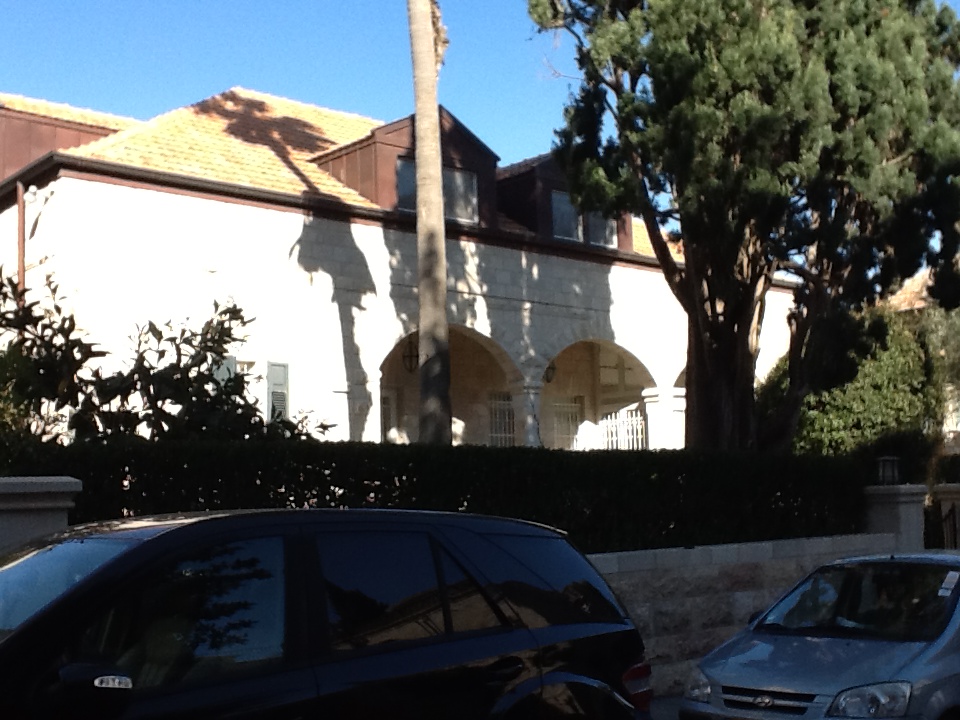
buber home

Martin Buber’s former home at 3 Chovavei Tzion (Lovers of Zion) Street

Based on one of the walks we found in Footloose in Jerusalem, our walk took us past the following places: the Sholom Hartman Institute, the old Hansen Leper Hospital, the Van Leer Foundation, The Israel Academy of Arts and Sciences (Israel’s “brain trust”), the President’s residence (the president is not the same position as the prime minister, BTW), the Jerusalem Theater (where the Begin-Sadat press conference took place in 1977), the Museum of Islamic Art, the spot where Folke Bernadotte was assassinated (he’s the Swede who Bili’s husband Mats is researching), philosopher Martin Buber’s home, homes with beautiful iron grillwork, typically done by Arab craftsmen, a rose garden, and a lot of Templer buildings. The Templers were members of a German Protestant sect who believed that living in the Holy Land would hasten the second coming of Christ. They gave the name to the German Colony of Jerusalem, the trendy neighborhood where I lived during rabbinical school and next door to the Greek Colony where Chaim and I are currently staying.
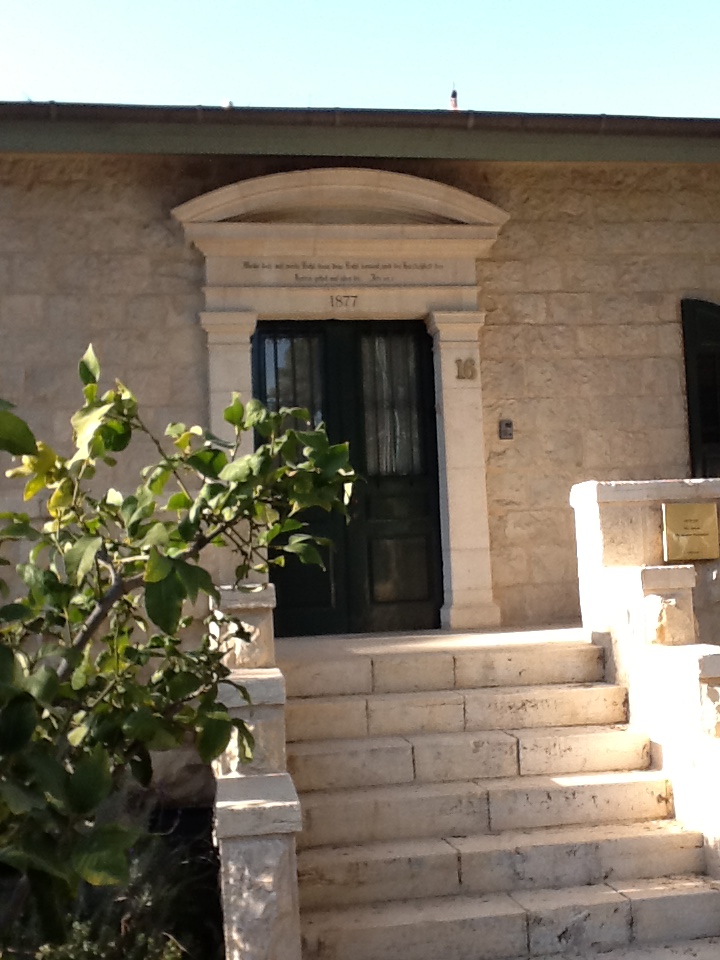
templer entrance

Entrance to a Templer Residence on Emek Refaim St.

The quote above the door is Isaiah 60:1 in German: “Kumi Ori/Arise, shine for your light has dawned. The presence of the Lord has shone upon you.”

Do you remember the news stories about the crazy Orthodox Jews who would stone cars that dared to drive through their neighborhoods on Shabbat? I think I started to identify with them a little today. A LOT more people seem to drive through the city streets on Shabbat than I ever remember from past visits, when Shabbat in Jerusalem was really Shabbat for almost everyone (unlike in other places in Israel which are generally more secular). I used to be able to walk in the middle of the road on Shabbat without any worries. That is impossible today. And it made me very sad, the loss of that sanctity.

By the way, if anyone plans to come to Jerusalem, start your walking practice earlier rather than later — there are a lot of hills, and you need to be in good shape!

We just got home from seeing the very moving and tragic French film Amour. A lot to think about.

9 Shevat/January 19, 2013

If I forget you, O Jerusalem/Shabbat Shalom (3)

If I forget you, O Jerusalem, let my right hand wither; let my tongue stick to my palate if I cease to think of you, if I do not keep Jerusalem in memory even at my happiest hour. (Psalms 139: 5-6)

If I Forget Thee, Jerusalem

If I forget thee, Jerusalem,

Then let my right be forgotten.                                                                                                                                                                                        Let my right be forgotten, and my left remember.                                                                                                                                                    Let my left remember, and your right close                                                                                                                                                                And your mouth open near the gate.

I shall remember Jerusalem                                                                                                                                                                                         And forget the forest — my love will remember,                                                                                                                                                       Will open her hair, will close my window,                                                                                                                                                              Will forget my right,                                                                                                                                                                                                      Will forget my left.

If the west wind does not come                                                                                                                                                                                     I’ll never forgive the walls,                                                                                                                                                                                             Or the sea, or myself.                                                                                                                                                                                                 Should my right forget,                                                                                                                                                                                                    My left shall forgive,                                                                                                                                                                                                            I shall forget all water,                                                                                                                                                                                                         I shall forget my mother.

If I forget thee, Jerusalem,                                                                                                                                                                                               Let my blood be forgotten.                                                                                                                                                                                                   I shall touch your forehead,                                                                                                                                                                                       Forget my own,                                                                                                                                                                                                                 My voice change                                                                                                                                                                                                                For the second and last time                                                                                                                                                                                            To the most terrible of voices —                                                                                                                                                                                      Or silence.                                                                                                                                                                                                                   (Yehuda Amichai, Poems of Jerusalem)

amichai

Chaim and I walked a new way to the Mahane Yehuda market/shuk this morning. We came upon the following memorial to the great Israeli poet Yehuda Amichai: “Jerusalem is a port city on the shore of eternity.” Like the poem I inserted above, that line comes from a poem in his book Poems of Jerusalem, which is one of only a few books that I ultimately packed when we came to Jerusalem.

I’ve been called to poetry on this trip. I already spoke about the T. Carmi book of poetry I bought, and the other day I picked up another book of poetry by Yaakov Avitzuk, unknown to me until now, but the poetry (from what I’ve been able to translate so far) is about kibbutz life in a very spiritual, prayerful way.

I haven’t read any fiction except for one short story from The New Yorker. This is quite rare for me, since I usually read several books a week when on vacation. I have been reading the articles that Chaim clips for me. But this trip feels too short to spend my time in a book. I want to be out there experiencing.

Things are heating up here for the election on Tuesday. A lot of electioneering is going on outside on the streets. Today is the last day that polls can be performed, and the news today is looking a little better for Meretz, the left-leaning party that we would favor. Chaim realizes that had he brought his Israeli identity card, he would have been able to vote in this election. Alas, he did not think to do so and is kicking himself.

On our way back from the shuk, Chaim saw a group of Meretz folks across the street, so while I went to pick up a few more things in the supermarket, he went across the street to speak with them. He met Rabbi Ehud Bandel, former president of the Conservative movement in Israel, who is listed as #13 on the Meretz slate. It’s very unlikely that Meretz will get enough votes for #13 to get into the Knesset, but Chaim was glad to see that a liberal religious Jew was actively part of Meretz, since it’s been known as a secular party. In fact, the lines shouldn’t be so firmly drawn between religious and secular. If you would like to understand how the election system in Israel works, I got a great link that will help. Go to http://www.isrealli.org/the-nuts-and-bolts-of-israels-upcoming-election/

shuk
I very much wanted to get a picture in Mahane Yehuda today, but it was SO crowded, it was impossible to stop anywhere without being jostled along in the sea of shoppers. Therefore I am posting a photo from our visit yesterday to the Carmel Market in Tel Aviv. Imagine this scene with about 50 people crowded into the spot where those two men are standing (and about 200 in the space between them and the people you see further in front of them), and you’ll have a sense of Mahane Yehuda on a Friday before Shabbat.
Yes, I still have more than a week left of this trip, but I am getting really sad about leaving next Saturday night. I asked Chaim if he saw us coming again in the near future, and he said yes, but that we should stay in another city. “If I forget thee, O Jerusalem,” I wanted to say to him. How could that be? “Well, what if we stayed in Jerusalem for a week of it, at least?” I asked. Should my right forget, my left shall forgive… 
Maybe I can get bargain him up to 4 weeks in Jerusalem. Bargaining is the Middle Eastern way…
Shabbat shalom.
7 Shevat/January 18, 2013

Abortion in Israel and my new mission

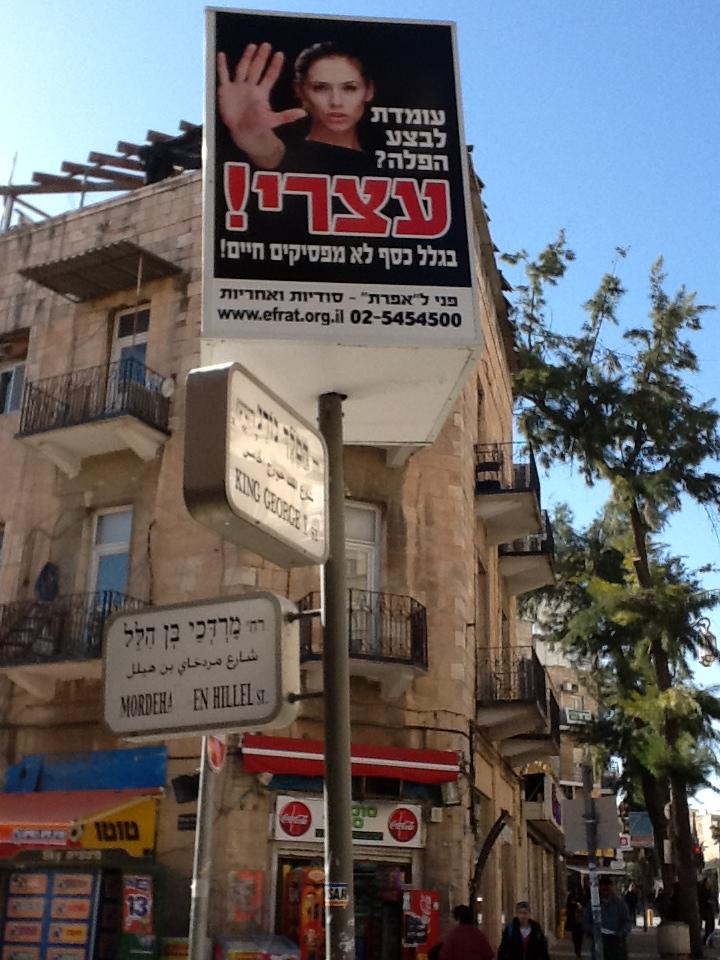
efrat poster

Anti-Abortion Poster in mid-town Jerusalem:

“If you are considering an abortion, Stop! Do not end a life because of money.”

Because I don’t have the time or patience to read the newspaper cover-to-cover, I have a personal reader. His name is Chaim, and when he reads the papers (whether here in Israel or at home in the States), he cuts out the articles that he thinks I must read or that I would be most interested in. Most of the time, he makes good choices. One of the themes he knows always to clip are articles about reproductive choice and abortion restrictions (or victories) around the world.

So it was that I learned about an Israeli anti-abortion organization called Efrat that just won the Jerusalem Prize, an annual award sponsored by right-wing paper Batsheva.  An editorial in Ha-aretz on January 4 alerted me to the fact that this organization uses pressure and propaganda tactics not unlike those of the right-wing Christian pregnancy crisis centers in the U.S. But in Israel there is a nationalist agenda “to encourage birth in the Jewish nation” that further complicates the issue of a woman’s right to choose, in addition to a very family-centered society in which the choice to not have children is laden with heavy societal disapproval. Women who already feel guilty about contemplating an abortion are ripe victims for an intimidating organization like Efrat.

On January 8, Ha-aretz again reported on the Efrat organization, this time about Orthodox Rabbi Benny Lau’s scathing attack on Efrat in which he affirms that “the slogan ‘abortion is murder’ is neither rabbinical law nor Judaism.”

As many of you know, I have been a passionate advocate of reproductive choice and abortion rights since my early 20’s. After college, I moved to Santa Cruz, CA, where I received training as a health counselor through the Santa Cruz Women’s Health Collective. I became the coordinator for pregnancy counseling there, a volunteer position, and also was a member of the newsletter committee, which produced a feminist health newsletter 4 times a year that was sent (and read) internationally.

In addition to my work at the SCWHC, I held a paid position as an abortion counselor and medical assistant at a different clinic. I would counsel the women when they entered the clinic, and I was with them throughout their abortion procedure, holding their hand, as well as assisting the doctor. We were often picketed at the clinic, even then, which was 30 years ago. Some of the doctors were called at home and threatened; some of them couldn’t hack it and left the job.

Most will assume that my feminism and social activism were nurtured at my alma mater, Oberlin College, not only the first coed institution of higher learning, but also the first to accept African Americans, where progressive politics, feminism, and activism still reign supreme. And that would be true.

But my specific interest in reproductive choice grew out of an experience I had in Jerusalem in 1981.

After spending my fall semester 1980 in London, I travelled in Europe, mostly by myself, and then took a boat from Italy to Greece to Haifa. I planned to finally meet my longtime penpal Bili and her family in the flesh and then to go to a kibbutz for ulpan, an intensive Hebrew program.

Things weren’t quite so simple. It turned out that my seasickness on the boat was more than seasickness, and that I had arrived in Israel pregnant. Thanks to the counseling I received at Shilo (an organization not so different from the SCWHC where I later worked), I had an abortion at Hadassah Hospital, and was soon on my way to kibbutz.

The process included my being interviewed by a social worker who brought my case to a committee of 3, herself and two doctors, who determined that an abortion in my case was appropriate. Indeed, they could have said no, and there is no such thing as a private abortion in Israel. (Shockingly, married women under the age of 40 in Israel cannot get an abortion unless there is a health reason for self or fetus, there is an emotional reason — for which a psychiatrist must sign off — or if the pregnancy is not her husband’s. It is commonly accepted in Israel that a woman’s job is to bring babies into the world and to have a family. I remember the waiting room at Shilo in 1981 and my surprise that there were ultra-Orthodox women there. Now I think: Thank God there were ultra-Orthodox women who loved themselves — and the children they already had — enough to be there.)

So the Efrat news story upon my arrival in Israel this trip truly got me in the kishkes. I realized I had no idea what the whole story was concerning abortion rights in Israel today. Not only that, I had a debt to repay to Shilo. Big time. I teach about gratitude/hakarat hatov practice all the time with my students and clients. So I emailed Shilo and asked if I could come to meet with them while I was still in Israel.

Dear Staff at SHILO,

In 1981, as a 20-year old American on her way to a kibbutz ulpan, I arrived pregnant in Israel. I was fortunate enough to be connected up with SHILO, had an abortion at Hadassah Hospital, and then was on my way to the kibbutz for several months, and then back to college in the U.S.

I became active in reproductive rights work in the US, serving as a pregnancy and abortion counselor in two different clinics in California, and actively volunteering for (and financially supporting) organizations such as NARAL New York and Planned Parenthood in the US.  

I am now a Reform rabbi, and though I have been to Israel many times since 1981, I have never come to thank you for what you did for me so many years ago.

I have been concerned about the situation here as I read about the Efrat organization. Their tactics sound like those of right-wing Christians in the US. Might it be possible for me to come and meet with someone to find out more about the situation? I will be in Jerusalem until January 27.

many thanks and many blessings to you all,

So, this morning I met with Orli, the executive director of La-da’at Livchor Nachon (Choose Well), formally Shilo. I learned so much in our conversation about abortion in Israel, the mission of the organization, the incredible work they do on a shoe-string, and most important of all, that helping them raise money to do their important work is my new mission. (Jane and Miriam, are you reading? Jane and Miriam are spiritual director friends who have stood by my side as I’ve tried to discern what my truest tikkun olam/social action project in the world is meant to be.)

The Jewish women in my life are generally pro-choice women who understood in the last few elections that it truly mattered that we would elect a Democratic president in order to protect the Supreme Court and Roe v. Wade. We care about this issue and we vote with this issue in mind.

So I appeal to those who are reading and care about this issue and care about Israel to help me in this mission, either financially or with leads to potential funders or with media/advocacy expertise. Israel does not have the kinds of advocacy organizations (like NARAL Pro-Choice) that we do. La-da’at Livchor Nachon has old medical equipment, they desperately need to be able to fund an advocacy/media staff person who can respond to Efrat effectively and bring the issue of reproductive choice and a woman’s right to choose into the public eye in a consistent way. They need money for ads in Arabic, Amharic, Russian, English, and Hebrew, since they need to reach more women (right now it’s primarily through word-of-mouth). They no longer have money to hold sex education groups in East Jerusalem (the Arab section of the city). If you are in a position to make a donation of any size, go to their website to see what they do and become a supporter. http://www.shilo4u.org.il/english.htm  THANK YOU!

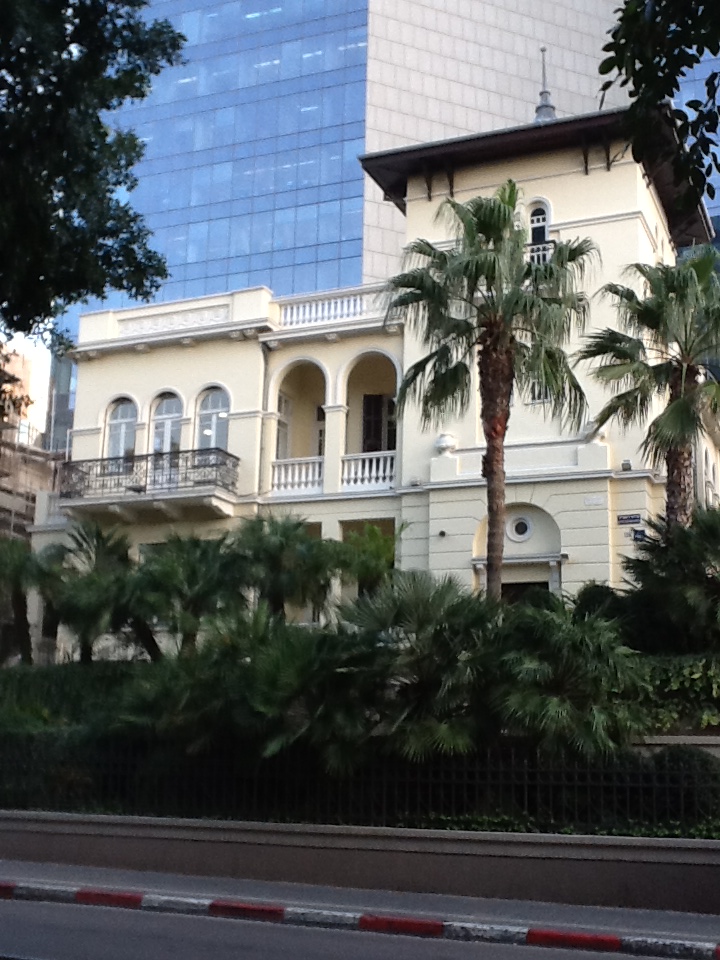
bauhaus

The White City (The Levin House, considered one of the best renovated examples of Bauhaus architecture in Tel Aviv)

After my morning meeting with Orli, Chaim and I took the bus to Tel Aviv. From the bus station, we walked to the Yemenite Quarter and had lunch, walked through the Carmel market/shuk, and then took a walking tour of the White City, trying to locate certain Bauhaus houses that our guidebook considered worthy. Bauhaus was one of the first modernist movements in architecture, and these houses were built in the 20’s and 30’s by followers of the German Bauhaus/International Style. I also had the most amazing ice cream at a place called Iceberg’s (this was the first dessert I’ve had since our first Shabbat in Israel — I do think I’m losing some of the weight I had hoped to!)

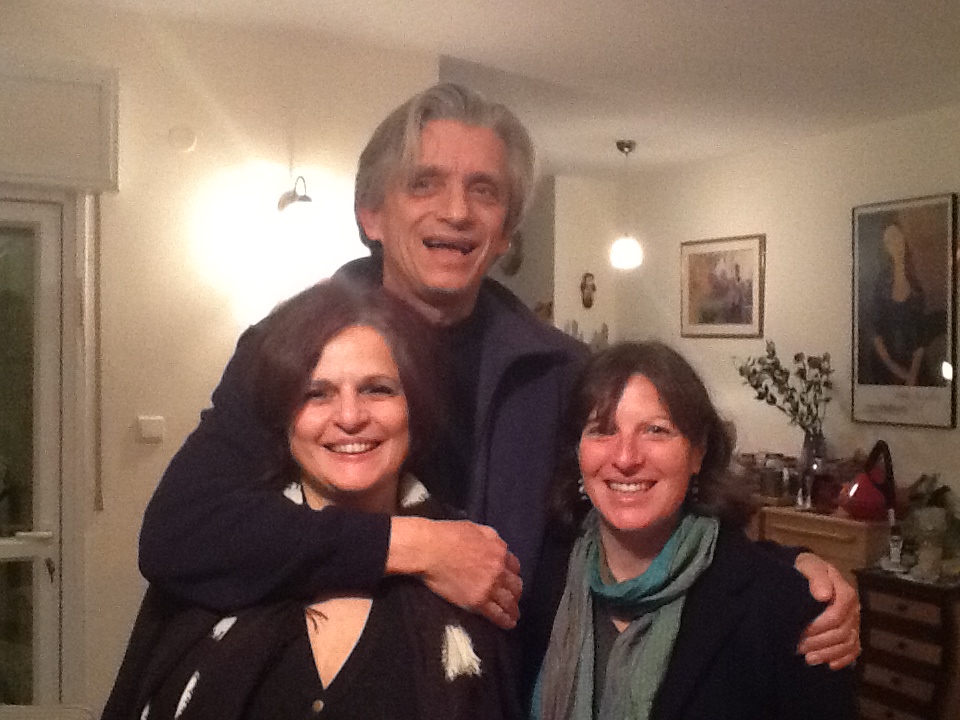
Bili, Mats, me

Israel Broadcasting Authority, Bili and Mats

When we got back to Jerusalem, we walked the couple of blocks to the Israel Broadcasting Authority where Bili works. She gave us a tour of the recording studios and showed us the multi-million dollar project she is overseeing, which is digitizing all of the IBA’s archives in conjunction with Harvard University, who will have access to them. Bili then brought us home to her house for dinner, where I got to see (and Chaim got to meet) her husband Mats, who is just back from his trip to Sweden.

(Susan and Stanley: We’re sorry we didn’t make it to your friends’ concert tonight!)

Another fascinating day thus comes to an end.

7 Shevat/January 17, 2013

Liberating the Wall, Comic-tary, Kfar Chabad

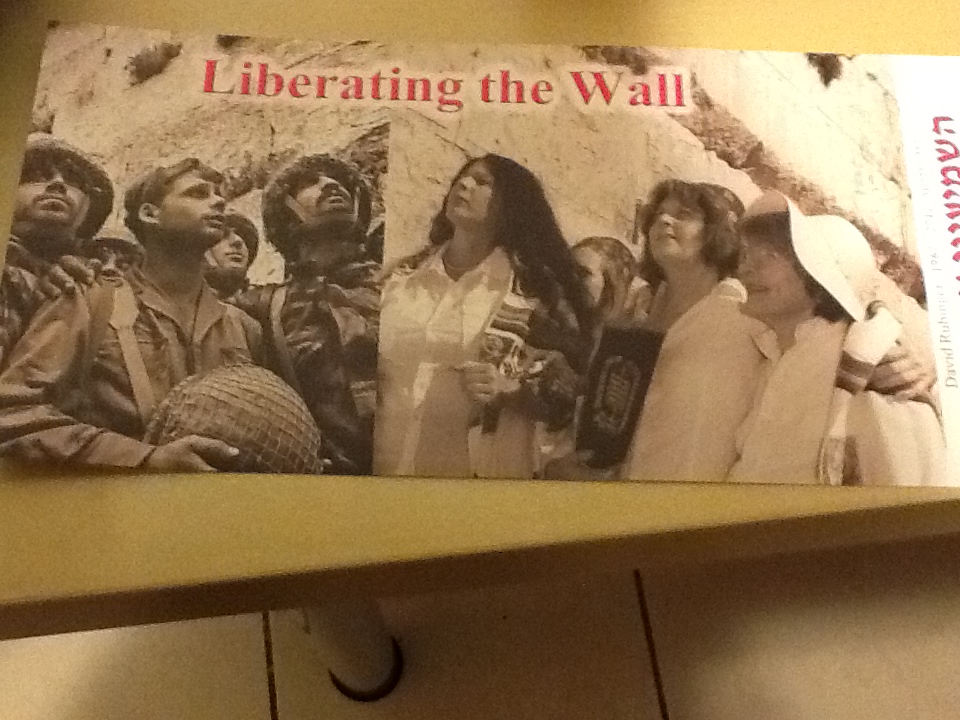
liberating the wallwomen in tallesim

Women at the Wall (yet again)

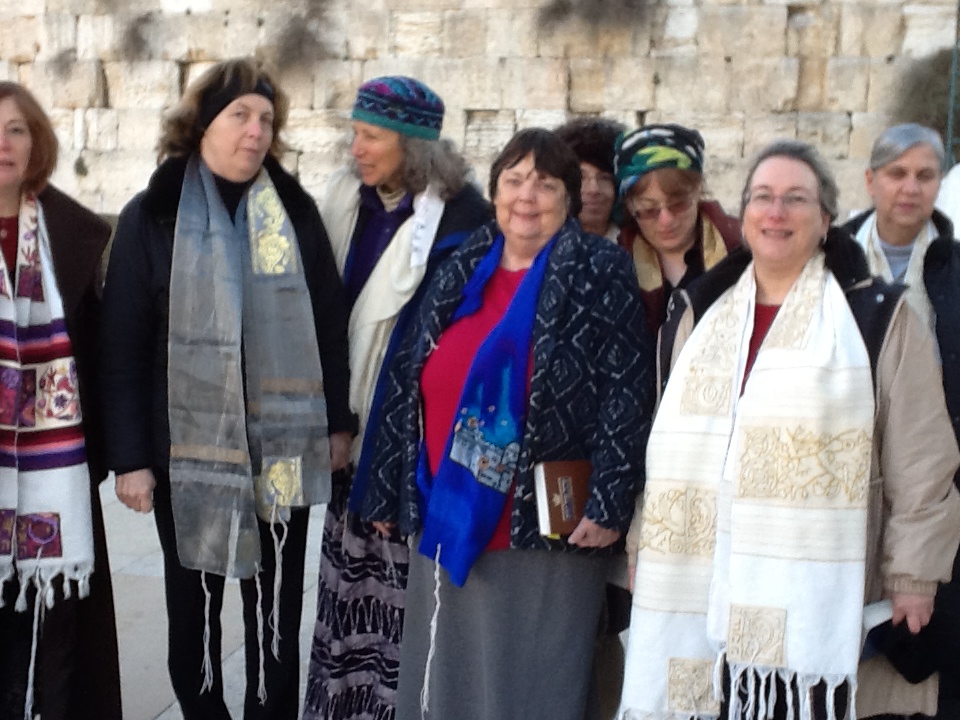
I had a very long and meaningful day. It started at 7 AM in a prayer service at the Wall to which Anat Hoffman had invited me, a private minyan that had been pulled together because two of their group members needed to say the Mourners’ Kaddish prayer for a yahrzeit (and because they hadn’t met on Saturday for Rosh Hodesh/the new moon). I couldn’t mention this opportunity in my blog the other day because of the sensitivity. Normally the group gathers about 40-50 women; today we were just over a minyan (11 or 12) so as not to draw attention to ourselves. Women of the Wall hoped that the police and the religious authorities of the Wall (who are out in full force on Rosh Hodesh in order to crack down on them) would not be expecting them today. Nonetheless, since the ground rule for today was to NOT get arrested (most of them HAVE been arrested at one time or another for the “crime” of wearing a prayer shawl publicly, though not treated as brutally as Anat was last month), we were instructed to wear our tallitot/prayer shawls under our coats.

I mentioned David Rubinger the other day, the official Knesset photographer. He also photographed the famous shot of the paratroopers liberating the wall in 1967 after the Six-Day War. Sympathetic to Women of the Wall, he also shot the second photo above, staged as a counterpoint to the original, with Women of the Wall standing in their prayer shawls. This is new publicity in honor of their 25th anniversary. I hadn’t realized the incredible serendipity of my being here in their anniversary year, as I had been there at the beginning. At the conclusion of today’s service, we were asked to take out our tallitot and wear them proudly, see above (though some took them out from under their coats during the recitation of the Shema, in which the fringes/tzitzit of the prayershawl are a focus of meditation).

This is a hot-button civil rights issue in Israel (and in the American Jewish community) today because of the brutality of the arrests at last month’s gathering.  Just a few days ago the Israel Religious Action Center (IRAC) and Women of the Wall filed a petition with the Israeli Supreme Court (along with several organizations, including the Reform and Conservative movements) that calls into question the legality, ethics, and financial dealings of the bodies that control the Wall. If you want to keep abreast of this situation, you can get updates directly from Women of the Wall (www.womenofthewall.org.il). And don’t forget about my own belief in the justice of Israel’s Supreme Court as discussed the other day — I hope that this case proves me right.

What I also want to say in reference to this gathering today is that I had a very difficult time getting myself psyched to go to the Wall this morning. I assumed they would have a minyan without me, and I personally don’t any longer feel connected spiritually to the Wall as a holy place (though I very much respect those who do and am very moved watching others pray so faithfully there). However, I ultimately went for my 11-year old niece Hannah, my sister’s daughter. Hannah has not had a formal Jewish education of any kind, but she sent me an email at the beginning of my trip to Israel merely to ask me to take pictures of the Wall for her. Why this was the place she knows and asked about, I’m not sure. But I do want her to stay connected to whatever it is she knows and feels about this historic sacred place without it being “uglified” by politics and intolerance. Then I thought that maybe I myself lost the own sense of sanctity about the Wall because of these ugly politics. So I got myself there this morning, committed to being part of the solution for all of the Hannahs out there, and ultimately for myself, as well.

And it was meaningful, and yes, it was spiritual.

comics:rabbis

Comic-tary Group (Yisrael, Gary, Dahlia, Maayan, and Susan)

From the Wall, I went to my friend Susan’s first Comics and Rabbis Torah study group (“Comic-tary”), which was a blast. Yisrael and Gary are comics/comedy writers, Maayan and I are rabbis, and Susan sees herself as the bridge, both rabbi and comic (all three of her sisters are also comediennes, including her most famous sister, Sarah Silverman). The woman in the middle, Dahlia, was the special invited guest — a journalist for Slate, currently writing a book about the women on the Supreme Court (her comic side came through when she said she’s thinking about calling the book either The Supremes or Ovary-Ruled). In the small world department, it also turns out that her rabbi in the U.S. is a very close friend of mine and that she knows my cousin who writes for Slate, as well. More small-world tidbits: Chaim and I have seen Yisrael (Campbell) perform his show “Circumcise Me” in New York, and Gary (who is also an architect) is married to Jodi Rudoren whom I mentioned previously is the current New York Times Jerusalem bureau chief. These kinds of coincidences, which are common in Israel, also add to the potential for “Jerusalem syndrome.”

One of Yisrael’s (who converted to Judaism from Catholicism) most-quoted jokes is about his aunt, a nun, “which of course makes Jesus my uncle, allowing for easier parking in Jerusalem.”

Chaim had very much wanted me to “ordain” him as a comic so that he could join us today, too, so I’ve been given special dispensation to bring him to our next session on Sunday morning (especially since I volunteered us to guide the next discussion).

mashiach

Kfar Chabad — poster of the Rebbe

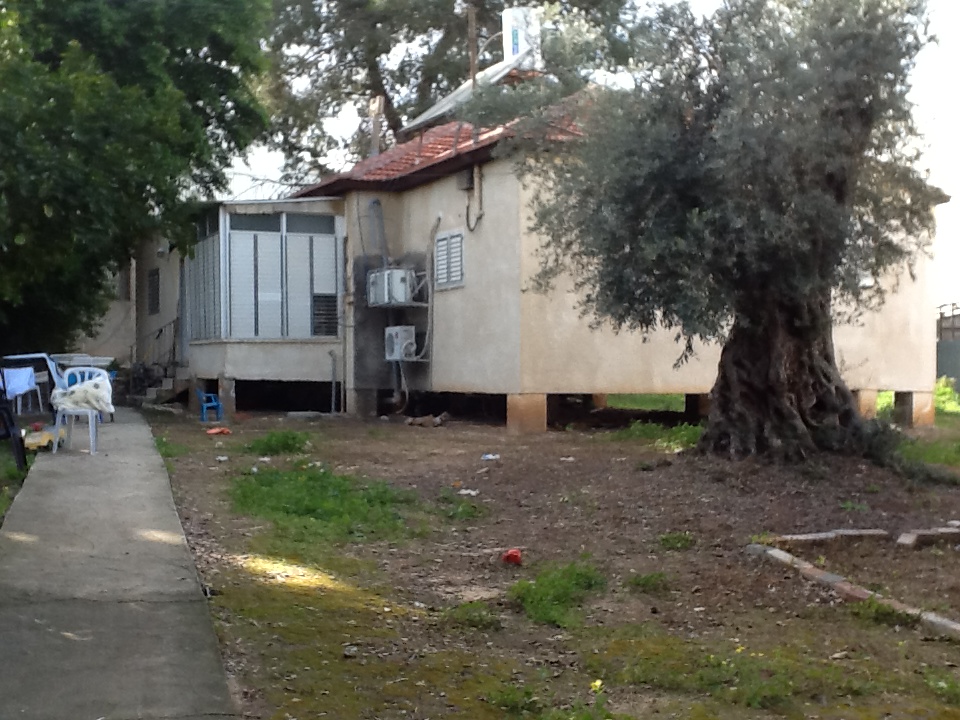
chaim's house

Home where Chaim grew up (with massive olive tree)

770

Replica of 770 Eastern Parkway

From Torah study, Chaim and I took a bus to Kfar Chabad, the ultra-Orthodox (Chabad-Lubavitcher) village where he grew up. Messianic posters of the Rebbe, Menachem Mendel Schneerson, hang everywhere within the community. The poster above, on the road into Kfar Chabad, reads “Our generation is the last generation of Galut/Exile and the first generation of the Geulah/Redemption.” The sign next to it reads “This is a religious settlement. There is no entrance [via car] on Shabbat or holy days.”

Schneerson died in 1994, and many of his followers consider him the Messiah. One of the newer buildings since Chaim lived on Kfar Chabad is a replica of 770 Eastern Parkway in Brooklyn, which was where the Rebbe lived and worked. This same building has been replicated in Lubavitch communities around the world.

Chaim chose to go incognito in Kfar Chabad today. I found it very easy and comfortable to walk around (in pants) — there were a few curious looks, but nothing hostile. We saw the synagogue where he prayed and some of the newer homes.

Chaim’s sister called him today. He asked her if our driver yesterday (who drove her from her home in Kiryat Malachi to pick us up to go to the Mount of Olives and then to B’nai Brak) was the same driver who takes her every year to visit their parents’ graves on the yahrzeit/anniversary of their deaths. She said yes, but that she expected that next year it wouldn’t be necessary since they would come to her (meaning that they would be resurrected). He was so moved by her absolute faith, while at the same time disdainful of this community (who generally are the largest voting bloc for the racist Kahanist party). And yet, as he remarked to our friend Julie on Shabbat when she asked him about his Lubavitcher upbringing, “You can take me out of Kfar Chabad, but you can’t take Chabad out of me.” He had a sense of community there that he believes is absolutely unattainable in a liberal Jewish community. He had a complicated upbringing that leaves a complicated legacy in its wake. I was so glad to finally get to visit and see it with my own eyes, and through his eyes.

It was quite a day.

Shevat/January 16, 2013

Nerves, graves, and Scrabble

Mt. of Oliveschaim:leah

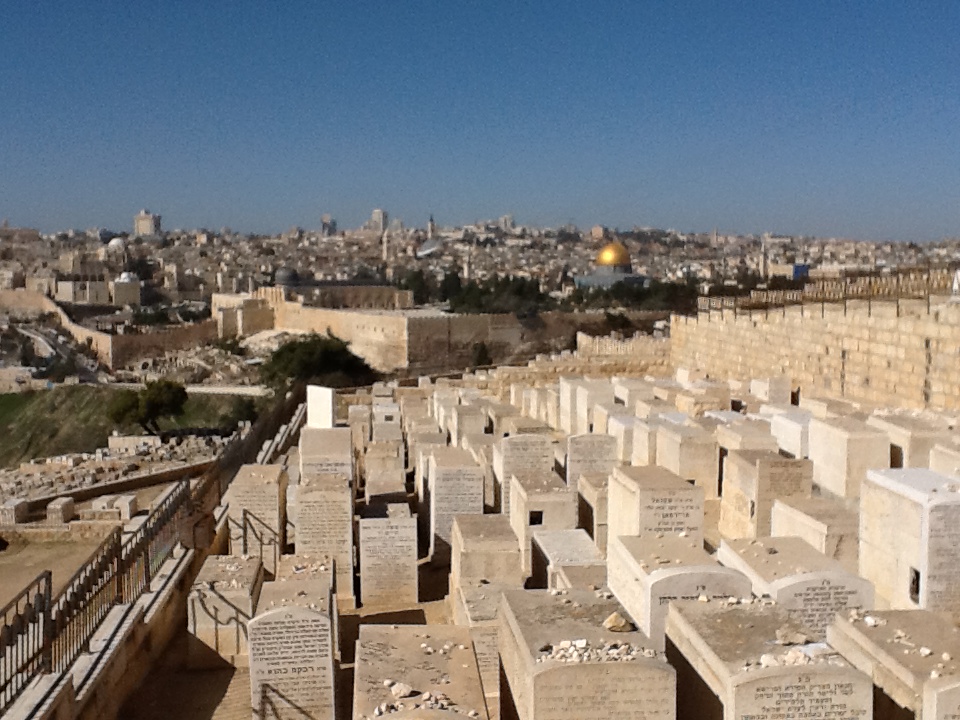
The view of the Old City of Jerusalem from the Mount of Olives (note the walls of the Old City below and Al Aqsa mosque with the gold dome)

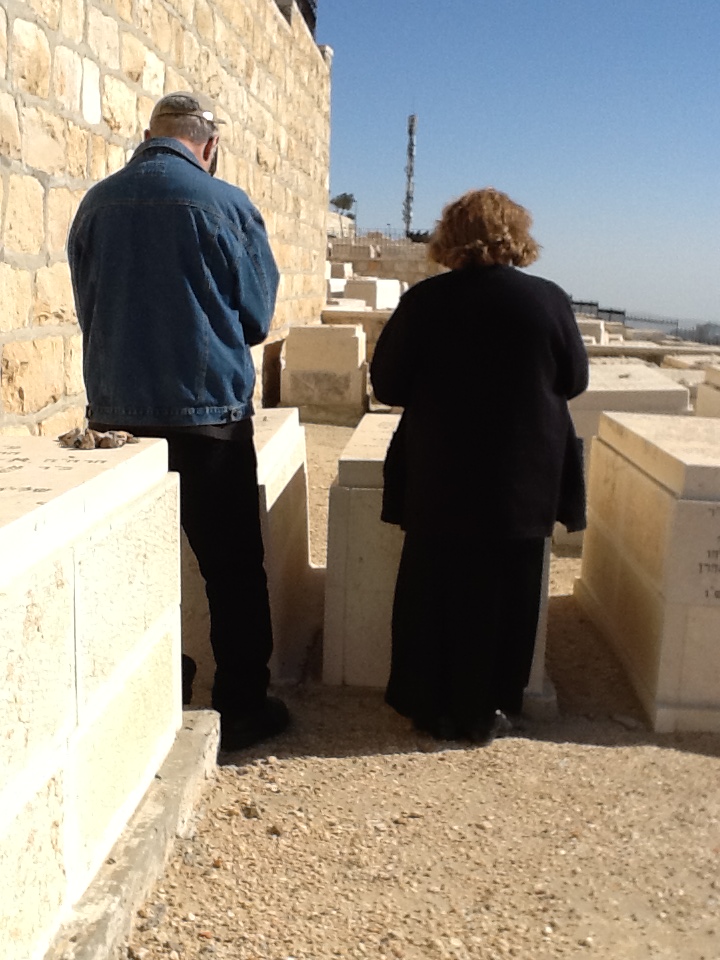
Chaim and his sister Leah praying at their father’s grave

I didn’t sleep last night for worry about meeting Chaim’s sister today. He hadn’t seen her in over 25 years and their phone conversations leading up to today’s visit didn’t bode well. She didn’t think it was a good idea for me to come on their pilgrimage to their parents’ graves because I am a Reform Jew, and it would dishonor them (the parents). She grilled him mercilessly about my religiosity and ultimately didn’t approve. This was ultra-Orthodoxy in action: my way or the highway. (His other sister, in Brooklyn, put it even more harshly when we married: “Our parents are turning in their graves,” she had said to him. Needless to say, she wasn’t invited to our wedding.)

This visit to Mount of Olives (where Chaim’s father and grandson are buried) and to B’nai Brak (where his mother is buried) has been the central piece of “business” of our visit to Israel. I wanted to go with Chaim and his sister today, but it would mean eating crow and dressing the part (long dress, though I drew the line at covering my hair as Orthodox women do). The choices were: (1) I go and we have a “no religion and no politics” rule for any conversation. (2) I don’t go, and let Chaim go alone with his sister. (3) He tells his sister that he won’t see her, and he and I do the trip alone. (4) We go, but have an understanding that if anything untoward happened, we would excuse ourselves and be on our separate, merry ways.

Choice #4 prevailed, I dressed the part, AND we had a “no religion, no politics” rule.

As it turns out, it was lovely meeting her, and she cried when we departed. She had no idea how reasonable my Hebrew is (she barely speaks English), so I got a lot of points for that. I got points for throwing in some verses from Psalms along the way (purposefully, to show her I was not a know-nothing Jew). In my sleeplessness last night, I wrote a lot of farewell speeches to her (in Hebrew!) in my head. The one that was least mean-spirited was to bless her on our departure that she should “have an open heart, an open mind, and eyes that see only the good.” I think/hope that that was accomplished without my actually having needed to make that blessing/admonishment.

B’nai Brak today is an ultra-Orthodox enclave, and Chaim and I had to sit towards the back of the bus on our return to Jerusalem if we wanted to sit together, since only men can sit up front! (This IS 2013, isn’t it?) Anyone who has ever celebrated Passover will remember B’nai Brak from the Haggadah:  “Here is the story of Rabbi Eliezer and Rabbi Yehoshua and Rabbi Akiva and Rabbi Tarfon, who were sitting in Bnei Brak all throughout that night and were telling the stories of the exodus from Egypt…”

The Mount of Olives also offers a great view of the Old City of Jerusalem, and many tourists are brought there just for the view. According to Jewish tradition, the 3000-year old cemetery on the Mount of Olives is where the resurrection will begin when the Messiah comes.  That’s why even Orthodox Jews living abroad are often buried there (Chaim’s father and grandson are cases in point). ​Since the cemetery holds approximately 150,000 graves, that also explains why we wandered for so long trying to find each of the graves! They are not well-marked, and every section looks like every other section. The Mount of Olives was apparently one of Jesus’s favorite places and is significant in Christian tradition, as well. According to the New Testament, the Mount of Olives will also be “ground zero” for Christ’s return. (If Chaim’s father wasn’t ready for me, I wonder if he is ready for that!) And I don’t mean to offend my Christian friends whom I know are reading this, but will this be the case of the dueling Messiahs — what if they both come to the Mount of Olives at the same time?

ScrabbleClub

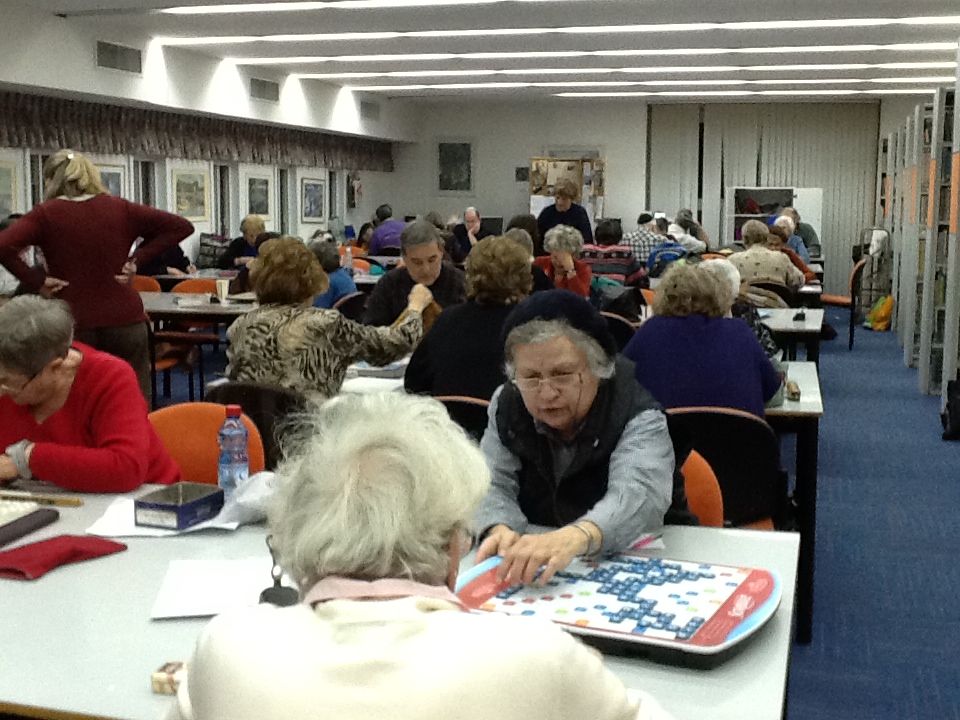
The Jerusalem Scrabble Club

The other gift of today, however, was returning to my beloved Jerusalem Scrabble Club (JSC), which I attended religiously most every Tuesday night during my time in rabbinical school (1988-9), and then again on visits in the mid-90’s, 2001 and 2006 (I also spent significant time in Israel in 1981 and 1985 but I didn’t yet know of the JSC then.) The JSC is reputed to be the largest Scrabble club in the world. It plays Scrabble in English (a much more competitive game than Hebrew Scrabble is), and it is mostly attended by English-speakers living in Israel, though there are some native Hebrew speakers, as well. The JSC was founded by my friend Sam Orbaum of blessed memory, a British-born, Canadian-bred journalist for The Jerusalem Post. When I last saw Sam in 2001, he had gone bald from chemotherapy for lymphoma, and he made his goodbyes by giving me a copy of his book Eskimos of Jerusalem and Other Extraordinary Israelis as a gift, a compilation from his newspaper column “Not Page One” (the title of which is emblematic of Sam’s wry sense of humor). Sam died in 2002 at age 46, leaving behind identical triplet daughters, now aged 22. (I was fortunate to run into Sam’s widow, Wendy, tonight and she filled me in.)

The club is now officially called the Sam Orbaum Jerusalem Scrabble Club. Each Tuesday night we play three one-hour timed games. We start at 7:30 and end at 10:45. About 40 or 50 people attend each week. Prizes used to be given out for high-scorers, highest losing score, highest team score, etc. One time I won a copy of Salman Rushdie’s Satanic Verses for winning some category or other. I remember how thrilled I was and how thrilled Sam was for me.

Tonight I was delighted to find familiar faces of people who remembered me and to discover that I was still in their computer system (and am eternally member #568 out of the 1700-plus members and guests that have come through since its inception. I met one woman who lives up in the north of Israel who told me that she and her husband bought another place in Jerusalem JUST so she could be in Jerusalem on Tuesday nights to play Scrabble! They can’t even rent it, since they are there one night a week. That speaks of the kind of loyalty that people have to this club.

Tonight I played Taffy and won, Joel and lost, and then Miriam and won again. It was a great time! Unfortunately, the public building in which they meet is closed next week because of the election, so I will not get another opportunity to be with the JSC this trip.

Blessings to all, and happy birthday to my brother, Howard!

5 Shevat/January 15, 2013

YMCA, HUC, and Spiritual Care in Israel

Y bldg Y sign

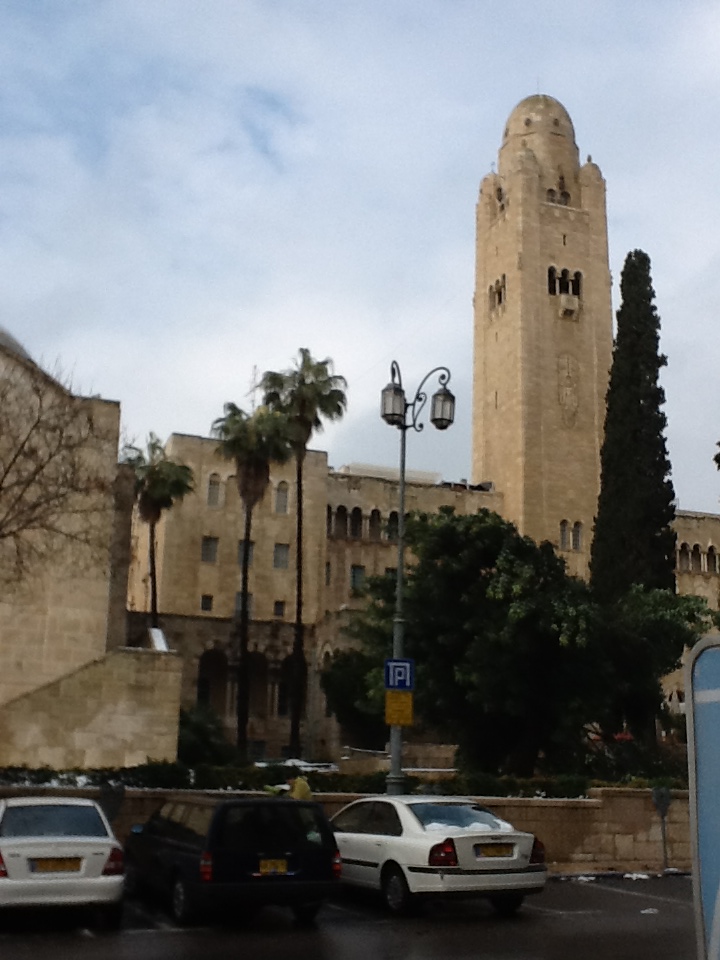
Jerusalem YMCA

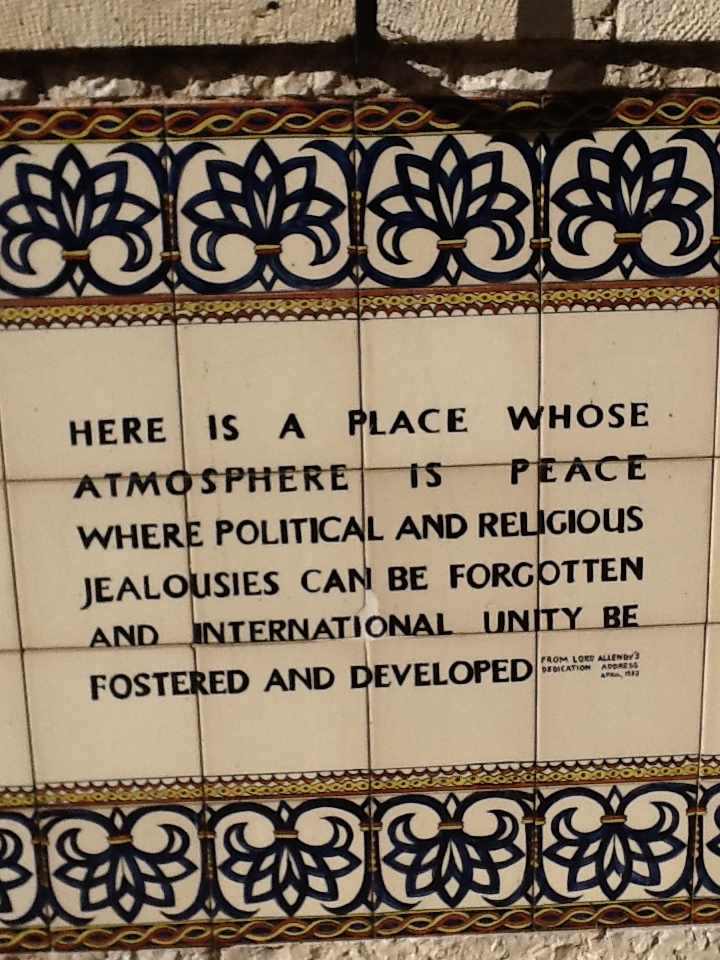
When those Village People sang WHY-EM-SEE-AY, it’s clear that they had never been to Jerusalem. The YMCA in Jerusalem is pronounced “YIMKA.” It is housed in a massive Byzantine-like building on King David Street across from the famous King David Hotel (where the rich and famous stay). When the Y was dedicated in 1933, Lord Allenby spoke the words above as part of his speech: “Here is a place whose atmosphere is peace, where political and religious jealousies can be forgotten, and international unity fostered and developed.” Perhaps he was prescient, because the YMCA in Jerusalem is one of the few places where one can see coexistence in action. It is a significant meeting place for the city’s divided Christian, Muslim and Jewish populations, and it has a joint daycare program for Jewish, Christian and Arab Israeli children.

I have swum there many times in years past, but this time I had a mission. I was asked by the executive director at the Y where I swim in the Northern Berkshires to bring back a lot of pictures because “the Jerusalem Y is such a wonderful and historic part of our movement.” So I have taken a lot of pictures to bring back home.

It’s where I swam today before going to teach first-year students (rabbinical, cantorial, and education) at Hebrew Union College, which is just a few blocks away. My visit with them was very sweet, and my goal was to offer them an alternative model of a rabbinate. I know that in my early years of rabbinical school I thought I “had” to be a pulpit rabbi. However, my rabbinic career has turned out to be a rich and varied tapestry, and I wanted to share my journey with these first-year students, as well as to teach them a bit about spiritual care in the real world.

While I was at HUC, I ran into Anat Hoffman, who is the executive director of the Israel Religious Action Center and chairwoman of Women of the Wall, both of which are now housed at HUC. Anat was much in the news last month after being arrested, along with American Rabbi Elyse Frischman, for wearing a prayershawl/tallit at the Wall. I had the opportunity to remind Anat that I had been at that first prayer service/riot in 1988. She verified that that service had not taken place on a Rosh Hodesh/the new moon, but had been a Thursday morning service (Monday and Thursday morning prayer services include a Torah service). She said that the decision to meet monthly on Rosh Hodesh was a later decision of the Israeli group.

Tishkofet

Israel Spiritual Care Network Office

I had the opportunity to teach about spiritual care yesterday, as well, in a session with the “Reshet” that was postponed from the day of the snowstorm last week. The Reshet/Israel’s Spiritual Care Network is a loose coalition of organizations that are funded by UJA Federation of New York (which also funds my position in spiritual care). Spiritual care (and chaplaincy) is still a fledgling movement in Israel since rabbis who work in hospitals or nursing homes in Israel are generally there for legal/halakhic and ritual issues that come up rather than for patient care. Additionally, for secular Israelis, it is still a battle to bring anything “spiritual” to them without them thinking it is Orthodox coercion.

Six years ago UJA sponsored a few of us from three different Healing Centers to come to Israel to teach this group about spiritual care. Tishkofet and Maagan, two separate organizations that deal with serious illness and which make spiritual care central in their counseling work, are housed in the same building as the Reshet office. Yesterday was my return visit, seeing old faces and meeting new ones, offering support, and teaching some of the skills and techniques that I have learned over the years, what I consider the “spiritual tools” that I have in my toolbox when working with clients. It was a fascinating session. I was enriched, as always, by the encounter with colleagues who are interested in what it means to offer spiritual care in a deep and authentic way. Most were social workers/therapists working with populations ranging from parents of special needs children to the elderly to serious illness to bereavement, and one whose bereavement work is specifically with traumatic loss caused by terrorist attacks.

I was quite honored to be part of this Israeli-Diaspora dialogue about spiritual care.

May God heal the brokenhearted and bind up their wounds. (Psalms 147:3)

3 Shevat/January 14, 2013

Truth and Justice

waterway Supreme Court

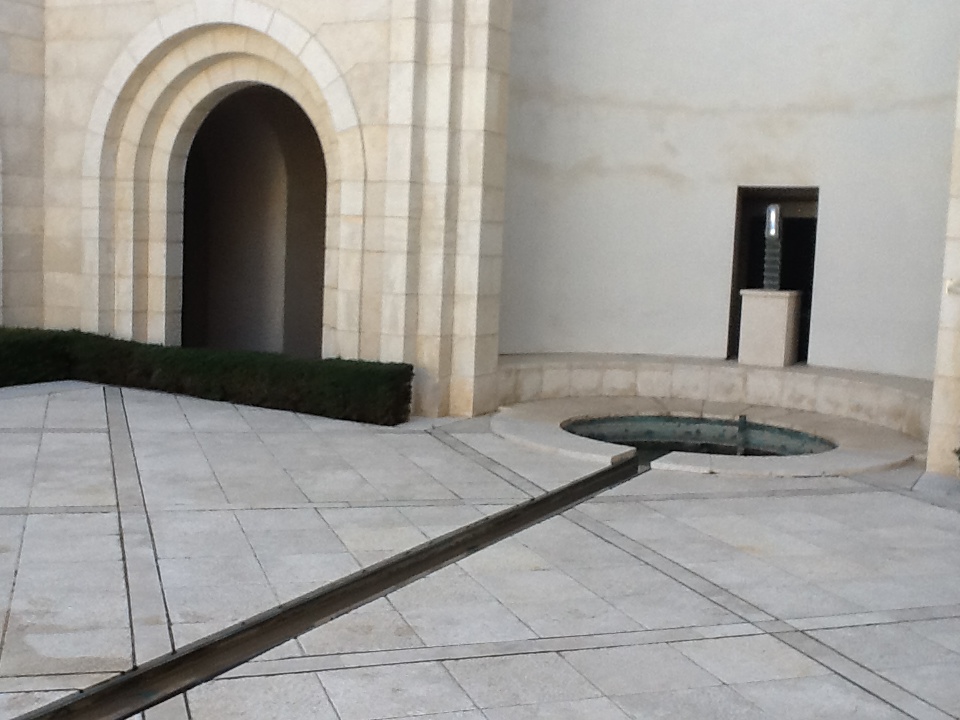
The Waterway at Israel’s Supreme Court (line and circle)

You are righteous…and Your laws are straight. (Psalms 119:137)

[God] leads me in the circles of justice. (Psalms 23:3)

Tzedek, tzedek tirdofJustice, justice shall you pursue. (Deuteronomy 16:20)

This morning Chaim and I toured the Knesset and  the Israeli Supreme Court. The Supreme Court is actually my favorite building in all of Israel and I was anxious to bring Chaim there to “show it off,” since it was built in 1992 after his last visit to Israel.  Paul Goldberger, a leading figure in architecture criticism, wrote in the New York Times (August 13, 1995) that the Israeli Supreme Court is “Israel’s finest public building…a remarkable and exhilarating balance between the concerns of daily life and the symbolism of the ages.”

What makes it so remarkable is the blend of the modern with the ancient, and the symbolic touches throughout. Lines in the architecture are used to represent law, and circles are used to represent justice; unhewn Jerusalem stone on one wall is juxtaposed with plain white plastered walls on the other; the design of each courtroom entrance symbolizes the “gates of the city” where courts in biblical times took place. There are 5 different courtrooms, each a gem in and of itself, in which skylights let in natural light.  According to the visitor’s guide, the use of mirrors against one of the natural stone walls  creates “the illusion that the building’s foundation extends deep into the earth… [suggesting] that the roots of law and justice are also deep.” Most impressive to me (and what I best remembered from my previous visit) is the little waterway in the Courtyard of Arches (pictured above) which was inspired by Psalms 85:12, “Truth will spring up from the earth and justice will be reflected from the heavens.” The stone quarried from the earth and the water reflecting the sky represent the biblical symbols of truth and justice.

Except for the grand State Hall (nicknamed Chagall Hall), the Knesset building (home to Israel’s parliament) is not as impressive a building as is the Supreme Court; the art, not the architecture, is where the symbolism lies there. Since the Knesset is currently not in session in preparation for the upcoming elections in 9-days’ time (in which all 120 seats are up for grabs, as opposed to the staggered elections we have in the U.S.), we only ran into one MK/member of Knesset) in the hallways there. Ironically, that member is the disgraced (and some might say racist and anti-democratic) Avigdor Lieberman of the Yisrael Beiteinu party. Lieberman just resigned in December from his position as Minister of  Foreign Affairs and Deputy Prime Minister because of ethics charges (fraud and breach of trust) against him.  Nonetheless, as founder and leader of Beiteinu, he is running again in this upcoming election as MK. (Lieberman is a client of the right-wing American political consultant Arthur Finkelstein, who has made “liberal” a dirty word in American politics.)

It is only a partial exaggeration to say that it took all my strength to keep Chaim from verbally accosting Avigdor Lieberman in the halls of the Knesset.  😉  Chaim despairs a bit about democracy in Israel; I, on the other hand, while recognizing the problems in the Knesset and electoral politics in Israel, believe that Israel’s Supreme Court is strong and just. A case in point is the recent unanimous Supreme Court vote to allow Hanin Zoabi, an Arab legislator, to run again for Knesset, despite the fact that she took part in a flotilla that tried to breach Israel’s naval blockade of the Gaza Strip (an act that some considered treason).

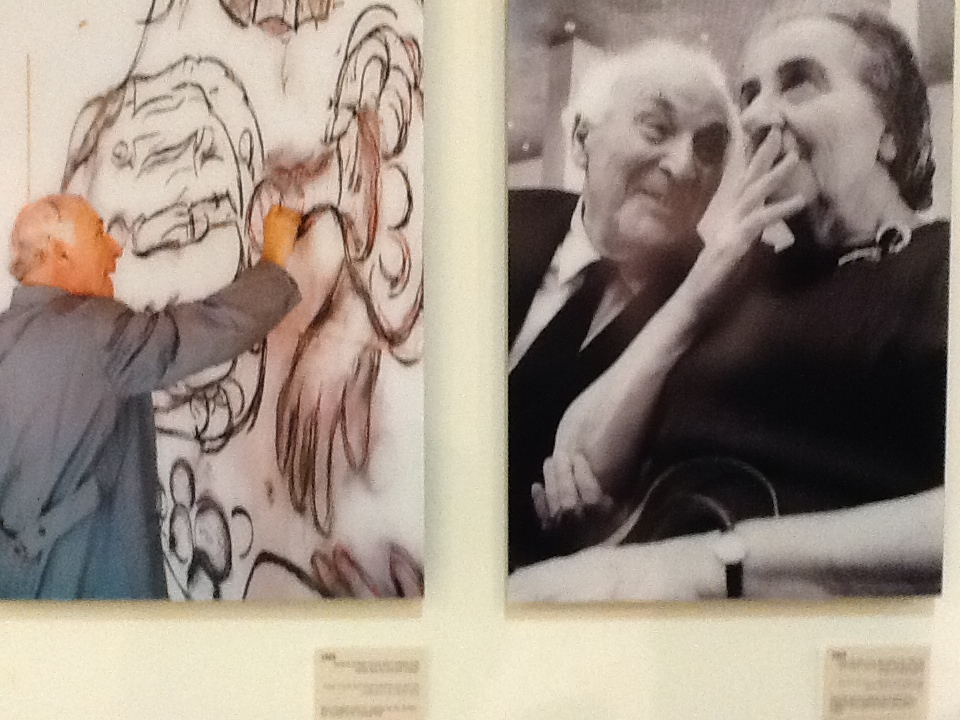
golda and chagall

The Chagall tapestries representing Jewish history past, present, and future hang in the Knesset’s State Hall. I am not posting a photo of the tapestries (I’ll send photos with commentary if you ask), but rather a photo of Chagall at work on the sketches and one of Golda Meir with Chagall when the tapestries were first hung in 1969. Chagall apparently leaned over to her and said in Yiddish, “Do you like it, Golda?” It looks like she did! (These photos were part of a rotating exhibit of photographs in the Knesset by the official Knesset photographer David Rubinger.)

knesset

The Knesset Building on the Hill

On January 8, in the posting entitled Axis Mundi, I shared a Talmudic story about the two brothers who loved each other so much that the spot where their generosity came to light became the location of the Holy Temple in Jerusalem.

Part II of that story, an Israeli joke (black humor), is as follows:

There were two brothers, one was single and one was married. The single brother  said to himself, “My brother has a wife and family, and I have nothing. We should not be sharing equally in the harvest of our farm — I deserve more.” So he took from his brother’s pile of grain and added it to his own. His brother likewise thought to himself, “I have a family to support; my single brother shouldn’t be getting a full share from our farm. I deserve more.” So he took from his brother’s pile of grain and added it to his own. Night after night their selfishness fed on itself, and each was convinced of the rightness of his cause. The night that they ran into each other on the top of the hill, hauling grain from his brother’s pile onto his own was also – as in ancient times – cause for the creation of a new structure in the Land of Israel. That place is called the Knesset.

tzedek banner

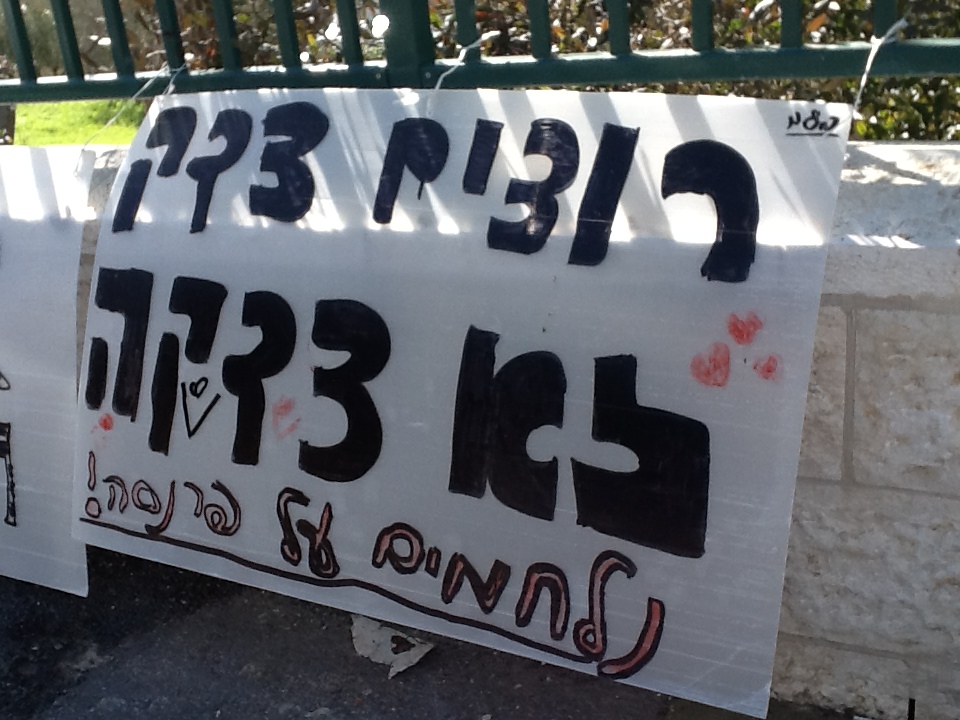
Tzedek, not Tzedakah

As we left our touring of Knesset and the Supreme Court, Chaim and I came upon a little 2-tent city and many handmade protest signs outside of the Ministry of the Interior. The current Minister of the Interior comes from the right-wing religious party, Shas, which claims to be for the poor but has not done much, if anything, to improve conditions for them. (In one of those political ironies, like that of an Elliot Spitzer or a Mark Sanford recreating themselves in the eyes of some of the public, the last Minister of the Interior, Aryeh Deri, also from Shas, was imprisoned for bribery in 2000, was voted the 58th greatest Israeli of all time in a poll in 2005 by the Israeli news website Ynet, and is running again in the upcoming election! What is it with public officials and integrity and with a public that so quickly forgets?)

Some of the posters we saw were specifically anti-Shas. One stated “If you vote for Shas, I will enter unemployment.” The guard told us that the tenters are from Eilat, protesting the closing of a factory and some other businesses there. This sign above reads, “We want tzedek/justice, not tzedakah/charity. We are fighting for parnassah/livelihood.”

Perhaps yesterday’s photo of the anti-Bibi poster “Bibi is only for the rich” has now been contextualized a bit.

The economic situation is quite severe for many Israelis. Though a much larger tent city exists in Tel Aviv, the issue of public housing in Israel is barely on the radar screen in this upcoming election. This despite the shocking story about 6 months ago about a man named Moshe Silman who immolated himself in a desperate act induced by fear of becoming homeless. The issue of “bullets or butter” is a real issue in Israel where security and defense is a primary concern. (Of course, it is a real issue in the U.S., as well, and was highlighted recently in the fiscal cliff debates.)

There are 40,000 people on waitlists for public housing in Israel and many more who are not deemed eligible or whose housing is severely inadequate. According to Rabbis for Human Rights in Israel, “We will not accept…a society that does not recognize its responsibility to take care of her citizens.” Rabbis for Human Rights North America, its sister organization, likewise highlights issues of economic justice in the U.S. One current campaign concerns slavery-free tomatoes. (For more information, go to http://www.rhr-na.org/issuescampaigns/slavery-a-human-trafficking/take-action/199-tomato-rabbis.html) Do you know where your tomatoes are coming from?

By the way for those of you in the Berkshires, Northampton area, or Boston, Rabbi Arik Ascherman of Rabbis for Human Rights in Israel will be speaking in Somerville on the afternoon of January 17, in Bennington VT in the evening of January 17, and in Northampton after kiddush on January 18. He also has some time for private meetings in NY on January 15 and 16th and in Boston on January 17th and 18th (email him at ravarik@rhr.israel.net and tell him I sent you! Chaim and I will be seeing him again on the 25th after he returns to Israel.)

Let justice roll down like a river, righteousness like an ever-flowing stream! (Amos 5:24)


Women & Orthodoxy/Election Season/Shavuah tov (2)

My post yesterday about Women of the Wall failed to mention that there is an ultra-Orthodox hegemony that controls the religious activity at the Wall itself. Natan Sharansky has been put in charge of finding a solution. (FYI: A good article appeared the other day in JTA news about this. If interested, go to http://www.jta.org/news/article/2013/01/07/3116146/can-natan-sharansky-fix-the-western-wall?)

Modern Orthodoxy in Israel (as opposed to ultra-Orthodoxy) is often at the forefront of the movement for change vis-a-vis women’s role in religious life. While the media considers Women of the Wall a foreign import of liberal Jews from elsewhere, the reality is that many of the Women at the Wall are themselves (modern) Orthodox women in Israel who are no more comfortable with ultra-Orthodoxy than are liberal Jews who have been born and bred on egalitarianism. Modern Orthodox women in Israel are not necessarily in agreement with the policy that women’s voices cannot be raised in prayer at the Wall, as women’s prayer groups are common in modern Orthodox circles.

A case in point are the two modern Orthodox synagogues that Chaim and I visited over Shabbat.

Last night we attended Shira Chadasha (meaning “a new song”), a modern Orthodox, feminist synagogue that is trying to push the envelope on inclusion of women in prayer life. Its mission statement says that “We are attempting to create a religious community that embraces our commitment to halacha [Jewish law], tefillah [prayer] and feminism.” It may come as no surprise to anyone familiar with the Hartman Institute (a pluralistic research and leadership center in Jerusalem) to learn that Rabbi David Hartman’s daughter Tova Hartman is one of the founders of Shira Chadasha. Women there are able to lead Kabbalat Shabbat (the opening psalms) on Friday night and p’sukei zimrah (the opening psalms) on Shabbat morning, receive aliyot/Torah honors and read from the Torah, and obviously to offer sermons. The mechitzah/divider between the men’s and women’s section is laughable as a divider, it is so sheer, and even then, it is left open half the time so that no separation is really felt. The davenning/prayer there was lively and joyous, and it was a place I would definitely return to.

This morning we went to Yedidya, another Orthodox synagogue. I knew it was fairly progressive, particularly on social justice issues, but wasn’t sure how comfortable I would be wearing my tallit/prayershawl (a morning prayer garment, generally worn only by men in traditional circles), which I carried in a separate bag. As soon as I walked into the women’s side of the synagogue, however, I saw a few women wearing a tallit and felt comfortable putting mine on. Unfortunately, I realized that we had come too late to hear Hallel (the recitation of Psalms 113-118) which is only sung on certain holidays and on Rosh Hodesh/the new moon. Since it is one of my favorite pieces of liturgy, I called to Chaim where he was on the men’s side of the divide (a no-no for sure, but I obviously got away with it without being stoned!) and told him I wanted to go to Kol HaNeshamah (which had a later start time) so that I could hear Hallel. We will also have to return there for another full experience.

The gift of ending up at Kol HaNeshamah was that we were honored with raising and wrapping the first Torah. In order to (1) purposefully confuse gender roles, (2) for me to honor Women of the Wall which was not meeting today, and (3) because Chaim encouraged me to do so, I lifted the Torah and Chaim wrapped it. (Typically lifting the Torah is considered a macho-man honor, but since this was a fairly small and light Torah scroll, we felt I could manage it, even with my bad back). Even in Kol HaNeshamah, this apparently was a rare occurrence, and I was told that I was a great role model for other women there. Score a point for the women! And again, as always seems to happen at Kol HaNeshamah, I ran into people I knew, including Rabbi Arik Ascherman, who heads Rabbis for Human Rights in Israel.

We spent a lovely Shabbat lunch with my old friend Julie, a Conservative rabbi who has been studying in Jerusalem for the past couple of years, and her partner, Michael.

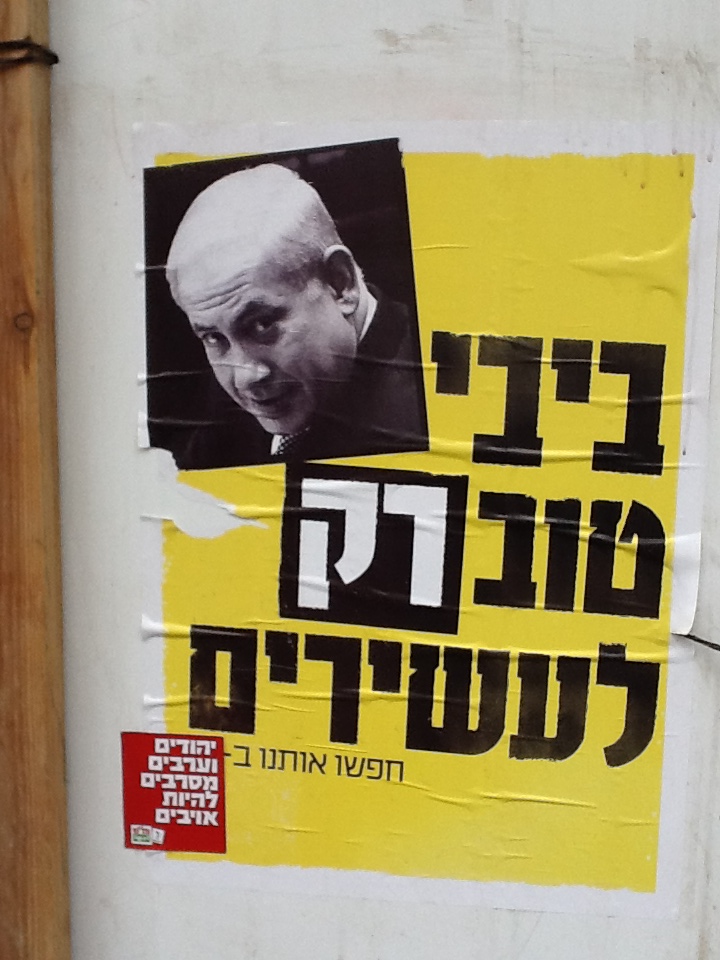
The photo I posted today is of an anti-Netanyahu (nicknamed Bibi) poster that is plastered around town in anticipation of the upcoming Israeli elections. It reads “Bibi is good only for the rich,” an ironic take-off on a previous slogan of his that read “Bibi is good for the Jews.” At the bottom this poster reads, “Jews and Arabs reject being enemies.” Despite this ad, most polls agree that he and his party will win this election, at which point he will have to build a coalition with other parties, since Israel does not have a two-party system. Most of the young people we see out on the street leafletting or holding campaign banners are doing so for Netanyahu, though we did run into a few Meretz campaigners. (Meretz is a left-wing, Zionist, social-democratic political party). Chaim actually stopped to thank them, he had been so discouraged by the right-wing atmosphere of the electioneering we have seen thus far.

The other night the election ads began running on Israeli TV, just two weeks before the election. (If only we had such a short election season in the U.S.!) Unfortunately, we don’t have a TV here, but we read that one of the ads, for the ultra-right religious Shas party, was pulled from the air because it was considered derogatory of Russians and of converted Jews (a direct attack on the Beiteinu party, a nationalist political party whose base is secular, Russian-speaking Israelis). Apparently, the ad featured a wedding in which the Russian bride receives her conversion certificate by fax while under the chuppah/wedding canopy. I am trying to find it on YouTube, where I expect we will have to find all of the ads.

We will be here for the election, so I’m sure there will be more news to report over the next couple of weeks.

Wishing you a shavuah tov/a good week.

2 Shevat/January 12, 2013
antiBibi poster

Women of the Wall / Shabbat Shalom (2)

women at the wallwomen at wall Wilson

Women praying at the Wall (outside)           Women at the Wall (underground)

On the new moon/Rosh Hodesh of the Hebrew month of Kislev in 1988, the year I was in Israel for rabbinical school, Women at the Wall was launched. The mission statement of Women of the Wall reads as follows: “As Women of the Wall, our central mission is to achieve the social and legal recognition of our right, as women, to wear prayer shawls, pray, and read from the Torah collectively and out loud at the Western Wall.” Since that first Rosh Hodesh gathering, Women at the Wall has gathered for most every new moon/Rosh Hodesh to pray together. They are still legally battling the prohibition against praying at the Wall itself. Instead they have been given a location to pray at Robinson’s Arch, another section of the plaza.

On that morning in 1988, I joined about 70 other women to pray publicly as a group at the Western Wall (also called the Wailing Wall or the Kotel) . Some of us wore tallesim/tallitot/prayer shawls which some associate only with male prayer, but more significantly, (1) we carried with us a Torah scroll (from Hebrew Union College, where I was attending school.) and (2) we raised our voices together. In essence, we were considered women who were breaking Jewish law. A riot soon broke out — traditional women on the women’s side of the wall started screaming at us, and once their voices were heard yelling, the men on the other side stood up on chairs to see what the commotion was about and started yelling at us, as well. Soon the yelling turned into chairs being thrown over the barrier at us. Ultimately, the police arrived and escorted us away.

Since Shabbat is fast approaching here, I don’t have time to fill you in on all of the details (you can Google for further information), but I was disappointed to find that I would not be able to join Women at the Wall this month, since Rosh Hodesh falls tonight and tomorrow, on Shabbat, which would have created many logistical problems for the gathering.

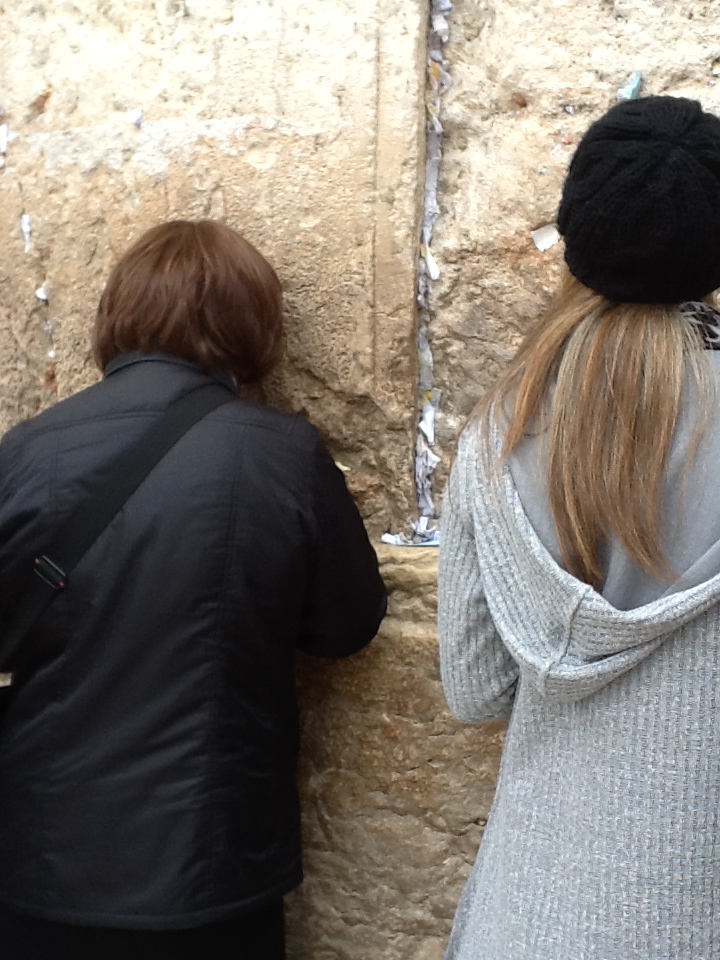
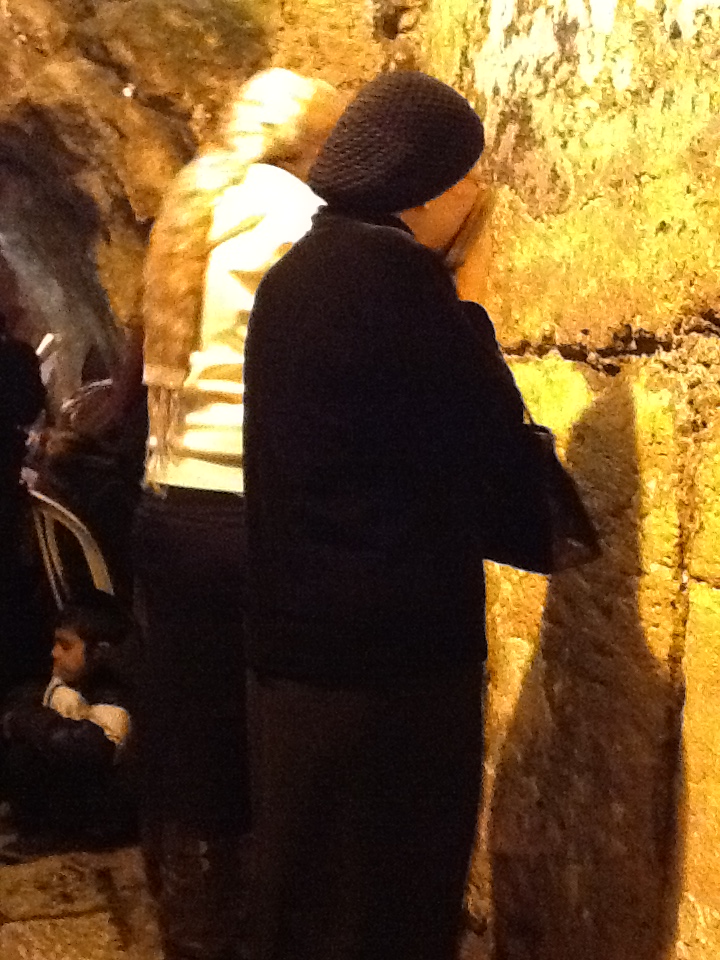
Instead, I show you other ordinary women praying at the wall. The first photo is of the outside wall that is easily seen from the plaza. The second photo is a photo of women praying at the wall that has been excavated but that is still underground.What we know of as the Wall is much larger than what is seen — in 1968, archeologists started digging and found much more of the Wall underground, which can only be seen by special tour.  Chaim and I took that tour of those excavations and tunnels today. What we learned is that the section of the Wall where the second group of women is praying is actually considered holier ground than the outside wall, since it was physically closer to the Holy of Holies, the central most sacred spot of the Temple. In either case, however, the wall (whether the one we know outside, or the one underground) was merely a retaining wall of the Temple, not part of the Temple itself.

With that I wish you all a Shabbat shalom and a Hodesh Tov, a good and restful Shabbat and a good and blessed month (of Shevat).

Note: According to the Women of the Wall website, that first gathering was Dec. 1, 1988. That date doesn’t work out by my calendar to have been a Rosh Hodesh. I will have to double-check the date.

Snow in Jerusalem

snowman 1:10:13 snowy scene

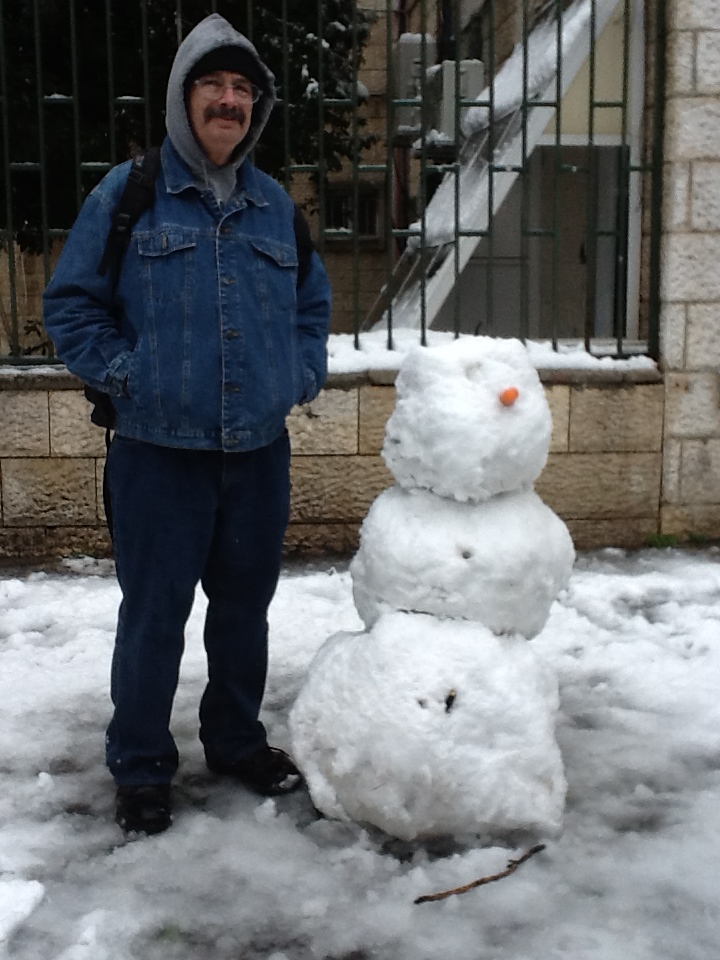
     Chaim and the Snowman                             Snowy scene                                        

[God] lays down snow like fleece, scatters frost like ashes. [God] tosses down hail like crumbs — who can endure His icy cold? (Psalms 147: 16-17)

For those who remember my first post, you may recall that I made fun of Chaim’s obsession with the weather report on the plane’s t.v. screen as we landed, rather than minding the actual scene outside our plane window.

As you can tell, however, I have also become obsessed with Israel’s weather. It has kept us indoors far too often this past week, and today was no exception. EVERYTHING in Jerusalem shut down. My UJA teaching gig was cancelled yesterday in anticipation of the snow (though rescheduled for Sunday), schools were closed, and when we got up this morning thinking we would spend the day at the Israel Museum, we found the walkways far too treacherous (no one has shovels  — and Jerusalem stone, out of which many sidewalks — and buildings — are made, is quite slick). We tried walking in the middle of the road, but even that was just too slippery.  We would have compromised on our “walk everywhere we can” rule, but found that no busses or cabs were running, there being no snowplows to clear the roads! I imagine that few people got to work. Though we were able to buy a newspaper and shop at the local market, most stores (and even the post office) were closed. For those of us who live in the northeast, the idea of a whole city shutting down in the face of a few inches of snow is humorous.

When we headed home from our little outdoor adventure, we saw another tree and electric wire downed by the wet snow, and sure enough, came home to no electricity for the second time in a week. This time, however, it was up and running within two hours as opposed to the seven we waited the other day.

BUT WAIT: Ironically, as I was writing my post an hour and a half ago, our electricity went out yet AGAIN, now the third time within a week. We are currently down the road at Cafe Aroma, after ascertaining that the problem did not reside in our apartment alone. We went door-to-door in the building and found that some of the apartments had electricity, some didn’t — weirdly, there are multiple grids serving the nine different apartments in the building.

We are hoping for better walking weather tomorrow (I can’t abide “His icy cold” much longer) — we need to replenish our produce supply at Mahane Yehuda,  and we are scheduled for an 11 AM tour of the excavated tunnels under the Wailing Wall. Shabbat starts at around 4 PM, so I am hoping I will have time to post about our day’s adventures beforehand.

One more thing: I can refer you now to more information about the Hamsa group of young Muslims and Jews (from both Jerusalem and Long Island) who were meeting in Jerusalem this past week. I was excited to discover that their program is partly funded by UJA Federation of New York, the same agency that funds my position in spiritual care and much of the Jewish programming at the social service agency where I work. You can read more about the Hamsa group in general and about their experience in Jerusalem at http://blogs.timesofisrael.com/imagining-coexistence-a-muslim-jewish-journey/,  an article by my colleague Rabbi Ron Kronish. (He is the same man, director of the Inter-religious Coordinating Council, who brought the Kadi to Congregation Kol HaNeshama last Shabbat morning, as written about in the post “Shavuah Tov 1.”)

L’hitraot/see you later!

P.S. For more news about this storm (the most snow Jerusalem has seen in 20 years), go to http://www.jta.org/news/article/2013/01/10/3116481/jerusalem-paralyzed-by-snowstorm. We cracked up reading that Mount Hermon, the only ski resort in Israel, CLOSED during the snowstorm. Chaim remarked that since skiing is their business, shutting down during a snowstorm is like a synagogue shutting down for the High Holy Days!

Tevet 29/January 10, 2013