Lobbying on Capitol Hill


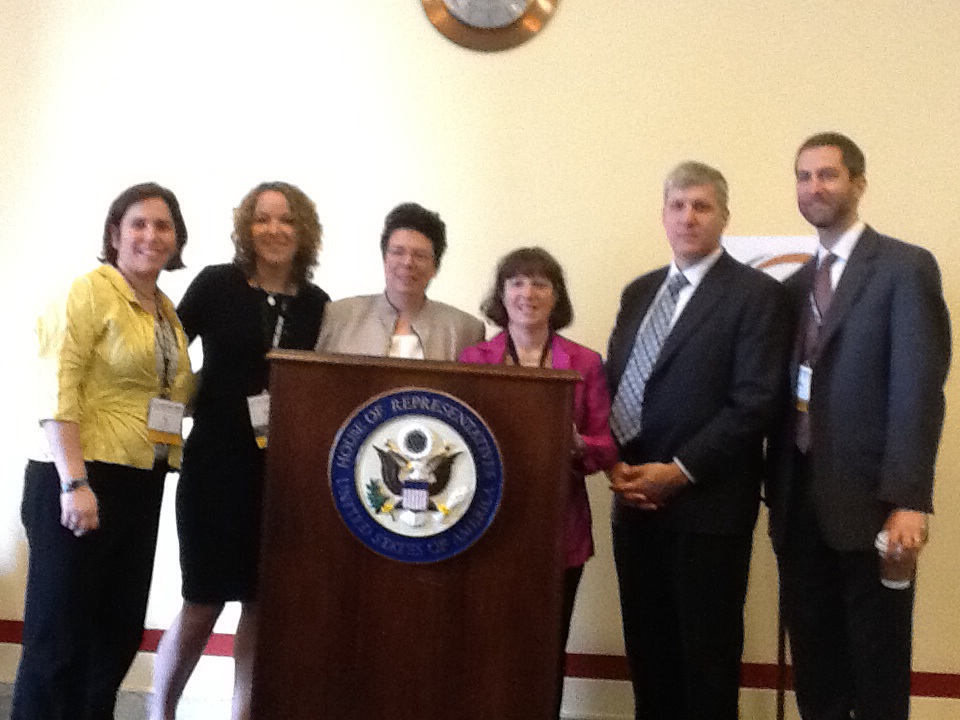
Half of the AJWS rabbinic cohort with whom I will be traveling to Guatemala

Half of the AJWS rabbinic cohort with whom I will be traveling to Guatemala

Congressman Richard Hanna (R-NY)
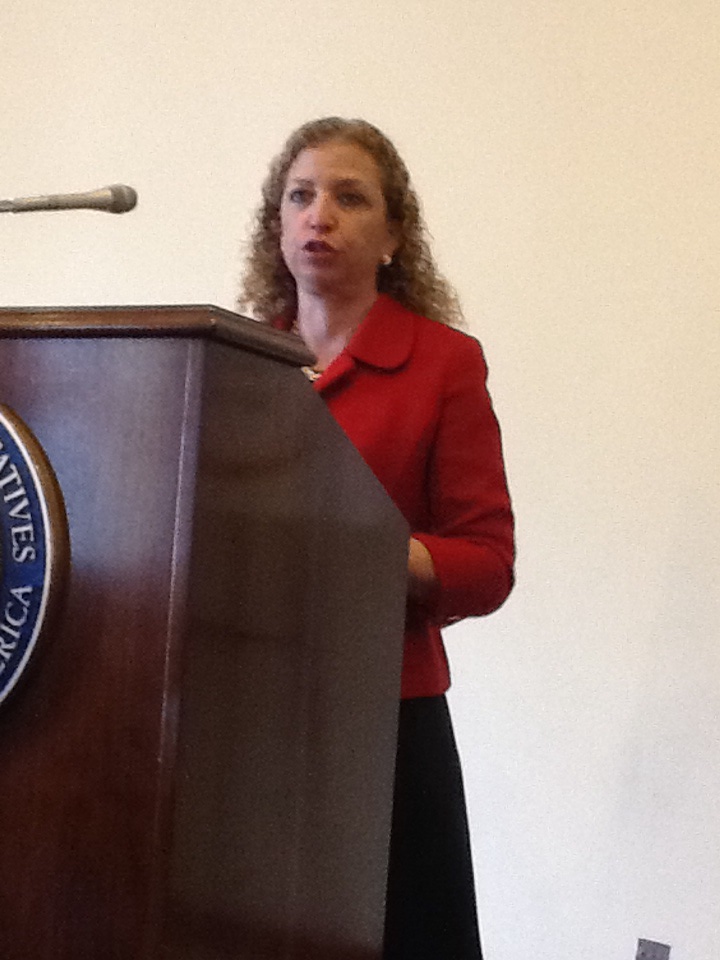
Congressman Richard Hanna (R-NY)

Congresswoman Debbie Wasserman Schultz
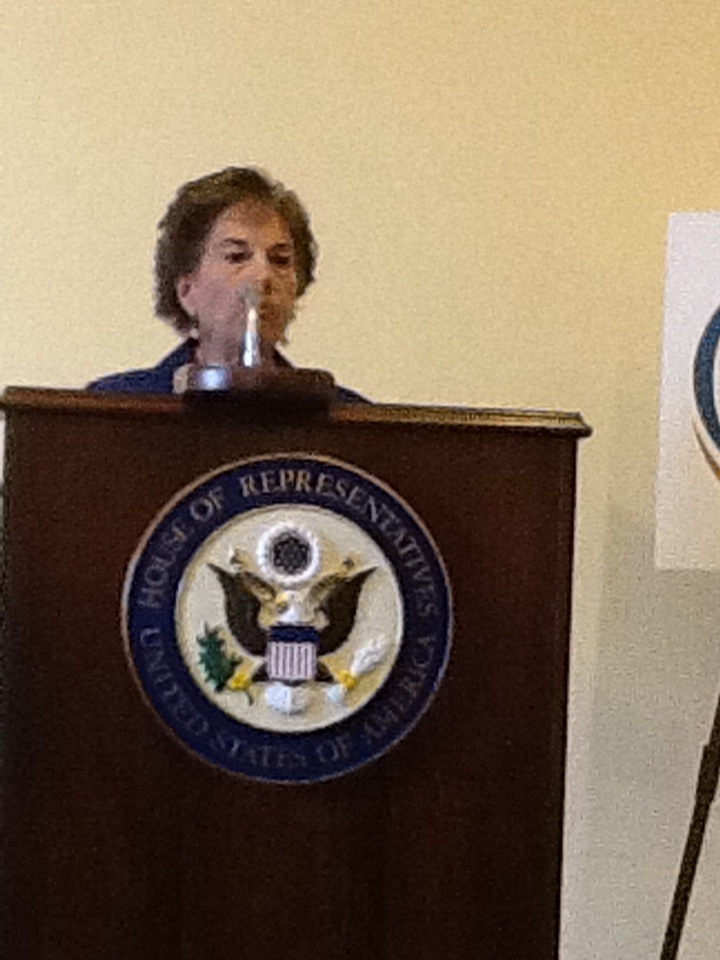
Congresswoman Debbie Wasserman Schultz

Congresswoman Jan Schakowski of Illinois

Congresswoman Jan Schakowsky of Illinois
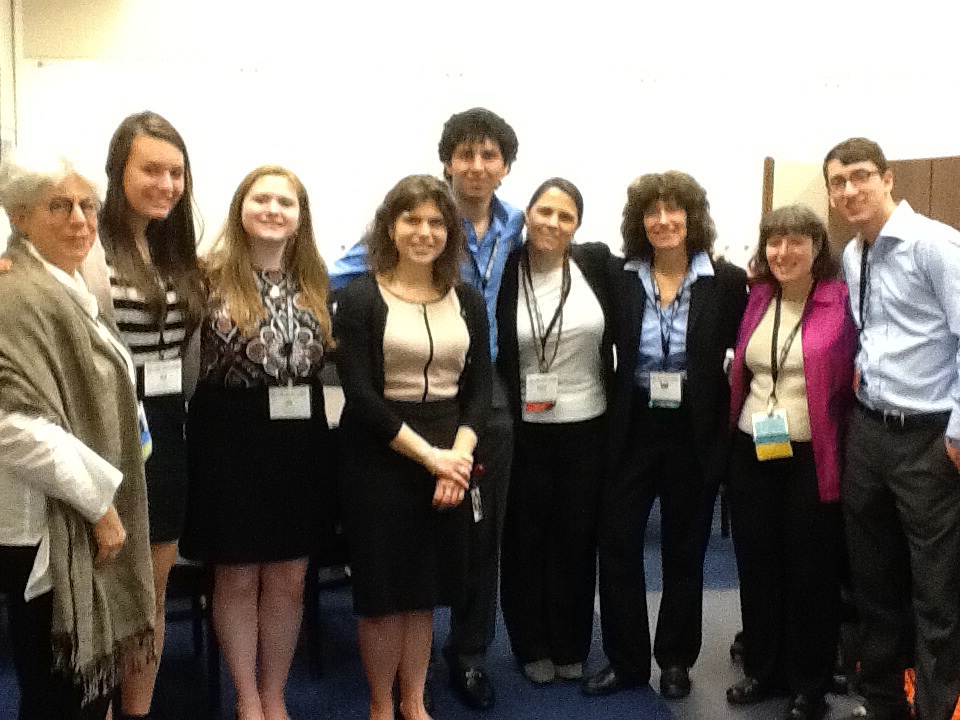
Those of us who lobbied at Congressman Elliot Engel and Nita Lowey's offices

Those of us who lobbied at Congressman Elliot Engel and Nita Lowey’s offices
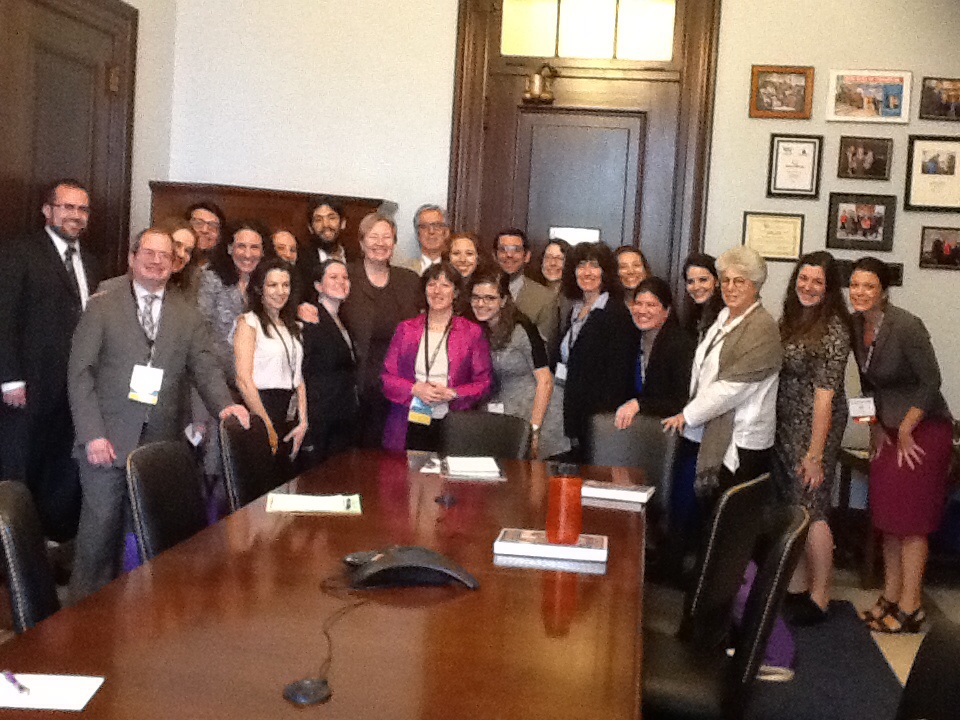
Lobbying at Senators' Gillibrand and Schumer's offices

Lobbying at Senators’ Gillibrand and Schumer’s offices

Yes, a salon in the Senate building

Yes, a salon in the Senate building

Yesterday morning, after a 7:45 AM group photo on the Capitol Steps, we had breakfast in Rayburn, a Congressional building, after which 5 AJWS Congresspeople on the Hill (both Democrats and Republicans) who are AJWS friends and supporters, addressed us about their being cosponsors of IVAWA (the International Violence Against Women Act) and about their support of LGBT rights here and abroad, which are both primary AJWS foci.

These included Congressman Ted Deutch (D-Florida), whose rabbi, David Englander, is in my rabbinic cohort traveling to Guatemala this summer; Congressman Debbie Wasserman Schultz (D-Florida), who is also the Chair of the Democratic National Committee; Congressman Lee Zeldin (R-NY) who shared that it was his rabbi who had persuaded him on this issue; Congresswoman Jan Schakowsky (D-Illinois); Congressman Richard Hanna (R-NY); and Congressman Chris Gibson (R-NY).

It was clear that for the Republicans, AJWS’s lobbying was fundamental to their understanding of the issues (whether because of the influence of an AJWS supporter like Rep. Zeldin’s rabbi or because of AJWS’s direct lobbying on the Hill).

Chris Gibson, a Republican who was an original cosponsor of both IVAWA and IHRDA (the International Human Rights Defense Act which built protection of LGBT rights into the framework of US diplomacy), said that his military and security background is what had helped him to see a connection between human rights and national security.

Republican Lee Zeldin also spoke about his military background and how, in Iraq, he would get battle update briefs with red dots highlighting places where rape and sexual violence was taking place as further casualties of war. He also made the connection that as leaders of the free world, the US has to make this work a priority.

Ted Deutch cited the documentary “Girl Rising” as one of his influences, as well, about which he said that you can’t watch it and not think that “this work [of getting girls an education and out of cycles of early childhood marriage or sex slavery] is as important as anything we will do in our lives.” (BTW, I own a copy of the film and am happy to show it anywhere, anytime and lead a discussion. I agree that it is ESSENTIAL viewing.)

Debbie Wasserman Schultz, who sits on the House Committee on Appropriations, talked about how the subcommittee deals with many of the issues that AJWS cares about: hunger of children, women’s empowerment, and the plight of women and children internationally. She called Ruth Messinger, AJWS president, “a force of nature” and said that the “world is so much better because of Ruth’s advocacy and leadership.” Those of us who know Ruth couldn’t agree more.

After the rallying cry from these congresspeople, we went off in our smaller groups to lobby, making 86 visits total yesterday on the Hill in both the Congress and the Senate! I went first with a small group from Westchester and the Bronx to lobby in Congresswoman Nita Lowey’s and Elliot Engel’s offices. Though the adults are all constituents of Congressman Engel’s district, the teens in our group were in Congresswoman Lowey’s district. And, I must say, the teens were AMAZING, speaking both about LGBT rights and the gay-straight alliance at their Jewish high school (Solomon Schechter of Westchester) and about the importance of education for girls and how they couldn’t imagine what it would mean to not have the opportunity to go to school.

Judy Stern, an AJWS board member (and one of my early supporters for the Healing Center that I run at my job) gave the AJWS overview. Bina Raskin who oversees Mosaic of Westchester, an organization aiming for LGBT inclusion, thanked both congresspeople for supporting the appointment of Randy Barry as LGBT special envoy. She also asked them to sign onto a new letter from Rep. Alan Lowenthal, D-California (still in draft form) that would extend non-discrimination of LGBT folks in government contracts not just domestically but in foreign contracts, as well.

I presented about IVAWA and child marriage in each office, in which we had the following “asks”:

  • Since both representatives are already cosponsors of IVAWA, could we depend on them to reach across the aisle and try to persuade some more Republicans to sign on?
  • Could we depend on them to help pressure President Obama to not let the gender-based violence strategy sunset in August? (This is special funding to support programs abroad focussed on gender-based violence, but the funding could end.)
  • Could we depend on them to pressure President Obama to write an Executive Order on child marriage, especially in light of First Lady Michelle’s Obama “Let Girls Learn” initiative which is geared to promoting educational opportunities to girls in the developing world?

Though we only met with staffers in each case, we knew we had the support of these liberal Democratic congresspeople.

Later we found out that the day of lobbying had gained us some new co-sponsors for IVAWA, and that others had been greatly educated on the issues. One group had had time to attend a hearing (led by Congressman Engel) on ISIS, hearing 4 female witnesses — including one nun — attest to atrocities.

I am now back in New York, after a late-night arrival home by bus (since Amtrak is shut down due to that tragic derailment). Ironically, this train tragedy did not turn the hearts of Republicans on the Hill yesterday. While we were lobbying for women’s rights and gay rights around the world, Republicans refused to increase Amtrak funding here at home, despite the fact that the accident seems to be the result of an underfunded rail system which didn’t have the safety upgrades it should have.

Such are the vagaries of American politics. Heaven help us.

Today is the 40th day of the Omer, humility in bonding.
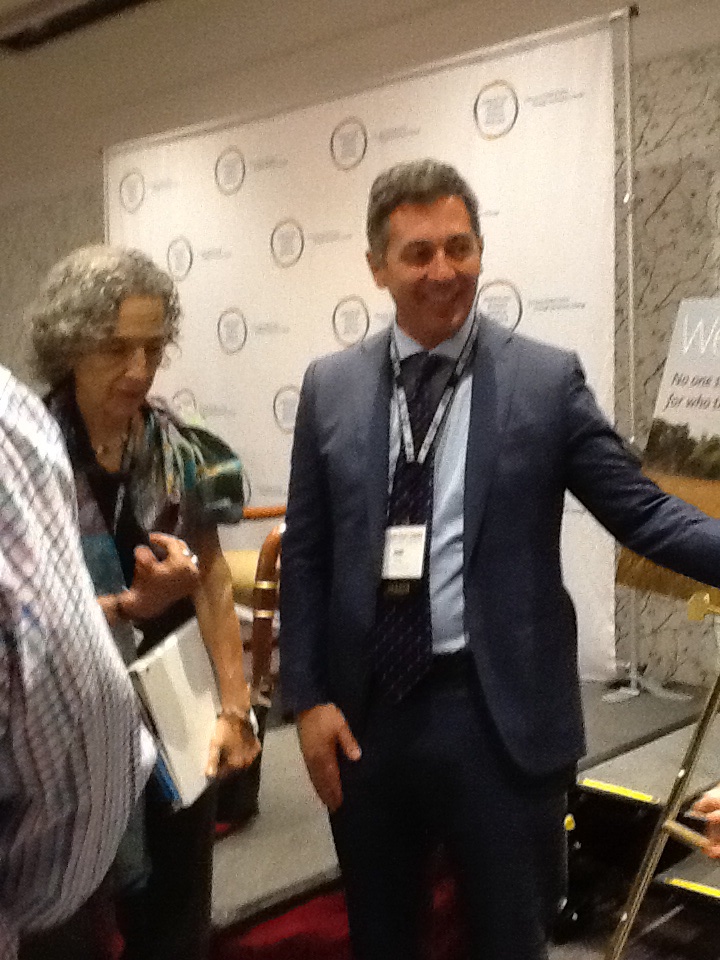


Days 38-39 — meeting Randy Barry, Elliot Engel – and MLK anew

Special LGBT envoy Randy Barry and Ruth Messinger

Special LGBT envoy Randy Barry and Ruth Messinger

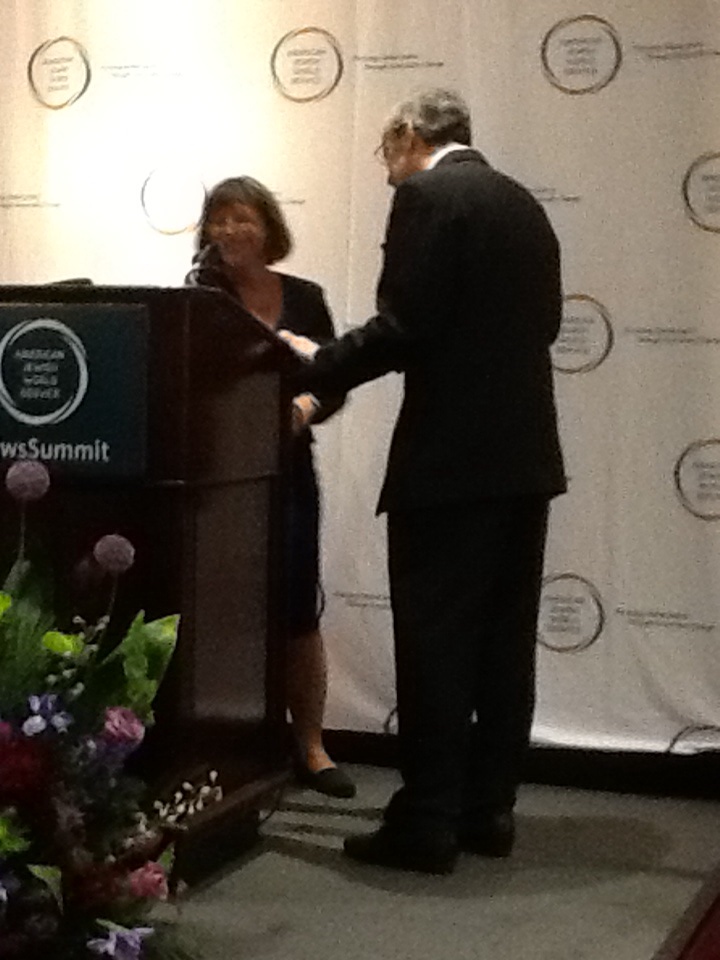
Here I am introducing Elliot Engel

Here I am introducing Elliot Engel 

Presenting Congressman Engel with a gift

Presenting Congressman Engel with a gift

MLK, Jr.

MLK, Jr.

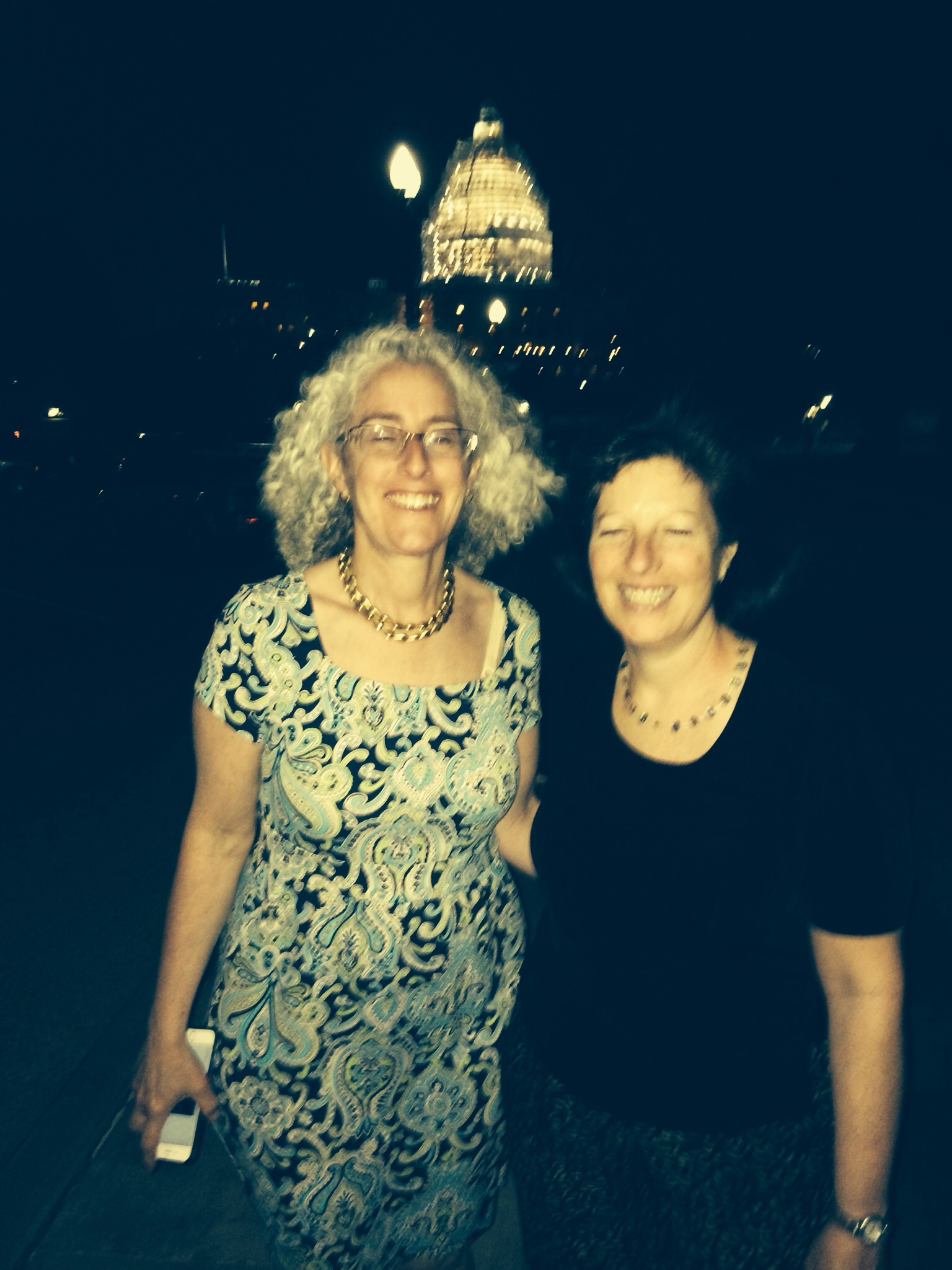
Faith, me, and the Capitol

Faith, me, and the Capitol

While AJWS is known primarily for its funding of grass-roots organizations devoted to women, children, LGBT, and other marginalized groups in 19 countries of the Global South (countries in the developing world), it has also done important advocacy work in the US on behalf of these concerns abroad. It has been advocating not only for IVAWA (the International Violence Against Women Act), but was also a key mover behind the appointment of a special envoy for LGBT rights in the State Department.

In January when I spoke on behalf of AJWS at two congregations in Chicago in honor of Martin Luther King Day, some of my talking points were about these very two issues, and I distributed letters for folks to sign, calling on President Obama to appoint a special envoy for LGBT rights. As many of you know, Randy Barry was appointed to that position in March. This was a great step forward for LGBT rights domestically and globally, but it also spoke to the power of citizen engagement and advocacy on behalf of the issues that are important to us.

All of us who had worked on behalf of this campaign were thrilled when we found out that Randy Barry would be addressing us at this policy summit in DC. At breakfast this morning, he was eloquent and moving. He acknowledged that AJWS, through its leadership on the issue and the pressure we had put on the White House, was a prime mover of creating this position of special envoy for LGBT rights. He felt optimistic that there is support from the Administration and the State Department for what he is hoping to accomplish, but he was realistic that this will be a long game that will take years, possibly decades to win. Quoting Charles Radcliffe (head of global human rights issues for the UN), he said that the best time to plant a tree would have been 25 years ago; but the next best time is today.

Continuing with his theme of trees, Special Envoy Barry mentioned that his office is still basically undecorated because his stuff has yet to arrive from Holland, his last diplomatic post. The one thing he DOES have already hanging in his office, however, is a black-and-white photograph of a tree that Anne Frank saw from the secret annex. This had been a departure gift from Robert Leopold, the executive director of the Anne Frank House, who said to him that this tree had been a tree of hope to Anne and that he hoped it would also be a tree of hope to Randy in his work on global LGBT issues. In a world in which 77 countries criminalize homosexuality (constituting 1/3 of the world), he will certainly need to be reminded often of this tree of hope, lest he become disheartened.

The rest of the day was filled with workshops and advocacy training for our lobby visits on Capitol Hill tomorrow on behalf of both women’s and LGBT rights. Todd Larsen, LGBT coordinator for USAID (Agency for International Development) addressed us at a pre-dinner cocktail hour and reiterated how important a partner AJWS is in the world of economic development and human rights.

This evening’s banquet, however, was my opportunity to take the stage and introduce my congressman, Elliot Engel, who was an original co-sponsor of IVAWA. What a thrill. Even better was getting to sit next to him at dinner and find out that he lives just two blocks away from me in Riverdale. He spoke eloquently about the work of AJWS and of how truly important lobbying visits on the Hill are. One constituent visit is worth far more than even hundreds of emails.

After dinner two friends from my cohort (Rabbi Faith Joy Dantowitz and Rabbi Elliot Baskin) strolled down the entire Mall all the way from the Capitol Building to the Washington Memorial, then to the Lincoln Memorial, the Korean War Memorial, and ultimately to the new and breathtaking (2011) Martin Luther King, Jr. National Monument. That was the perfect piece de resistance of our day, as so many of the quotes embedded in his memorial spoke to the work that AJWS does and that we have become so passionate about:

“Have the audacity to believe that peoples everywhere can have three meals a day for their bodies, education and culture for their minds, and dignity, equality, and freedom for their spirits.”

“Injustice anywhere is a threat to justice everywhere. We are caught in an inescapable network of mutuality, tied in a single garment of destiny. Whatever affects one directly, affects all indirectly.”

“We shall overcome because the arc of the moral universe is long, but it bends toward justice.”

And my favorite of all: “If we are to have peace on earth, our loyalties must become ecumenical rather than sectional. Our loyalties must transcend our race, our tribe, our class, and our nation; and this means we must develop a world perspective.”

That’s where I am and why I’ve become so committed to the work of AJWS, developing a global perspective, and marrying my Jewish faith to a broader vision and version of loyalty.

Tonight we have counted 39 days of the Omer, Endurance in Bonding.


The Week of Bonding – Yesod

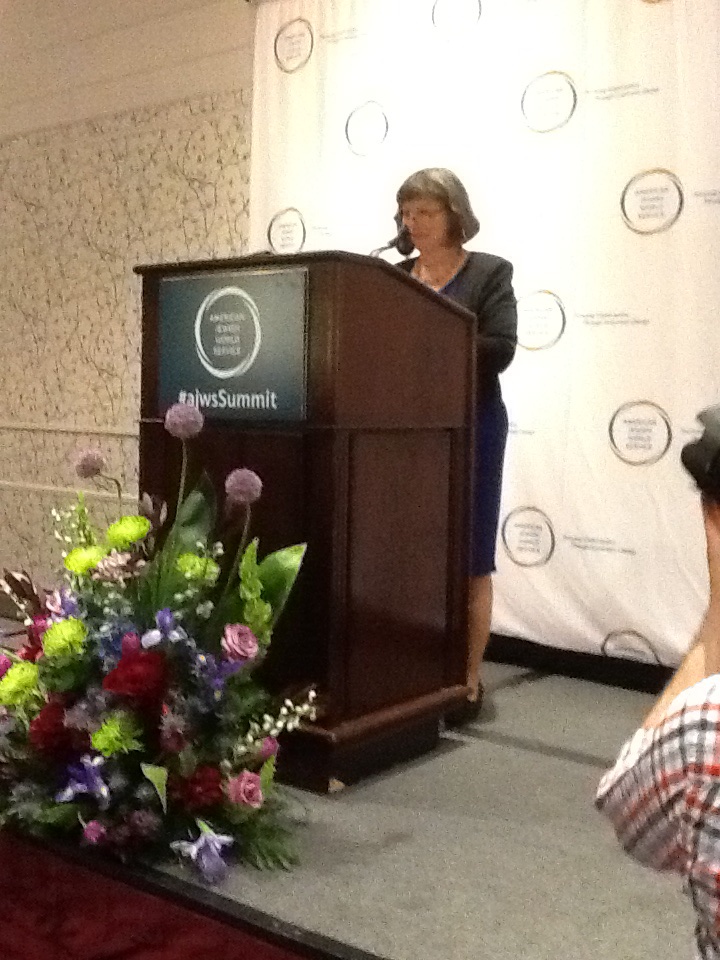
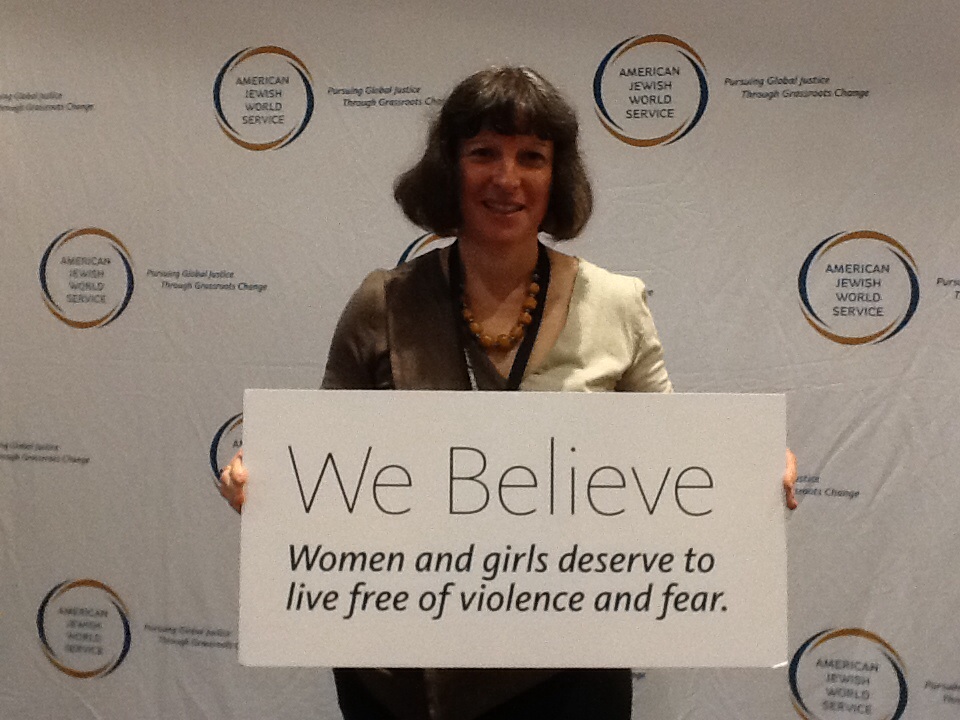
At the AJWS Policy Summit, DC "We Believe: Women and girls deserve to live free of violence and fear."

At the AJWS Policy Summit, DC “We Believe: Women and girls deserve to live free of violence and fear.”

Today was one of those rich days, filled to the brink with “wows” and inspiration. It began at UJA-Federation in NY, where a roundtable about Atul Gawande’s must-read book Being Mortal was convened. Rabbi Amy Goodman offered a d’var torah in which she compared the landscape of aging — all of the what if’s, the wondering if the cup is half empty or half-full — to the inconsistent reports that the scouts brought back from their reconnaissance mission to the land of Israel (parashat Shelach Lecha — Numbers 13 — that we will read in a few weeks). Moses asked the scouts: “What of the land they inhabit? Is it good or bad?” And to us, Rabbi Goodman asked, “What of the land of the aging? Is it flowing with milk and honey, does that land support life?”

Dr. Gawande’s book forces us to ask what is an acceptable quality of life for us as we stare down death face-to-face, and was a sobering look at the state of our medical system and doctor training. The book serves as a counterbalance to the Wise Aging work I’ve started to do, helping me to realize that it is not enough to have my groups explore the luxury of middle age and its spiritual opportunities without peeking in on the very real liabilities of aging that lie just around the bend, as well. I will make this book required reading for my future groups.

I left the roundtable and hopped a train to Washington, DC where I am attending the Policy Summit for American Jewish World Service (AJWS) with a couple of hundred other human rights activists. The “We Believe” campaign that I have been involved with over the past year will take us to Capitol Hill on Wednesday to lobby on behalf of IVAWA, the International Violence Against Women Act, which is being reintroduced for the 5th time in this legislative session with more bipartisan support than ever before.

Our plenary this evening with Ruth Messinger, AJWS President, and Pat Morris, President of Women Thrive Worldwide, zeroed in on disaster relief in Nepal and lessons from the field in previous disasters. I learned that women suffer more from disasters than men do — it exacerbates pre-existing gender equities of food insecurity, lack of education, problems of child labor and sex trafficking. I learned that after a disaster, gender-based violence always increases. I learned that because sexual violence runs rampant in a Haitian post-earthquake refugee camp, some of the women there wear 3 pairs of jeans so that perhaps by the time someone hears them scream they won’t yet have been raped.

I learned that because AJWS has so many partners on the ground in so many of the poorest countries of the Global South, it really pays to send money to AJWS (or ALSO to AJWS) in times of disaster because they are there for the long-term, supporting the grass-roots organizations that really know the communities and the terrain best. While big organizations will fund important, immediate needs of tents, food, water, medical supplies, etc. after a disaster, AJWS funds organizations that deal with issues that require long-term attention and help fund things that others don’t or won’t — like women’s issues. Notably, the AJWS motto is “Pursuing global justice through grassroots change.” (It’s written all over the backdrop behind me in the photo above.)

Sometimes, disaster relief does leave a country in better shape than it was before. For instance, now that Liberia has just been declared ebola-free, its healthcare system is in much better shape due to an influx of money (there had only been 50 doctors in the whole country before the ebola outbreak).

Ruth, an optimist, believes that change vis-a-vis GBV (gender-based violence) CAN happen if there is a will. She points to the fact that the anti-smoking campaign really has worked in the US and noted that cigarette ads used to clog our TV airwaves. She quoted writer/activist Grace Paley who said “The only recognizable feature of hope is action.”

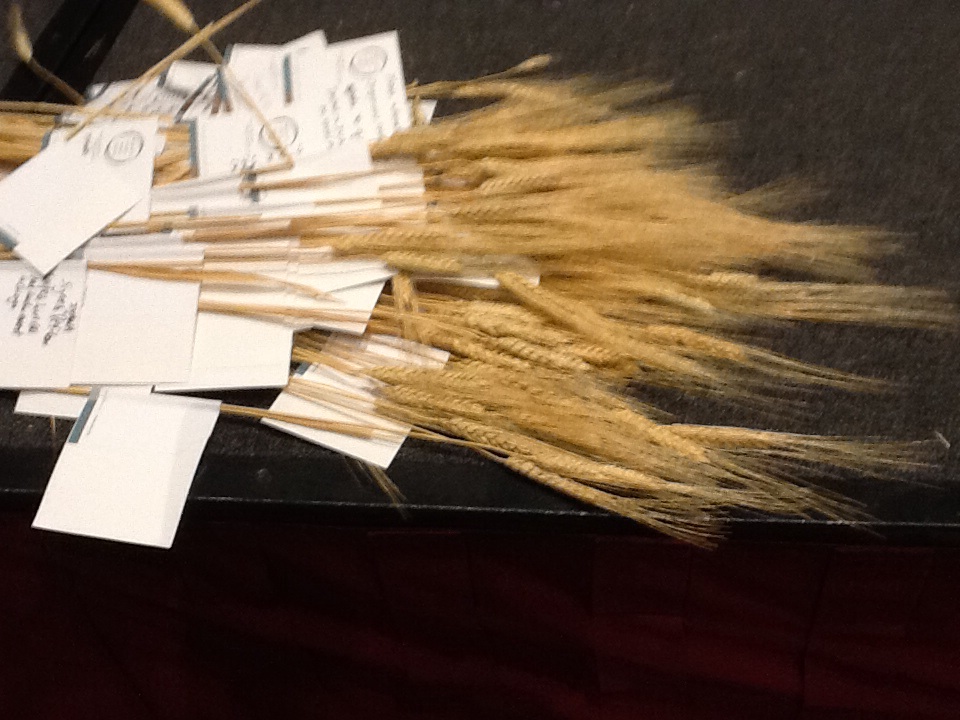
An authentic counting of the Omer!

An authentic counting of the Omer!

At the end of the program, we did a creative Counting of the Omer ceremony. We each took a sheaf of wheat (technically, an Omer is a measurement of wheat) and on the attached paper wrote the things that we have done on behalf of IVAWA this past year. The sheaves were then collected/counted before we officially counted the Omer.

Today is the 38th day of the Omer.

In this week of bonding, I hope to bond more closely with my fellow AJWS rabbinic global justice fellows with whom I will be traveling to Guatemala in August, and also to bond with my social justice soul.

Amazing workshops will be offered tomorrow from “Countering Child Marriage” to “Shaping a Digital Campaign Strategy” to “Righteous Rage” to “Social Change Philanthropy.” Stay tuned!

Lag B’Omer, Day 33 – Humility in Humility

It happens without fail that this mini-holiday that we call Lag B’Omer always falls on the day of Humility within Humility. The “lag” of Lag B’Omer is actually a number: it stands for the number 33 (Hebrew letters represent numbers, as well). Lag B’Omer literally means “the 33rd of the Omer.”

I might add here that 3 is my lucky number, for whatever that’s worth — and it’s actually worth a lot when you consider how many weird experiences I’ve had waking up in the middle of the night and my clock reading either 11:33 or 2:33 or 4:33. It started before I turned 33 and since I believe in signs, I thought it was some kind of message for my 33rd birthday. But it kept happening, and is still happening twenty+ years later. I now wonder, is the message about Lag B’Omer?! (If so, maybe my “day” in the Omer is not the 31st day, after all!)

The Omer period is traditionally understood to be a period of semi-mourning. In observant Jewish communities, weddings don’t take place during the Omer — or at least not until either ON or after Lag B’Omer or, in other communities, not even until the new moon/the 1st of the month of Sivan (Shavuot itself is on the 6th of Sivan), very close to the end of the Omer period.

It is rare for a progressive Jew to get hung up about the mourning aspect of the Omer period, but there is one tradition I do keep. It’s not because I consider this a period of mourning — I would, in fact, officiate at a wedding during this timeframe.  However, what can I say? I happen to like this particular and quirky tradition: I get my hair cut before Passover but then not again until Lag B’Omer. So at 8:30 tonight when I got out of the office, I recited the Omer in the car and rushed  to get my hair cut before the salon closed at 9 PM, as I wasn’t sure I’d have time tomorrow.

So, I ask myself: what is the connection between this mourning period, the one-day reprieve of Lag B’Omer, and humility-in-humility?

The Omer was not considered a period of mourning according to Torah. This tradition is first mentioned in the Talmud where we are taught that 24,000 (the term “12,000 pairs” is used to indicate the disunity among them) of Rabbi Akiba’s students died in the period between Passover and Shavuot because of lack of respect for one another. (Talmud Yevamot 62b)

It is that extreme, murderous lack of respect for one another that demands a deflation of ego, a call to arms not just for humility, but for humility-in-humility. Lack of humility can kill, the Talmud seems to be saying. Lag B’Omer with its extra dose of humility on top of humility is the antidote to that rampant hubris. It is a day of reprieve.

When we only hold the “For me was the world created” without the counterbalancing “I am but dust and ashes” (this is a practice that R. Simcha Bunem of Peshischa prescribed to hold a well-balanced humility), the world would literally self-destruct.

Here is the quintessential humility-in-humility poem, by one of my very favorite poets, as it reminds us of all that could go wrong if our ego is imbalanced:

The Place Where We Are Right

From the place where we are right
flowers will never grow
in the spring.

The place where we are right
is hard and trampled
like a yard.

But doubts and loves
dig up the world
like a mole, a plow.
And a whisper will be heard in the place
where the ruined
house once stood.

(Yehuda Amichai)

From the place where we are right, flowers will never grow in the springAnd a whisper will be heard in the place where the ruined house once stood.

Are we humbled yet?

Happy Lag B’Omer — Enjoy your reprieve!

Balance in humility — day 31

Cherry blossoms!

Cherry blossoms!

Cherry blossom canopy, Central Park

Cherry blossom canopy, Central Park

Spring tulips!

Spring tulips!

Ah, spring! I used to live on the Upper West Side and would wait for the peak of the cherry blossom canopy on a 4-block stretch in Central Park between around 86th St. and 90th St. I used to walk under the canopy of trees, back and forth, and marvel. Sometimes I felt like a bride under the chuppah.

Since I no longer live within walking distance of Central Park, I now have to send out my Upper West Side spies (actually only one spy — my friend Rachel) to let me know when peak will be. So I actually caught it this year before the rains come and send the petals flying. How glorious it is!

As for early spring flowers, tulips are my favorite. Later when the irises pop, they will be my favorite. “Love the one you’re with!”

Since this is the week of hod/humility in the counting of the Omer, I’d like to take note of the fact that a sense of deep awe and gratitude can lead to humility. And I suppose that is what I feel as I contemplate the wonders of spring. In the experience of awe, there is a humbling.

Helen, my friend – and Mussar chevruta/study partner of 15 years – says she has one day in the Omer that exemplifies who she is emotionally and spiritually. It is the 11th day of the Omer, the day of Netzach sh’b’Gevurah — endurance in discipline/boundary-setting. For years we’ve discussed her g’vurah-dik (structured and well-boundaried) nature, but we never placed it in the context of a particular day in the Omer. I asked her whether the reverse — the 23rd day, Gevurah sh’b’Netzach (discipline in endurance) — would have been equally apt. She pondered the question for a moment and then said that, no, her base middah/soul-trait is g’vurah with the netzach as overlay.

She then (of course) turned the tables on me. “So, Pam, which day of the Omer best exemplifies you?”

I know my day falls sometime in this week of humility, not because I yet am humble in my essence, but because my sense of self is so entangled with it in a myriad of complicated ways, both as aspiration and longing, and in senses of the word other than those connoting ego. I want to live my life aware of my mortality, which is a way of living in humility. I want to live my life in gratitude, which is a way of living in humility. I want to live my life being more present and available, which is a way of living in humility. If I understand today’s overlay of Tiferet to mean compassion or balance or harmony, I think today would be my day. I want to live compassionately (to self) in my humility, and I want to have it be in proper balance in my life.

Contemplative exercise: I invite you to consider which day of the Omer best captures your soul’s essence.

First step, which would be your “base” soul-trait — Chesed (lovingkindness), Gevurah (discipline/strength/boundary-setting), Tiferet (compassion/harmony/ balance), Netzach (endurance/eternity), Hod (humility), Yesod (bonding/foundation), Malchut (nobility/sovereignty)?

Once you figure that out, you can discern which one would be the “overlay” soul-trait.

Let me know how it goes!

Humility/Hod — week 5


Today is the 29th day of the Omer (text on bottom)

Today is the 29th day of the Omer (Hebrew text on bottom)

It is Saturday night and we have just counted 29 days, beginning the week of Hod (week 5) in the counting of the Omer. This sefirah/emanation is often translated as Glory or Beauty or Splendor. Some connect it to the Hebrew word hoda’ah, a word for Gratitude. And some understand it to represent Humility. In his Omer guide The 50th Gate, Rabbi Gavriel Goldfeder joins gratitude to beauty and humility in this description of Hod:

The word hod means to thank and admit. Both may be summed up as acknowledgment that there is someone outside of me with whom I am in relationship. S/he holds something that I need — be it knowledge that I don’t have or a smile that warms my heart. Hod also connotes humility and recognition of beauty. All of these are in the same family — seeing the beauty and value of that which is outside me, before whom I must be humble, to whom I may have to admit my violations of that relationship, before whom I express gratitude… The week of hod calls upon us to recognize and make space for others even when it does not seem to fit with our vision, even when it challenges our own illusion of self-sufficiency. The same is true of our relationship to G-d — hod reminds us of the necessity of silence and humility in order to hear what He is telling us…”

And Rabbi Simon Jacobson in his Omer guide reminds us that this week of Hod follows the week of Endurance and that these two weeks inform each other:

 “If endurance is the engine of life, humility is its fuel. Hod gives netzach (endurance) direction. Humility is the silent partner of endurance. Its strength is in its silence. Its splendor is in its repose.”

Humility is my favorite middah (soul-trait/virtue). Favorite in the sense that it is the one I most often think about and try to cultivate in myself. Favorite in the sense that it also seems to be the richest, with many different valances. I used to be afraid to teach this one to my Mussar students. It seemed “advanced” and so difficult to attain. My own understanding initially was that humility was the culmination of years of Mussar study and practice and not for the beginner or faint of heart.

When I discovered that some colleagues teach humility as the very first middah to their new students, I was, truthfully, floored. And yet, it has come to make sense to me. If students don’t begin the process of their Mussar studies by noticing the kind of space they take up in conversation with the other, either in class or with their chevruta (study partner), how will they ever attain humility in their relationship with God?

Humility is no longer scary for me to teach; it is not only the most compelling middah for myself personally but is also now my favorite to teach others. In fact, I will be teaching it at a Mussar gathering sponsored by The Mussar Institute tomorrow in Manhattan.

This week I invite you to contemplate Joseph, a true exemplar of humility when he let God take the credit for his own skills in dream interpretation: when someone praises you, thank God for acting through you. Ask for and accept constructive criticism from others. Practice tzimtzum/contraction — watch how you take up space physically (on busses, subways, benches or in your home or office — does your mess spread into others’ domain?) and emotionally (in conversation or in demands on others’ time/energy).

And if you have a chance to read the children’s picture book Zoom, I suggest you do. It is a great meditation on another aspect of humility altogether (to be continued)….


Week Four: Fortitude

Today is 22 days, which is 3 weeks and 1 day of the Omer

Today is 22 days, which is 3 weeks and 1 day of the Omer

Tonight we have counted the 22nd day, beginning the 4th week of counting of the Omer. This is the week of Endurance or Fortitude (Netzach).

I went to the cardiologist yesterday, my print-out of blood pressure readings (both AM and PM) in hand. He told me I didn’t have to take my blood pressure twice a day, as I have been so diligently doing.

“No, it’s a good thing,” I assured him. I shared my excitement about my fledgling prayer and meditation practice that accompanies my blood pressure reads morning and night. “This is the silver lining; don’t tell me not to do it!” After telling me about the several patients of his who had used biofeedback as a way to lower their blood pressure, he again tried to take the wind from my sails: only one of his patients has stuck with the practice of biofeedback as a way to combat their high blood pressure.

Did he have my number? Will I, too, become a casualty of broken promises and a lack of commitment?

How does one commit to new good habits for the long haul? Almost everything I know about habit comes from my Mussar study and practice, and now from new research in neurobiology that bolsters the argument that the brain can be re-triggered through repetition and the creation of new habits. I’m not sure if there is a clear turning point when I can rest assured that this practice will “stick,” when I can trust that I am truly conditioned to daily prayer and meditation. I can only hope that I will pass whatever hump I have to pass and realize that I need it, like I need my swims and my sleep and my meals.

So I now start the day with prayer, meditation, and chant… and then the inevitable blood pressure reading. I end the day with prayer, meditation, and chant… and a blood pressure reading.

My morning ritual typically consists of (1) Modah ani/I give thanks (I’ve just learned two new Shefa Gold chants for that prayer); (2) Asher yatzar (giving thanks for the body and the organs that are in working order); (3) Ashrei (expressing joy for dwelling in God’s house).

My nighttime practice includes the Angel blessing and the counting of the Omer.

Both include mindfulness meditation, with a focus on the breath, as well.

During this week of Netzach, of fortitude and endurance, I pray that my undertaking becomes truer and deeper. May you, too, have a week of renewed commitments and the energy to persevere.

Heart-space: Lovingkindness in Compassion – Day 15

Many years ago I “channelled” a musical setting for the words Ahavat Olam  (“everlasting love”) from the evening liturgy. Not considering myself a terribly musical person, I was sure I had lifted (stolen? expropriated?) the melody from somewhere else. I consulted with two of my closest cantor friends, Cantor Martin Levson and Cantor Abbe Lyons. Both of them deemed my melody “original” and therefore kosher. Additionally, each has been using it in their congregational settings, which tickles me to no end. Abbe set an English translation to it, along with the Hebrew, using Rabbi Rami Shapiro’s translation “We are loved by an unending love.” You can listen here: https://soundcloud.com/abbe-lyons/ahavat-olam-unending-love-rabbi-pam-wax. Thanks, Abbe! (My talented friend also has other tracks up on Sound Cloud that you can listen to while you are there.)

Today is the first day of the week of Compassion/Tiferet in the Omer count. This first day is dedicated to lovingkindness/chesed. I will commemorate it by sowing my garden, preparing it for spring planting, and by planting some potted hyacinths which were given to me as a Passover gift. It is my way of saying thank you to God for finally giving us in the northeast a spring!  Hodu l’Adonai ki tov – ki l’olam chasdo — Give thanks to the Eternal for God is good; God’s lovingkindness is everlasting/unending!

First crocuses in my garden

First crocuses in my garden

My blood pressure continues to be scarily elevated, both morning and evening. Thanks to Helen, Carol and Judith for helping me develop a meditation/prayer/chant practice to accompany my daily BP checks. If there is a good thing to come out of this scare, it will be the imperative for daily meditation, a regular practice I’ve long wanted and dabbled in but never fully committed to. This, too, will be lovingkindness and compassion for self.

Even Chaim, one of the most averse-to-meditation kind-of-guys I know, is supporting my meditation practice — reminding me how the great yogis can control their blood pressure and leading me to the early work of Dr. Herbert Benson at Harvard on meditation and blood pressure. (BTW, Chaim has been on blood pressure meds for as long as I’ve known him and never once decided to try the meditation route himself.)

Another appropriate thought for the day: My friend Shari has collected heart-shaped rocks for some time. I have since joined in the search. Sometimes I search for them for her, sometimes for myself. I have quite a collection spread out all over my desk at work, but nothing like hers. On Friday, she sent me this photo — a rock she found while walking her (very cute!) dog. A perfect photo for this day of lovingkindness within compassion.

May it be a day of unending love for you!

A perfect heart rock

A perfect heart rock


Eternity within Restraint — day 11

"Today is eleven days, which is one week and four days of the Omer" [Hebrew]

“Today is eleven days, which is one week and four days of the Omer” [in Hebrew on top]

This is a picture of my Omer counter. It is about 4 x 2 inches. I turn the rollers each night after I say the blessing, to reveal the Hebrew formula announcing the new day. That is the basic practice. Merely to count.

Then there are the various additional spiritual practices, reflections and contemplations that one might add. If you choose to meditate on or practice one of 48 ways to acquire wisdom (Torah) as delineated by Pirke Avot (Ethics of the Fathers 6:6), today’s theme (beginning at sundown tonight and lasting until sundown tomorrow) is “keen discussion.”* If one chooses to contemplate merely one word as offered by the 49-worded Psalm 67, today’s word of the day is b’chol — meaning “in everything” or “in all.”

One can get more intricate and elaborate with the practice (or some think, “complicated” or “unfathomable”) by adding various permutations, either on the mystical Ana B’koach prayer, or in working with various combinations of seven different themes called sefirot (“emanations”), as illustrated in this graph. Today’s theme is Netzach in Gevurah.

Since there are many ways to translate and interpret these kabbalistic themes of each day, I enjoy comparing the various renderings in my collection of Omer books and guides.

Rabbi Jill Hammer understands Netzach in Gevurah as “Endurance within Strength” and equates the Biblical Dinah with this combination of traits (The Omer Calendar of Biblical Women). She says “We can imagine that Dinah found the persevering strength, the netzach shebegevurah, to go past her victimhood and become truly free. We are most like Dinah when we find a voice to speak of our tragedies, and transcend them.”

Rabbi Simon Jacobson translates it as “Endurance in Discipline” (A Spiritual Guide to Counting the Omer: 49 Steps to Personal Refinement) and invites us to consider whether our discipline is consistent.

Rabbi Rami Shapiro understands it as “Your capacity for follow-through” (https://rabbisremembering.files.wordpress.com/2011/04/rs-omer-journal.pdf).

But the translation I will hold closest for this day is that of Rabbi Yaacov Haber (Sefiros: Spiritual Refinement through Counting the Omer). He renders netzach sh’b’ gevurah as “Eternity within Restraint,” writing that “Netzach views the long-term gain within the short-term pain or loss.”

This theme speaks to me today, the proud (?) new owner of an expensive blood-pressure cuff, recommended this morning by my internist (along with a referral to a cardiologist for a stress test and a coronary calcium score) due to newly diagnosed high blood pressure.

I want netzach — eternity and endurance — for as long as I can have it. If it requires short-term restraint/inconvenience to get me there, I’ll take it. You betcha.

So, I have a new daily practice — to check and record my blood pressure. Now, can I turn it into a daily spiritual practice? Is there a mantra or prayer I might say, a kavanah/intention to set, a virtue to perfect? Suggestions welcome.


*Note that the different texts that use Pirke Avot 6:6 as a basis for a daily Omer reflection do not necessarily adhere to the same order (and again, the translation may vary from text to text, as well). However, rest assured that by the end of the Omer period, with reflection on these 48 pathways to wisdom in ANY order, you will feel just a bit wiser, and maybe a whole lot! Likewise with a serious contemplation of the sefirot.

Boundary-Setting: A Spiritual Exercise

8th day of the Omer — Chesed she’b’g’vurah — Lovingkindness within Discipline

Sunday, April 12, 2015

Last year at Shavuot, I remarked how the counting of the Omer (the 7-week period between Passover and Shavuot) is the only daily spiritual practice I have ever had or been able to commit to. I count the Omer every night and do some kind of reading and reflection on the theme of the upcoming day through the kabbalistic/spiritual-mystical lens.

But then I realized that that was not entirely true — I had taken on a different spiritual practice during the month that Chaim and I had spent in Israel in January 2013 — a daily commitment to my writing.

Last year at Shavuot I vaguely thought that I might tie the two together this year by writing everyday during the Omer period, to strengthen both practices.

Sadly, I have already fallen short, as today is already the 8th day of the Omer period. I have thoroughly missed out on writing during the week of Lovingkindness (Chesed) which began on the second night of Passover. As of last night, we have moved into the week of Boundary-Setting and Discipline (Gevurah).

But perhaps, that is appropriate: I was Chesed-dik with myself last week, fulfilling the impetus to be loving-kind to myself, to give myself a little slack during the busy and disruptive week of Passover. Now that Passover is over, the week of Gevurah gives me an opportunity to get Gevruah-dik, to begin the Omer discipline anew with intensified Discipline.

Expect at least one post a week during the next six weeks (NOT daily).

Consider how you may need to set some boundaries this week or discipline yourself in some meaningful way. For me, the intention is clear: writing and reflection. (And, yes, to get back on a healthy eating track after a week of too many macaroons, chocolate-covered matzas, and other Passover treats!)